 United States


“The movie is an exercise in torture porn, offering little more than a series of gruesome deaths and a lack of genuine scares.”
Roger Ebert
Chicago Sun-Times
Part of a Collection
Wrong Turn Collection
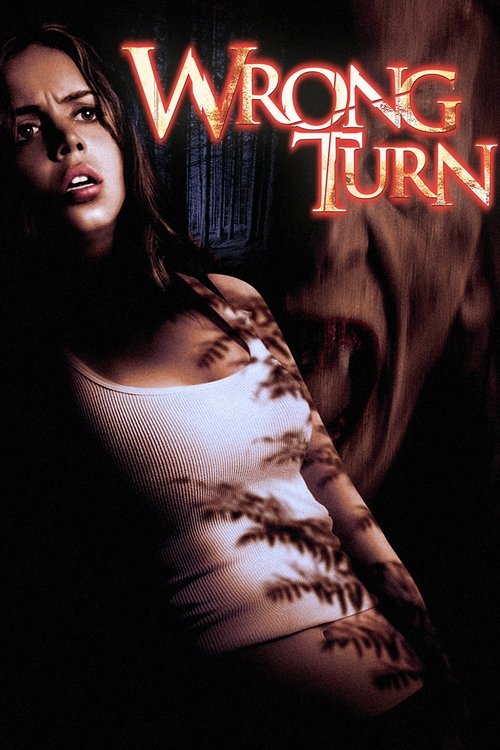
A fender bender on a desolate West Virginia road strands six strangers in a dense, uncharted forest. The group includes Jessie Burlingame, an ambitious public relations professional heading to a job interview; her boyfriend Scott; and four others who took a shortcut that led nowhere. When their vehicles fail and the road disappears, they realize they are not alone. Rob Schmidt directs this tense survival horror where the locals are not merely hostile but a family of deformed cannibals who have lived off the grid for generations.
Produced by Stan Winston Productions and Summit Entertainment, the film relies on practical makeup effects rather than computer-generated imagery to bring its grotesque antagonists to life. The $12.6 million budget allowed for detailed prosthetics created by the legendary Stan Winston Studios, giving the mutants a visceral, tactile presence that defined the movie's aesthetic. Despite mixed reviews from critics, the film resonated with audiences seeking raw, unfiltered terror, grossing over $28 million worldwide upon its release in May 2003.
Stream
Availability and pricing can change. Confirm on the provider's site before purchasing.
The story begins with a minor collision between two cars on a remote stretch of highway deep within the West Virginia mountains. Six individuals find themselves stranded when the road ahead is revealed to be washed out or blocked by debris. The group consists of Jessie Burlingame, driving with her boyfriend Scott, along with young couple Carly and Evan, Francine, and Chris Flynn, a truck driver who stopped to assist after his own vehicle broke down nearby. Initially, the mood is one of mild frustration as they attempt to navigate the situation, but the atmosphere quickly shifts to dread as night falls and the surrounding woods seem to close in.
As the group ventures into the forest to find an alternate route, they encounter strange markings and evidence of long-term, isolated habitation. The tension escalates when they discover that the threats lurking in the trees are not just wild animals or lost hikers but a family of inbred cannibals. Led by the terrifying Three Finger and his brother Saw-Tooth, these mutants view the intruders as prey. The terrain itself becomes an enemy, with the characters struggling against the dense undergrowth and treacherous paths while being hunted by killers who know every inch of the land.
The narrative follows a classic slasher structure where the group fractures under pressure. Trust erodes as internal conflicts arise regarding leadership and survival strategies. Initial attempts to communicate or escape fail miserably, leading to a grim realization that there is no easy exit. The survivors are forced to split up to increase their chances, a tactic that ultimately seals their fate. Each character faces a unique and gruesome end at the hands of the mutants, highlighting the film's reputation for unflinching gore and visceral horror. The story builds to a climax where the remaining protagonists must face the full extent of the danger in a desperate stand against the cannibal family.
Jessie and Chris become the primary focus as they attempt to protect the others, though their efforts are constantly thwarted by the sheer brutality of the antagonists. The film maintains a claustrophobic atmosphere, emphasizing the isolation of the characters against a backdrop of dark, foreboding woods. The narrative leaves the audience questioning whether any of the protagonists will make it out alive, setting the stage for a shocking conclusion that redefines the genre's expectations of survival. The final moments reveal that the road they fled was never meant to lead to safety, but rather deeper into the heart of the monsters' territory.
Official Trailer
Teaser Trailer
Critical Consensus
While Wrong Turn fails to offer much in the way of originality or psychological depth, it succeeds as a straightforward, blood-soaked slasher. The film relies heavily on practical effects and gore rather than suspense, delivering a visceral experience for fans of the genre but lacking the sophistication to appeal to a broader audience.
“The movie is an exercise in torture porn, offering little more than a series of gruesome deaths and a lack of genuine scares.”
Roger Ebert
Chicago Sun-Times
“Rob Schmidt directs with a steady hand, but the script lacks the wit to elevate the material beyond standard slasher fare.”
Todd McCarthy
Variety
“A solid, if unremarkable, horror flick that delivers on its promise of gore but fails to leave a lasting impression.”
Todd Gilchrist
The Hollywood Reporter
Eliza Dushku
Jessie Burlingame
Desmond Harrington
Chris Flynn
Emmanuelle Chriqui
Carly
Jeremy Sisto
Scott
Kevin Zegers
Evan
Lindy Booth
Francine
Julian Richings
Three Finger
Garry Robbins
Saw-Tooth
Director
Rob Schmidt
Writer
Alan B. McElroy
Composer
Elia Cmiral
Cinematographer
John S. Bartley
Producers
Erik Feig, Brian J. Gilbert, Robert Kulzer, Stan Winston
Fangoria Chainsaw Awards (2004)
Best Makeup Effects: Nominated
Saturn Awards (2004)
Best Horror Film: Nominated
Fright Meter Awards (2004)
Best Makeup: Won
Join the community
fans discussing