 Germany
“Lynch has created a world that is both beautiful and terrifying, a place where love and violence coexist in a delicate balance.”
Roger Ebert
Chicago Sun-Times
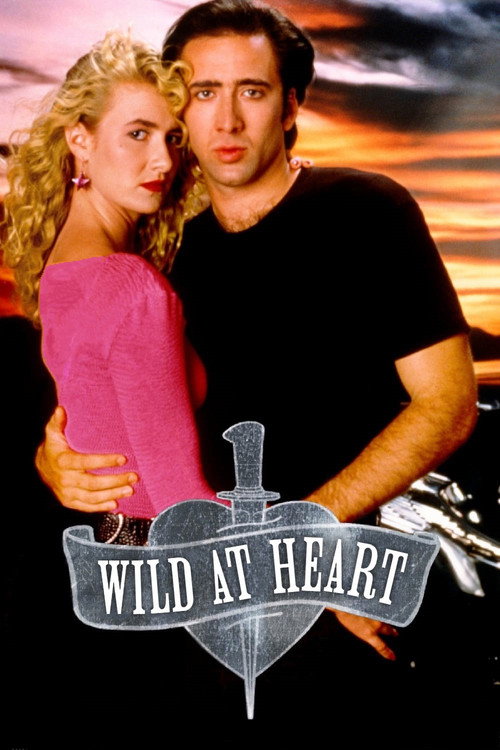
Nicolas Cage steps out of prison to find his girlfriend Lula Pace Fortune waiting with a plan to flee New Orleans for California. Their journey begins in a 1957 Chevy Bel Air convertible, but the road is blocked by Marietta Fortune, Lula's controlling mother who hires killers to stop the wedding. David Lynch directs this chaotic blend of noir and romance where violence and tenderness collide on the American highway.
The film premiered at the Cannes Film Festival in May 1990 before hitting US theaters in August. Critics praised the bold visual style and the chemistry between the leads even as some found the pacing erratic. The production cost $9.5 million and eventually grossed over $14.6 million worldwide. It remains a defining work of 1990s cinema that balances surreal dream sequences with gritty street-level drama.
Stream
Availability and pricing can change. Confirm on the provider's site before purchasing.
Sailor Ripley walks out of prison after serving time for killing a man in self-defense. He immediately seeks out Lula Pace Fortune, a woman who has been living under the suffocating control of her wealthy and disturbed mother, Marietta. Sailor wears a red leather jacket and carries Elvis Presley memorabilia, symbols of his own rebellious spirit. Lula dreams of escaping her home in New Orleans to start a fresh life in California. They decide to drive there together in a classic 1957 Chevy Bel Air convertible, planning to get married along the way.
Marietta refuses to let her daughter go. She views Sailor as a dangerous criminal and an obstacle to her twisted desires. To ensure they never leave town, she hires Bobby Peru, a menacing hitman known for his sexual aggression and unpredictability. The couple flees into the night, driving through Texas and Louisiana while being pursued by Marietta's men. Their trip becomes a surreal nightmare filled with eccentric characters and sudden bursts of violence.
Along the road, Sailor and Lula encounter a series of bizarre figures that populate Lynch's unique vision of the South. A mysterious witch warns them of danger. A hotel owner reveals a strange past involving a murder. Bobby Peru tracks them down, attempting to seduce Lula and kill Sailor. The atmosphere shifts constantly between dark comedy and genuine terror. Sailor struggles with his violent temper while Lula fights to break free from her mother's psychological grip.
The stakes rise as Marietta escalates her efforts to stop the wedding. She employs increasingly desperate tactics to keep the lovers apart. The journey tests their commitment to one another and their ability to survive in a hostile environment. The narrative explores themes of forbidden love, the corruption of family dynamics, and the search for freedom. Every mile brings them closer to their destination but also deeper into danger. The tension builds as they approach Houston, leading to a confrontation that will determine their fate.
The film maintains a disorienting tone throughout. Moments of tender romance are interrupted by graphic violence and surreal imagery. Sailor sings "Love Me Tender" in a diner scene, a moment of raw vulnerability amidst the chaos. The road trip structure allows the audience to see layers of trauma and resilience in both characters. As they move further from home, the world around them seems to warp and shift. The landscape becomes a reflection of their internal states. The story culminates in a final showdown that challenges the nature of reality itself.
Official Trailer | 4K Restoration
Original Theatrical Trailer
Critical Consensus
David Lynch's Wild at Heart blends noir, romance, and surrealism into a visually stunning tapestry. While some critics found its pacing inconsistent, the bold style and electrifying performances create an unforgettable experience.
“Lynch has created a world that is both beautiful and terrifying, a place where love and violence coexist in a delicate balance.”
Roger Ebert
Chicago Sun-Times
“A wild and crazy love story that is as unpredictable as it is entertaining, with performances that are nothing short of extraordinary.”
Janet Maslin
The New York Times
“Lynch's most accessible film yet, Wild at Heart is a thrilling ride that showcases his unique brand of storytelling and visual flair.”
Variety Staff
Variety
Nicolas Cage
Sailor Ripley
Laura Dern
Lula Pace Fortune
Willem Dafoe
Bobby Peru
Diane Ladd
Marietta Fortune
Harry Dean Stanton
Johnnie Farragut
Director
David Lynch
Writers
David Lynch, Barry Gifford
Composer
Angelo Badalamenti
Cinematographer
Frederick Elmes
Producers
Steve Golin, Monty Montgomery, Sigurjón Sighvatsson
Cannes Film Festival (1990)
Palme d'Or: Won
Cannes Film Festival (1990)
Best Actress: Won
Academy Awards (1991)
Best Original Screenplay: Nominated
Golden Globe Awards (1991)
Best Motion Picture – Musical or Comedy: Nominated
BAFTA Awards (1991)
Best Cinematography: Nominated
Join the community
fans discussing