 United States
“Greengrass turns revolutionary rage into a Robin Hood origin myth, but the film is too often muddled by its own ambition and a confusing narrative structure.”
Peter Bradshaw
The Guardian
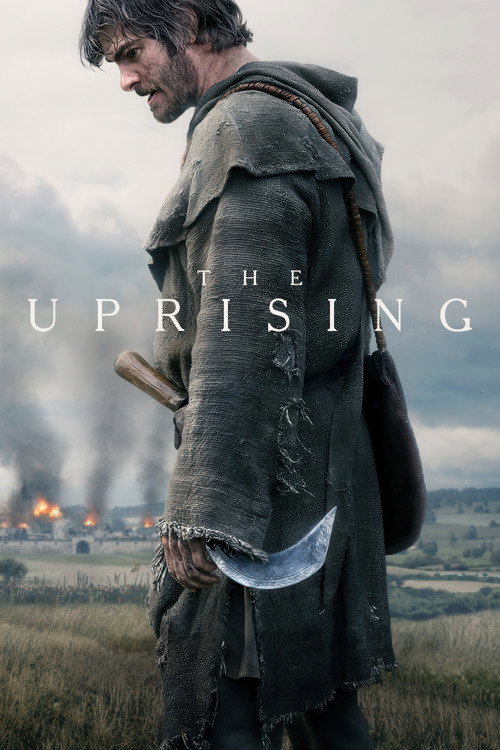
England in the mid-14th century stands on the brink of collapse as the Black Death wipes out nearly half the population and the Hundred Years' War drains the treasury. Director Paul Greengrass frames this historical moment with a handheld camera that places the viewer directly into the mud and blood of the peasant experience. The film introduces Ploughman, an anonymous farmer played by Andrew Garfield, who becomes the reluctant face of a movement born from starvation and oppressive taxation.
The narrative expands beyond a single village to capture the chaotic spread of the Peasants' Revolt across Essex and into London. Greengrass orchestrates large-scale scenes of unrest alongside intimate character moments, showing how ordinary people organize against the crown. The story weaves together the perspectives of radical priest John Ball, charismatic mercenary Wat Tyler, and the young King Richard II, creating a complex portrait of a society tearing itself apart over questions of rights and survival.
Rent
Availability and pricing can change. Confirm on the provider's site before purchasing.
The year is 1381, and the English countryside is a graveyard of sorts where the living struggle to survive the aftermath of the plague. Farmers like Ploughman work diminishing plots of land while facing relentless demands for taxes from corrupt local officials and the church hierarchy. The ruling class, led by the inexperienced King Richard II, imposes a new Poll Tax to fund their wars against France, ignoring the fact that the peasantry has already lost everything to disease and famine. When tax collectors arrive in Ploughman's village with brutal efficiency, threatening to seize his land and enslave his children, the farmer realizes that submission only leads to ruin.
Ploughman's awakening accelerates with the arrival of John Ball, a radical priest whose sermons preach a vision of social equality and divine justice. Ball's words resonate deeply with the oppressed masses, turning private grievances into public outrage. Together with Wat Tyler, a former soldier turned mercenary known for his fiery rhetoric, these three figures begin to organize a resistance that quickly spreads from Essex. What starts as a localized protest transforms into a massive, chaotic uprising involving thousands of peasants, craftsmen, and disenfranchised townsfolk.
The rebellion marches toward London, burning documents and looting aristocratic properties along the way. The film captures the raw intensity of this movement through Greengrass's signature immersive style, depicting violent confrontations with state forces and the internal fractures within the rebel camp. As the rebels approach the capital, they are joined by a diverse array of characters, including the Countess, who finds herself caught between loyalty to the crown and empathy for the common people, and Mayor Walworth, who represents the rigid authority of the merchant class.
The strategic brilliance of the peasant army shines as they capture key figures like Archbishop Sudbury and Chief Justice Bealknap, holding them hostage to negotiate terms with the King. The narrative focuses heavily on the ideological clash between the feudal order and the emerging demand for human rights. Tension mounts as the young King Richard II is forced to confront the scale of the threat to his throne, leading to high-stakes negotiations in the shadow of the Tower of London. The unity of the movement is tested by differing motivations and the fear of royal retribution, setting the stage for a dramatic standoff that will determine the fate of the revolution.
Official Trailer
UK Trailer
Teaser
Critical Consensus
Paul Greengrass delivers a visceral and visually arresting depiction of the Peasants' Revolt, anchored by Andrew Garfield's intense performance. However, the film struggles under the weight of its own historical ambition, occasionally sacrificing narrative clarity for chaotic spectacle. While the production values are high and the emotional stakes are palpable, the script feels muddled in its second act, and the heavy-handed comparison to Robin Hood detracts from the unique power of the actual historical events.
“Greengrass turns revolutionary rage into a Robin Hood origin myth, but the film is too often muddled by its own ambition and a confusing narrative structure.”
Peter Bradshaw
The Guardian
“A blood-boiling historical drama that captures the fury of the masses, though it sometimes loses its way in the fog of war and politics.”
Owen Gleiberman
Variety
“The Uprising is a fascinating mess, a film that knows exactly what it wants to say but lacks the discipline to say it clearly.”
David Ehrlich
IndieWire
“Garfield gives a career-defining turn as the faceless leader of the people, but the film's attempt to link the revolt to Robin Hood feels forced.”
Todd McCarthy
The Hollywood Reporter
“Visually stunning and emotionally draining, The Uprising is a necessary reminder of a forgotten chapter of history, even if it stumbles in its execution.”
Richard Roeper
Chicago Sun-Times
Andrew Garfield
Ploughman
Jamie Bell
John Ball
Cosmo Jarvis
Wat Tyler
Stephen Dillane
Archbishop Sudbury
Woody Norman
King Richard II
Jonny Lee Miller
Mayor Walworth
Katherine Waterston
Countess
Stanley Townsend
Chief Justice Bealknap
Thomasin McKenzie
Alyce
Tom Hollander
Treasurer Hales
Director
Paul Greengrass
Writer
Paul Greengrass
Composer
Volker Bertelmann
Cinematographer
Pål Ulvik Rokseth
Producers
Jason Blum, Paul Greengrass, Gregory Goodman, Joanna Kaye, Lars Sylvest
Academy Awards (2027)
Best Original Score: Nominated
Academy Awards (2027)
Best Production Design: Nominated
BAFTA Awards (2027)
Best British Film: Nominated
BAFTA Awards (2027)
Best Actor: Nominated
Golden Globe Awards (2027)
Best Motion Picture – Drama: Nominated
Join the community
fans discussing