 France
“The Tenant is a masterpiece of psychological terror, with Polanski creating a world so suffocating you can almost feel the walls closing in.”
Roger Ebert
Chicago Sun-Times
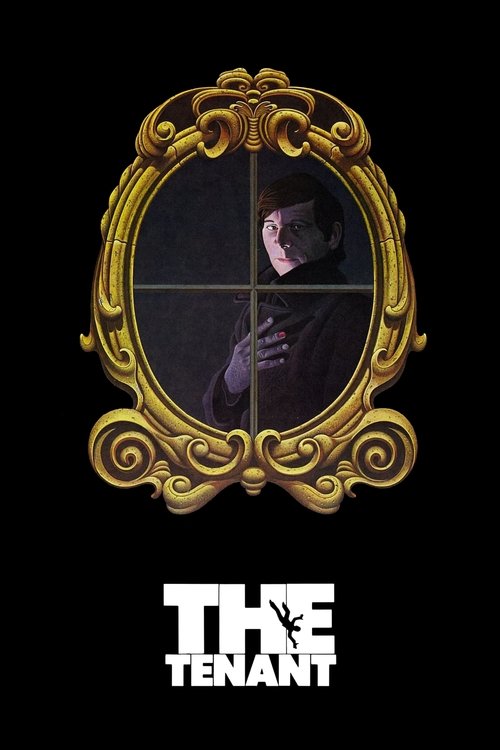
Roman Polanski directed and starred in this 1976 psychological horror film that explores the fragility of identity. The story follows Trelkovsky, a shy Polish man who moves into an apartment in Paris where the previous tenant, Simone Choule, committed suicide by jumping from her window. As he settles in, the building's residents begin to treat him with suspicion and hostility, whispering that he resembles Choule and expecting him to follow her fate.
The narrative unfolds as a claustrophobic study of paranoia and social pressure. Neighbors force Trelkovsky to wear Choule's clothes and mimic her mannerisms while his mental state deteriorates under their relentless scrutiny. Polanski crafted a surreal atmosphere where the line between reality and hallucination blurs, creating a tense environment that challenges the viewer's perception of truth.
Availability and pricing can change. Confirm on the provider's site before purchasing.
Trelkovsky arrives in Paris seeking a fresh start after fleeing Poland during World War II. He rents a modest apartment at 9 Rue des Moulins in the 6th arrondissement, unaware of the dark history attached to the space. The building exudes an oppressive atmosphere from the moment he steps inside, with walls that seem to close in on him. The previous occupant, Simone Choule, was a beautiful actress known for her eccentricity who recently took her own life by leaping from the very window Trelkovsky now occupies. Her death casts a long shadow over the residence, and the other tenants treat the new arrival with a mixture of pity, suspicion, and open hostility.
Upon moving in, Trelkovsky faces a barrage of strange behaviors from his neighbors. They whisper behind closed doors, make pointed comments about his uncanny resemblance to Choule, and seem to expect him to follow in her footsteps. Madame Dioz, the sharp-tongued concierge who runs the ground floor, treats him with cold indifference, while other residents offer unsolicited advice or menacing glares. Trelkovsky begins to feel constantly watched, and the boundaries between reality and hallucination start to blur. He hears voices and sees movements that are not there, growing increasingly isolated and paranoid.
The central conflict arises from the growing pressure exerted by the building's inhabitants, who appear determined to mold Trelkovsky into the image of his predecessor. They force him to wear Choule's clothes, mimic her mannerisms, and even attempt to dress him in drag. As Trelkovsky resists these impositions, his mental state deteriorates rapidly. Stella, a neighbor who lives nearby, becomes a focal point of his confusion. She appears friendly but harbors a dark secret, and her interactions with him are laced with ambiguity. Is she a potential ally, or is she part of the conspiracy against him?
Stella introduces Trelkovsky to a group of friends who seem to be orchestrating events around him. Her presence adds layers of mystery to an already tense atmosphere. Meanwhile, Trelkovsky's attempts to assert his independence only serve to alienate him further from the community. The building itself seems to come alive, its corridors stretching endlessly and its walls closing in on him. He begins to suspect that everyone in the building is complicit in a grand scheme to replace him with someone else, or perhaps to erase his existence entirely.
As the story progresses, Trelkovsky becomes more isolated and paranoid. His descent into madness accelerates, and he starts to believe that he is no longer Trelkovsky, but rather Simone Choule. The tension builds to a fever pitch as he struggles to maintain his grip on reality, all while the building's residents watch with a mix of anticipation and malice. The narrative serves as a masterful exploration of identity, isolation, and the psychological toll of societal pressure. Polanski crafts a world where the protagonist's sanity is eroded by the relentless expectations of those around him.
The film's genius lies in its ability to keep the audience guessing: is Trelkovsky truly losing his mind, or is he being manipulated by a group of people who have their own sinister agenda? The story unfolds with a slow-burning intensity, leading to a climax that challenges the viewer's perception of truth and identity. Every interaction feels charged with hidden meaning, and every glance from a neighbor carries a weight of unspoken threat. The setting becomes a character in itself, reflecting the internal turmoil of the protagonist.
Vinegar Syndrome Promo Trailer
Official Trailer
The Tenant (Roman Polanski, 1976) - Trailer
Critical Consensus
Critics praised The Tenant for its unsettling tone and stellar performances, noting how it captures the essence of identity crisis without relying on cheap thrills. The film remains a cult classic for fans of suspense and psychological drama.
“The Tenant is a masterpiece of psychological terror, with Polanski creating a world so suffocating you can almost feel the walls closing in.”
Roger Ebert
Chicago Sun-Times
“Polanski's direction is flawless, turning a simple story of identity loss into a haunting meditation on the fragility of the human psyche.”
Variety Staff
Variety
“A chilling, unforgettable descent into madness, with Isabelle Adjani delivering a career-defining performance.”
Vincent Canby
The New York Times
“Polanski's The Tenant is a tour de force of psychological horror, capturing the essence of paranoia in a way that feels both timeless and deeply personal.”
Peter Bradshaw
The Guardian
“A haunting, surreal journey into the depths of the human mind, with Polanski at the height of his powers.”
Eric Kohn
IndieWire
Roman Polanski
Trelkovsky
Isabelle Adjani
Stella
Melvyn Douglas
Monsieur Zy
Jo Van Fleet
Madame Dioz
Bernard Fresson
Scope
Shelley Winters
Concierge
Lila Kedrova
Madame Gaderian
Claude Dauphin
Husband at accident
Claude Piéplu
Neighbour
Rufus
Georges Badar
Director
Roman Polanski
Writers
Roland Topor, Gérard Brach, Roman Polanski
Composer
Philippe Sarde
Cinematographer
Sven Nykvist
Producer
Andrew Braunsberg
BAFTA Awards (1977)
Best Film Not in the English Language: Nominated
César Awards (1977)
Best Director: Won
César Awards (1977)
Best Actor: Won
César Awards (1977)
Best Cinematography: Won
Cannes Film Festival (1976)
Palme d'Or: Nominated
Saturn Awards (1977)
Best Horror Film: Nominated
Join the community
fans discussing