“A movie that makes you care deeply about characters who are locked up, that makes you feel you've been to prison even though you haven't, is a special kind of achievement.”
Janet Maslin
The New York Times
 United States
"Fear can hold you prisoner. Hope can set you free."
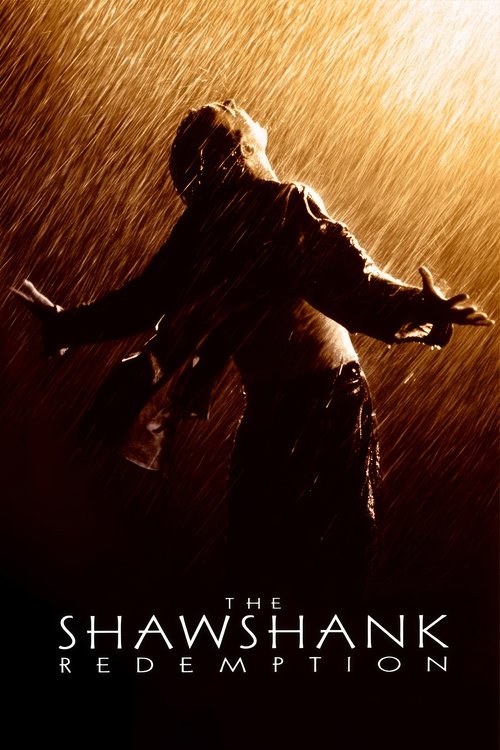
In 1994, Frank Darabont adapted Stephen King's novella Rita Hayworth and Shawshank Redemption into a film that would defy its modest box office performance to become one of the most cherished movies in history. Set in the brutal Shawshank State Penitentiary, the story follows Andy Dufresne, a quiet banker sentenced to two consecutive life terms for murders he did not commit. Over nearly two decades inside, Andy navigates the prison's corrupt administration, violent inmates, and the slow erosion of the human spirit, all while cultivating an unlikely friendship with fellow inmate Ellis Boyd 'Red' Redding.
The film's power lies not in dramatic escapes or violent set pieces, but in its patient, character-driven storytelling. Darabont's direction emphasizes small acts of defiance: Andy risking solitary confinement to play Mozart over the prison loudspeaker, building a library from donated books, and teaching a young inmate to read. These moments accumulate into a profound meditation on hope, institutionalization, and the quiet dignity of a man who refuses to let his environment define him. Roger Deakins' cinematography, Thomas Newman's haunting score, and career-defining performances from Tim Robbins and Morgan Freeman elevate the material into something transcendent.
Availability and pricing can change. Confirm on the provider's site before purchasing.
In 1947, Andy Dufresne, a vice president at a Portland bank, is convicted of murdering his wife and her lover despite maintaining his innocence. He is sentenced to two consecutive life terms at Shawshank State Penitentiary, a grim facility ruled by Warden Samuel Norton, a hypocritical man who preaches scripture while running a corrupt operation. On his first night, Andy remains silent while another inmate is beaten to death for crying, earning a measure of respect from the hardened population.
Andy soon meets Ellis Boyd 'Red' Redding, a longtime inmate who serves as the prison's black market supplier. Red initially bets that the quiet, well-dressed Andy will not survive his first night, but Andy surprises everyone with his resilience. Over the following months, Andy endures harassment from the 'sisters,' a predatory gang led by Bogs Diamond, who assault him repeatedly. He also observes the brutal tactics of Captain Byron Hadley, who beats inmates to death with little consequence.
Andy's skills as a banker eventually attract attention. While tarring the roof of the license plate factory, he overhears Hadley complaining about an inheritance tax. Andy risks approaching the captain and offers a legal solution to keep the money tax-free. In exchange, Hadley provides beers for the work crew, and the men share a moment of rare freedom on the rooftop. This incident establishes Andy's value to the guards and the warden.
Warden Norton soon co-opts Andy into his money-laundering scheme, using Andy's financial expertise to funnel illegal profits through a network of shell accounts. Andy, given a private cell and a reduced workload, begins to reshape his environment. He sends weekly letters to the state legislature requesting funds for a prison library, eventually receiving a donation of books and records. He also begins teaching inmates to read, including a young convict named Tommy Williams, who arrives with a fresh perspective and a secret that could prove Andy's innocence.
The central drama unfolds around Andy's dual life: outwardly cooperating with the prison's corrupt system while secretly maintaining his hope and planning his own path to freedom. Red, who has been denied parole multiple times, warns Andy that 'hope is a dangerous thing,' but Andy's calm persistence gradually changes Red's outlook. The prison's routine is punctuated by moments of rebellion: Andy playing an aria from Mozart's The Marriage of Figaro over the loudspeaker, earning two weeks in solitary but giving every inmate a fleeting taste of beauty. He also discovers that Warden Norton is using inmates for cheap labor and skimming funds from the prison budget.
Tommy Williams eventually reveals that he once shared a cell with a man who bragged about killing a banker's wife and her lover, providing the real murderer's name. Andy sees a path to exoneration, but when he brings this to Warden Norton, the warden refuses to reopen the case, fearing exposure of his own crimes. Instead, Norton arranges for Tommy to be murdered, and Andy is placed in solitary for months. When he emerges, he seems subdued, but Red notices a change in him. The film builds toward a resolution that has been decades in the making, with Andy's quiet endurance finally reaching a breaking point.
Trailer
Original Theatrical Trailer
Critical Consensus
A profoundly moving meditation on hope, friendship, and the resilience of the human spirit, The Shawshank Redemption transcends the prison genre through Frank Darabont's patient direction, career-best performances from Tim Robbins and Morgan Freeman, and Roger Deakins' luminous cinematography. Though overlooked at the box office, its emotional depth, memorable characters, and life-affirming message have earned it a permanent place as one of the most universally beloved films ever made.
“A movie that makes you care deeply about characters who are locked up, that makes you feel you've been to prison even though you haven't, is a special kind of achievement.”
Janet Maslin
The New York Times
“A deeply moving, quietly inspirational film that takes its time to unfold but ultimately delivers a powerful emotional payoff.”
Todd McCarthy
Variety
“The Shawshank Redemption is a story about hope, and it works because it is so patient. It is not about a prison break, it is about the way hope can sustain a person through the worst of circumstances.”
Roger Ebert
RogerEbert.com
“A movie of quiet power and enormous heart. Tim Robbins and Morgan Freeman give performances that rank among the year's finest.”
Peter Travers
Rolling Stone
“It has become a phenomenon… a film that speaks to the very best in all of us.”
Mark Kermode
The Guardian
Tim Robbins
Andy Dufresne
Morgan Freeman
Ellis Boyd 'Red' Redding
Bob Gunton
Warden Norton
William Sadler
Heywood
Clancy Brown
Captain Byron T. Hadley
Gil Bellows
Tommy Williams
James Whitmore
Brooks Hatlen
Mark Rolston
Bogs Diamond
Jeffrey DeMunn
1946 D.A.
Larry Brandenburg
Skeet
Neil Giuntoli
Jigger
Brian Libby
Floyd
Director
Frank Darabont
Writers
Frank Darabont, Stephen King
Composer
Thomas Newman
Cinematographer
Roger Deakins
Producer
Niki Marvin
Academy Awards (1995)
Best Picture: Nominated
Academy Awards (1995)
Best Actor: Nominated
Academy Awards (1995)
Best Adapted Screenplay: Nominated
Academy Awards (1995)
Best Cinematography: Nominated
Academy Awards (1995)
Best Film Editing: Nominated
Academy Awards (1995)
Best Original Score: Nominated
Academy Awards (1995)
Best Sound: Nominated
Golden Globe Awards (1995)
Best Actor – Motion Picture Drama: Won
Golden Globe Awards (1995)
Best Original Score: Won
Golden Globe Awards (1995)
Best Motion Picture – Drama: Nominated
Golden Globe Awards (1995)
Best Director: Nominated
Golden Globe Awards (1995)
Best Screenplay: Nominated
National Film Registry (2015)
Preserved: Won
Join the community
fans discussing