 Hungary
Overview
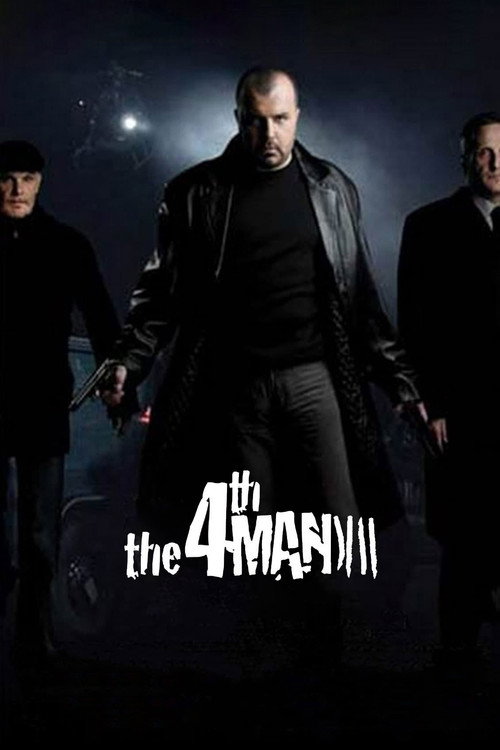
Dejan Zečević directs The Fourth Man, a gritty Serbian thriller that launched in February 2007 with a tight budget of $950,000. The story follows a man who wakes from a two-month coma with no memory after surviving a point-blank gunshot. He learns his wife and son were murdered, but the truth about his own role in their deaths remains hidden behind layers of amnesia and state secrets.
Nikola Kojo leads as the Major, a high-ranking officer from the Military Security Agency whose past is up for grabs. Dragan Petrović 'Pele' steps in as the Inspektor, a State Security agent pushing him to solve the crime, while Bogdan Diklić plays the Colonel who claims to be an old friend. The film weaves through a landscape of betrayal where every ally could be an enemy and every memory might be a lie.
PlotSpoiler-free
Major wakes up in a hospital bed in Belgrade, staring at a ceiling that feels both familiar and alien. His head throbs with a dull ache, and his mind is a blank slate. Doctors tell him he has been unconscious for two months following a shooting that killed everyone else in the car. When he finally pieces together fragments of his identity, he discovers a devastating reality: his wife and young son are dead. The police report lists the incident as a tragic accident, but Major senses something darker lurking beneath the official narrative.
Determined to find out what really happened, Major begins to investigate the events leading up to his coma. He tracks down his former colleagues and tries to reconstruct the timeline of his life before the accident. Each conversation reveals new contradictions. People he trusted now act strangely around him. Some avoid his gaze entirely, while others seem eager to steer him away from certain topics. The atmosphere grows thick with suspicion as Major realizes that his own memories might have been tampered with or erased by someone with access to his files.
Inspector Pele becomes a central figure in this web of deception. As a State Security agent, he has a vested interest in keeping certain truths buried. He offers Major help, yet his methods feel more like interrogation than assistance. The line between protector and pursuer blurs as Major digs deeper into the case. He uncovers evidence suggesting that his family's death was not random violence but a calculated hit ordered by someone within the agency itself.
As Major gets closer to the truth, he finds himself hunted by unknown forces. Shadows follow him through the streets of Belgrade, and phone calls go unanswered. He starts to question whether anyone can be trusted, including himself. The investigation turns into a personal nightmare as he confronts the possibility that he might be the killer he is searching for. Flashbacks fragment his vision, showing glimpses of a violent struggle that he cannot fully recall.
The tension escalates when Major discovers a connection between his unit and a series of disappearances that have plagued the city for years. He realizes that his coma was not an accident but a deliberate attempt to silence him. With nowhere left to turn, Major must rely on his instincts and whatever scraps of memory remain to expose the conspiracy before he disappears forever. The stakes are life and death, and the cost of the truth could be everything he has left.
Throughout the journey, the film explores themes of identity and guilt. Major struggles to distinguish between who he was and who he might have become. The narrative keeps viewers guessing as it shifts between present-day investigation and fragmented flashbacks. Every character holds a piece of the puzzle, but none are willing to share it freely. The mystery deepens with each revelation, creating a tense atmosphere that never lets up until the final moments.
By the time Major reaches the heart of the conspiracy, he faces a choice that will define his future. Will he seek justice for his family, or will he let the darkness consume him? The answer lies in the shadows of his own past, waiting to be uncovered. The film builds to a climax that challenges the audience to reconsider everything they thought they knew about the characters and their motivations.
Ending ExplainedSpoilers
Critical Reception
Critical Consensus
This Serbian thriller offers a tense exploration of memory and corruption. Critics noted strong performances from Nikola Kojo and Dragan Petrović 'Pele', though some found the plot twists predictable. The film succeeds in building atmosphere despite its limited budget, delivering a gripping narrative that keeps audiences engaged throughout.
Top Cast
Crew
Director
Dejan Zečević
Writers
Boban Jevtić, Dejan Zečević
Composers
Slobodan Negić, Nemanja Mosurović
Cinematographer
Goran Volarević
Producers
Slobodan Jocic, Nikolina Vučetić Zečević, Dénes Szekeres, Željko Mitrović, Marko Jocić
Keywords
Sources
Facts
- Status
- Released
- Original Language
- SR
- Budget
- $950,000
- Director
- Dejan Zečević
- Production
- PFI Studios, Viktorija Film, Tivoli Film Produkcio
Join the community
fans discussing