“A masterpiece of atmospheric horror, Lee's Duc de Richleau is a hero for the ages.”
Variety Staff
Variety
 United Kingdom
"When the devil rides, no soul is safe."
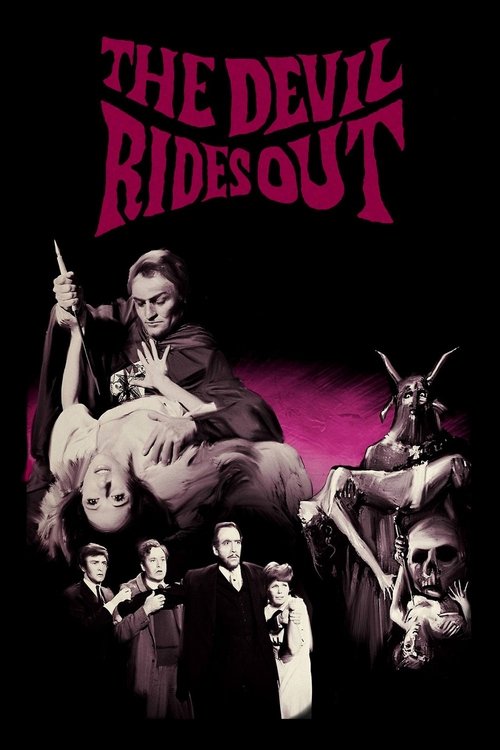
Christopher Lee returns as the Duc de Richleau in Terence Fisher's 1968 adaptation of Dennis Wheatley's novel, a film that marked a shift toward more serious literary horror for Hammer Studios. Unlike the studio's usual vampire and Frankenstein sequels, this story focuses on ritual magic and black arts with an earnest tone that resonated deeply with audiences seeking substance over spectacle. The production featured elaborate sets designed by Ken Adam and a thundering score by James Bernard that elevated the tension throughout.
The film opened to solid reviews in the United Kingdom but faced a truncated release in the United States where distributors feared the original title was too provocative. American audiences saw a version cut by nearly ten minutes under the name The Devil's Bride, which altered the pacing and impact of the narrative. Despite these hurdles, the movie has endured as a cult classic, praised for its atmospheric dread and Lee's commanding performance as a guardian against dark forces.
Availability and pricing can change. Confirm on the provider's site before purchasing.
London, 1920s. The Duc de Richleau (Christopher Lee) lives a quiet life dedicated to studying the occult and protecting humanity from supernatural threats. His peace shatters when he receives word that his old friend Rex Van Ryn (Leon Greene), a wealthy American, has been drawn into a dangerous circle of satanic worship. Richleau travels to Paris to investigate and finds Van Ryn under the spell of Mocata (Charles Gray), a charismatic Satanist who leads a coven devoted to the Goat of Mendes. Mocata believes he can harness demonic power to achieve immortality and has targeted Van Ryn as a vessel for his rituals.
The situation escalates quickly as Richleau discovers that Mocata plans to sacrifice two young women, Tanith Carlisle (Niké Arrighi) and Peggy Eaton (Rosalyn Landor), to transfer their souls to him. Richleau realizes that time is running out and that once the ritual begins, there will be no turning back. He enlists the help of Simon Aron (Patrick Mower), a former student who has become entangled in the cult's inner workings. Together they navigate a labyrinth of deception to track down Mocata's hidden sanctuary.
The narrative builds through a series of suspenseful encounters at a remote chateau where Mocata holds court. The atmosphere thickens with dread as the true nature of the sacrifices becomes clear. Richleau must use his knowledge of the occult to outmaneuver Mocata's minions while racing against the clock. The film explores themes of good versus evil and the corrupting influence of power as the allies face off against malevolent forces. Tension mounts until the final confrontation where the fate of Van Ryn and the two women hangs in the balance.
The Devil Rides Out / Official Theatrical Trailer (1968) HD
Critical Consensus
The Devil Rides Out stands as one of Hammer Film Productions' most sophisticated horror entries, blending gothic atmosphere with intellectual depth. Christopher Lee delivers a commanding performance as the Duc de Richleau, anchoring a tale of occult warfare that balances suspense with philosophical inquiry. While some critics note its pacing issues, the film's visual splendor and James Bernard's haunting score elevate it above typical genre fare.
“A masterpiece of atmospheric horror, Lee's Duc de Richleau is a hero for the ages.”
Variety Staff
Variety
“Fisher's direction is masterful, creating a world where the line between reality and nightmare blurs.”
Peter Bradshaw
The Guardian
“Richard Matheson's screenplay captures the essence of Wheatley's novel, delivering a tale of good vs. evil that feels both timeless and urgent.”
Michael Phillips
RogerEbert.com
Christopher Lee
Duc de Richleau
Charles Gray
Mocata
Niké Arrighi
Tanith Carlisle
Leon Greene
Rex Van Ryn
Patrick Mower
Simon Aron
Sarah Lawson
Marie Eaton
Paul Eddington
Richard Eaton
Rosalyn Landor
Peggy Eaton
Director
Terence Fisher
Writers
Dennis Wheatley, Richard Matheson
Composer
James Bernard
Cinematographer
Arthur Grant
Producer
Anthony Nelson Keys
BAFTA Awards (1969)
Best British Costume Design: Nominated
Hugo Awards (1969)
Best Dramatic Presentation: Nominated
Join the community
fans discussing