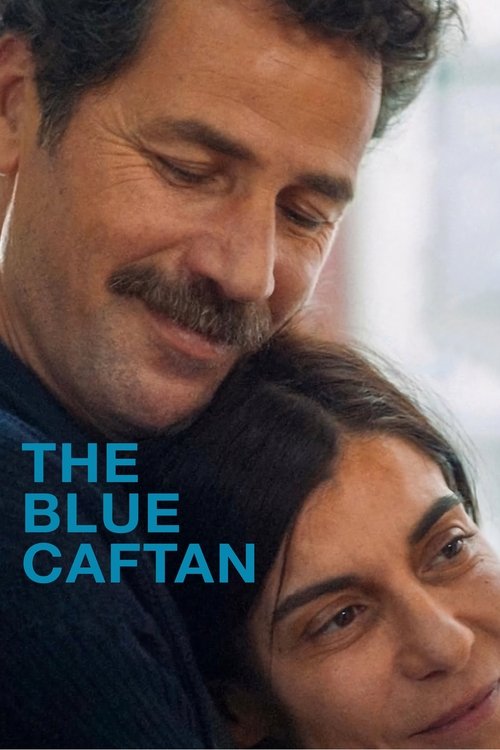
 Morocco
“A stunning, quietly revolutionary film directed with a gentle hand, allowing the characters' emotions to unfold naturally without forced drama.”
A.O. Scott
The New York Times
Set in the sun-drenched medina of Marrakech, The Blue Caftan unfolds as a quiet study of a marriage that has settled into a comfortable but distant routine. Mina and Halim have spent decades running a traditional hammam and tailor shop together, their bond forged through shared labor and mutual respect rather than overt passion. The film introduces them as pillars of their community, respected for their craftsmanship and dignity.
This equilibrium shatters with the arrival of Youssef, a handsome young man from the countryside seeking an apprenticeship. His entry into the household brings a vibrant energy that disrupts the established order, drawing Halim into a complex dynamic of mentorship and hidden desire. As the summer heat intensifies, the boundaries between professional duty and personal longing blur, forcing Mina to confront the silent fractures in her relationship.
Availability and pricing can change. Confirm on the provider's site before purchasing.
The story begins by establishing the rhythmic daily life within the walls of a traditional Moroccan bathhouse and the adjacent tailor shop in Marrakech. Mina, played by Lubna Azabal, manages the female side of the establishment with grace and authority, while her husband Halim, portrayed by Saleh Bakri, oversees the male clients and the tailoring work. Their partnership is defined by years of coexistence; they speak little of their inner lives, yet share a deep, unspoken understanding built on decades of shared history. The atmosphere is one of warmth and tradition, where the steam of the hammam and the scent of fabric create a sensory backdrop to their existence.
The narrative shifts when Youssef, a young man from a rural village, arrives at the shop seeking employment. He is eager to learn the trade of tailoring to support his family back home. Despite initial reservations about the cost and time required to train an apprentice, Halim is captivated by Youssef's charm and potential. The young man quickly becomes a fixture in their home, bringing a youthful vitality that contrasts sharply with the measured pace of the couple's life. As Youssef learns under Halim's guidance, the nature of their interactions evolves beyond simple instruction.
Halim finds himself increasingly drawn to Youssef, not just as a student but as a source of inspiration that challenges his own repressed feelings. The film captures these subtle shifts through lingering glances and moments of silence that speak volumes. Meanwhile, Mina watches these developments with a growing sense of unease. She notices the distance forming between her husband and herself, sensing a change in his demeanor that she cannot quite name. Her suspicion grows as she observes the intimacy developing between the two men, though she struggles to articulate the depth of her loss or the nature of the threat.
The setting itself plays a crucial role in the unfolding drama. The hammam serves as a space of revelation and secrecy, where the constraints of society are momentarily lifted, allowing for moments of genuine connection. The blue caftan, a garment central to Moroccan culture, becomes a symbol of identity and the fluidity of roles within this conservative society. As the story progresses, the tension builds through a series of intimate scenes that explore the hidden world of male relationships and the clandestine lives led within the community.
The film avoids melodramatic outbursts, relying instead on the power of understated performance and rich visual storytelling. It presents a nuanced portrait of a society grappling with modernity and tradition, where love can take many forms and where the courage to be honest about one's desires is both liberating and terrifying. The characters navigate the delicate balance between societal expectations and personal authenticity, leading to a climax that promises to redefine their understanding of love and loyalty without resorting to judgment or condemnation.
The Blue Caftan | Official Trailer HD
The Blue Caftan | Teaser
Critical Consensus
The Blue Caftan is a masterful exploration of love, identity, and tradition, delivered with visual splendor and emotional depth. Maryam Touzani crafts a narrative that is both intimate and universal, avoiding sensationalism while tackling complex themes of LGBTQ+ identity in a conservative society. The performances are understated yet powerful, creating a deeply moving experience that lingers long after the credits roll.
“A stunning, quietly revolutionary film directed with a gentle hand, allowing the characters' emotions to unfold naturally without forced drama.”
A.O. Scott
The New York Times
“A masterpiece of restraint and beauty where the visual poetry and the actors' nuanced performances create a deeply affecting portrait of a marriage in crisis.”
Peter Debruge
Variety
“Touzani's direction is precise and compassionate, offering a rare glimpse into the lives of LGBTQ+ individuals in Morocco with empathy and storytelling mastery.”
Peter Bradshaw
The Guardian
Lubna Azabal
Mina
Saleh Bakri
Halim
Ayoub Messioui
Youssef
Zakaria Atifi
Bachir
Mounia Lamkimel
Blue Caftan Client
Director
Maryam Touzani
Writers
Maryam Touzani, Nabil Ayouch
Composer
Kristian Eidnes Andersen
Cinematographer
Virginie Surdej
Producers
Nabil Ayouch, Les Films du Nouveau Monde, Velvet Films
Toronto International Film Festival (2022)
People's Choice Award: Nominated
African Movie Academy Awards (2023)
Best Actress: Won
African Movie Academy Awards (2023)
Best Director: Won
Fajr International Film Festival (2023)
Best Film: Won
Berlin International Film Festival (2023)
Special Mention: Won
Join the community
fans discussing