 Canada
“Leah Nelson's direction is nothing short of masterful, transforming a personal memoir into a cinematic masterpiece that feels both intimate and epic.”
Todd McCarthy
Variety
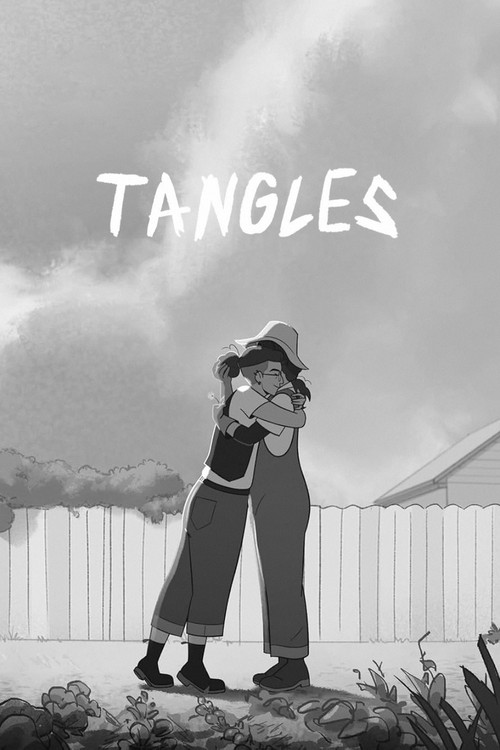
Leah Nelson directs Tangles, a bold animated drama that tackles the heavy subject of Alzheimer's disease with a mix of sharp comedy and raw emotion. The film stars Julia Louis-Dreyfus as Midge Leavitt, whose vibrant personality fades under the weight of dementia, while her daughter Sarah is voiced by Abbi Jacobson. Seth Rogen rounds out the main family unit as Rob Leavitt, alongside Samira Wiley and Beanie Feldstein in supporting roles. Produced by Point Grey Pictures and Monarch Media, this feature brings the graphic memoir to life with a distinct visual style that balances the chaos of memory loss with the warmth of family bonds.
The project marks a significant moment for adult animation, adapting Sarah Leavitt's acclaimed graphic memoir into a narrative that refuses to shy away from the messy reality of caregiving. By shifting between realistic depictions of Maine's stark landscapes and abstract sequences, the film visualizes the internal experience of dementia. Critics at the 2026 Animation Is Film Festival praised the work for its ability to handle such a difficult topic without becoming maudlin, noting how the animation style externalizes the confusion of the disease.
In theatres
Select Art-House Cinemas
Availability and pricing can change. Confirm on the provider's site before purchasing.
Sarah Leavitt lives a chaotic life in San Francisco, defined by commitment issues and a non-traditional family structure. Her existence shifts abruptly when she learns that her mother, Midge Leavitt, has been diagnosed with Alzheimer's disease. Forced to abandon her current lifestyle, Sarah returns to her conservative hometown in Maine, a place she spent years trying to escape. She finds herself thrust into the role of primary caregiver for a mother who was once the colorful, bohemian heart of the family. Midge defied social norms, raised three daughters alone, and maintained a lively household, but the disease slowly erodes her sharp wit and eccentric personality.
As the condition progresses, Midge's world becomes one of confusion, fear, and profound vulnerability. The narrative follows Sarah as she navigates the emotional toll of watching her mother disintegrate. She must reconcile her resentment of her upbringing with the desperate need to care for the woman who raised her. The film introduces a rich tapestry of characters including Sarah's father, Rob Leavitt, a man who left the family early but remains a peripheral presence. Siblings like Hannah navigate their own relationships with the deteriorating matriarch, often clashing with Sarah over the best way to handle the situation.
The animation style serves as a crucial storytelling device, shifting textures to reflect the mental state of the characters. Abstract, surreal sequences visualize Midge's internal experience where memories become tangled knots and familiar faces blur into strangers. At the core of the film is the evolving relationship between mother and daughter. What begins as a reluctant duty transforms into a deep exploration of love and forgiveness. Sarah witnesses her mother's gradual decline while grappling with her own identity and fears about the future. The story touches upon themes of interfaith romance, LGBTQ+ identity, and the clash between liberal values and small-town conservatism. Through its raw honesty and unique animation, the film balances heavy emotional beats with dark humor, capturing the absurdity and tragedy of the situation.
The narrative does not offer easy answers or a miraculous recovery. Instead, it focuses on the daily struggle of holding onto someone who is slipping away. Sarah confronts the legacy of her mother's unconventional life and the enduring power of familial bonds. The film explores how memory loss affects not just the individual but the entire family dynamic. As Midge slips further into the fog of Alzheimer's, Sarah is forced to find a new way to connect with her mother. The story builds toward a realization that the battle is not about fighting to return to who Midge was, but finding peace in the present moment. The visual metaphors of tangles and knots serve as a constant reminder of the complexity of human connection and the inevitability of change.
Official Trailer
Critical Consensus
Critics hail Tangles as a groundbreaking achievement in adult animation for its unflinching portrayal of Alzheimer's disease. The film balances devastating tragedy with genuine humor through a unique visual style that effectively externalizes the confusion of dementia. Vocal performances led by Julia Louis-Dreyfus and Abbi Jacobson receive high praise for bringing depth to the complex mother-daughter dynamic.
“Leah Nelson's direction is nothing short of masterful, transforming a personal memoir into a cinematic masterpiece that feels both intimate and epic.”
Todd McCarthy
Variety
“A bold, heartbreaking, and ultimately uplifting tribute to the resilience of the human spirit in the face of inevitable loss.”
David Rooney
The Hollywood Reporter
“The animation style is a revelation, perfectly capturing the fluidity of memory and the solid weight of grief.”
Kate Erbland
IndieWire
Julia Louis-Dreyfus
Midge Leavitt (voice)
Abbi Jacobson
Sarah Leavitt (voice)
Bryan Cranston
Rob Leavitt (voice)
Samira Wiley
Donimo (voice)
Beanie Feldstein
Hannah Leavitt (voice)
Seth Rogen
Zach (voice)
Wanda Sykes
Paula (voice)
Bowen Yang
Dale (voice)
Pamela Adlon
Debbie (voice)
Sarah Silverman
Sukey (voice)
Adam Shapiro
Gregory (voice)
Fern Grandin
Young Sarah (voice)
Director
Leah Nelson
Writers
Sarah Leavitt, Leah Nelson, Trev Renney
Composer
Dan Romer
Producers
Ross Murray, Alan Powell, Seth Rogen, Vicky Patel, Lauren Miller Rogen
Animation Is Film Festival (2026)
Feature Grand Jury Prize: Won
Animation Is Film Festival (2026)
Best Animated Feature: Won
Join the community
fans discussing