 United States
“It's a horror film that's not scary, a psychosexual thriller that isn't slick and horny enough, satire without a point and which isn't smart.”
In Review Online
In Review Online
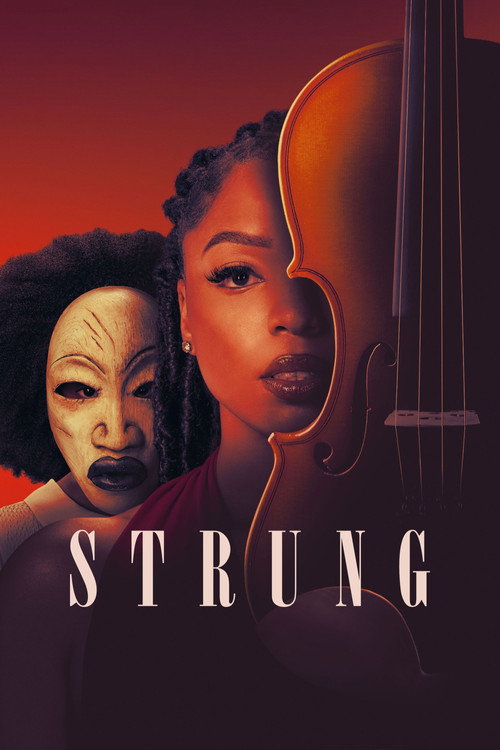
Malcolm D. Lee, best known for comedies such as Girls Trip and Barbershop, directed this psychological thriller from a screenplay by Alan B. McElroy. Chlöe Bailey plays Laila Calloway, a violinist whose career has stalled and who accepts a live-in tutoring position with a wealthy family presided over by Lynn Whitfield's Audra Jelani. The household also includes Lucien Laviscount as Marcus Walker and Anna Diop as Imani Walker, whose marriage shows visible strain. Blumhouse Productions produced the film with Peachtree & Vine, Blackmaled Productions and Universal Pictures; Tyler Perry is among the producers, a pairing that critics repeatedly identified as the source of the film's tonal split.
The picture premiered on June 18, 2026, and reached Peacock as a streaming original on June 26. It runs 1 hour 59 minutes and carries an R rating. Ali Shaheed Muhammad and Adrian Younge composed the score, and Greg Gardiner served as cinematographer. Box-office reporting lists a revenue of $8,570, a figure consistent with a subscription-first release rather than a wide theatrical rollout.
Stream
Availability and pricing can change. Confirm on the provider's site before purchasing.
Laila Calloway arrives at the Jelani estate with a violin case and a résumé that has gone quiet. She is a trained musician of real ability, but the film establishes early that her progress has been interrupted by something she does not discuss readily: the death of her sister, a loss that surfaces in fragments and informs nearly everything she does. The tutoring position, arranged through channels she does not fully question, offers steady income, a room in a beautiful house, and a student worth her time.
That student is Zuri Gaines, played by Romy Woods, a gifted girl whose talent Laila recognizes immediately. The household around Zuri is elegant and controlled. Audra Jelani, the matriarch, receives Laila with polished warmth and a watchfulness that never quite relaxes. Imani and Marcus Walker, whose marriage carries visible strain, move through the same rooms with their own tensions. Other figures come and go: Charmaine Stewart, Femi, Erik, Donovan, and the children in Laila's charge, including Andre. A social world opens up as well, with Jasmine and Reginald Garvey Bell, known as RGB, drawing Laila further into the family's orbit.
The work itself goes well at first. Laila pours herself into Zuri's development, and the music becomes the one area where both of them speak plainly. Around the lessons, though, small inconsistencies accumulate. A remark that does not match an earlier one. A room that is off limits. A version of the family's history that Laila cannot reconcile with what she has been told. She begins to ask questions, and the household answers them with deflection, then with pressure.
An affair develops, bringing desire and jealousy into an already unstable arrangement. The film uses this thread to complicate Laila's judgment: her involvement with a man inside the family's circle gives the household additional leverage over her, and it gives her reasons to doubt her own read on what is happening. The erotic undercurrent is not incidental. It is one more string being pulled.
As Laila pushes further into the family's past, the psychological pressure escalates. She is isolated from outside support, contradicted when she raises concerns, and gradually made to feel that her memory is the unreliable element in the house rather than the people around her. The film seeds the idea that her sister's death may connect to this family, though Laila does not yet have the pieces to see how. The violin remains her outlet. What she cannot say in conversation she plays, and the instrument becomes both her talent and her exposure.
By the final stretch, Laila is no longer deciding whether to keep the job. She is deciding whom to trust: the family that hired her, the man she has become involved with, or her own perception of events. The film builds toward a confrontation inside the house, with the answer to that question determining whether she leaves it.
Official Trailer
Critical Consensus
Reviewers found the film handsomely made and well performed, particularly by Chlöe Bailey and Lynn Whitfield, but tonally unsteady. The Blumhouse and Tyler Perry pairing trades sustained suspense for camp, and most notices agreed the picture is beautiful to look at and short on actual thrills.
“It's a horror film that's not scary, a psychosexual thriller that isn't slick and horny enough, satire without a point and which isn't smart.”
In Review Online
In Review Online
“The film falters on scares and devolves into comedic, campy chaos.”
Variety
Variety
“A far-fetched thriller that awkwardly mixes Blumhouse and Tyler Perry sensibilities, and a cautionary tale about following your gut.”
The Guardian
The Guardian
“Beautiful to look at but fails to deliver any thrills.”
The Movie Buff
The Movie Buff
“A familiar but fun tune.”
Bloody Disgusting
Bloody Disgusting
Chlöe Bailey
Laila Calloway
Lynn Whitfield
Audra Jelani
Lucien Laviscount
Marcus Walker
Anna Diop
Imani Walker
Romy Woods
Zuri Gaines
Coco Jones
Jasmine
Pardison Fontaine
Reginald Garvey Bell ("RGB")
Lebo Mashile
Femi
Langley Kirkwood
Erik
Donna Biscoe
Charmaine Stewart
Caellai-Joshua Hector
Andre
Luke Volker
Donovan
Director
Malcolm D. Lee
Writer
Alan B. McElroy
Composers
Ali Shaheed Muhammad, Adrian Younge
Cinematographer
Greg Gardiner
Producers
Tim Palen, Jason Blum, Dominique Telson, Malcolm D. Lee, Tyler Perry
Join the community
fans discussing