 Japan
“A masterpiece of suspense that builds a slow-burn terror, culminating in a scene that is both horrifying and beautiful in its execution.”
Roger Ebert
Chicago Sun-Times
Part of a Collection
Ring Collection
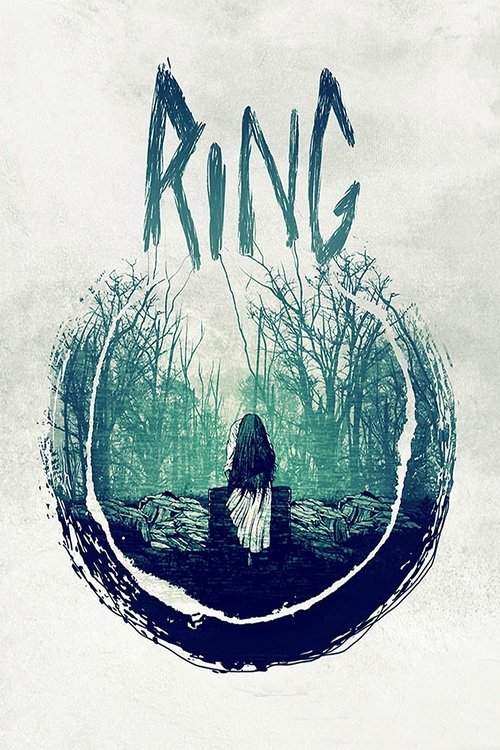
A grainy VHS tape circulates through the Japanese countryside, carrying a deadly message for anyone who watches it. The viewer dies exactly seven days later, and no one knows why or how to stop the clock. Reiko Asakawa, a sharp investigative journalist played by Nanako Matsushima, stumbles upon the cursed recording while looking into a series of mysterious deaths on an isolated island. Her curiosity turns into a race against time when she realizes the tape is linked to her own fate.
Directed by Hideo Nakata and adapted from Kōji Suzuki's 1991 novel, Ring arrived in Japanese theaters on January 31, 1998. The film quickly became a cultural phenomenon, sparking a wave of interest in J-horror globally. Its success demonstrated that domestic audiences were hungry for supernatural thrillers that blended modern anxieties with traditional folklore.
Availability and pricing can change. Confirm on the provider's site before purchasing.
The story begins with a series of unexplained deaths among teenagers in Japan. An urban legend spreads about a video cassette tape that kills anyone who views it within seven days. Victims receive a phone call before their death, leaving authorities baffled. Reiko Asakawa, a freelance journalist for a Tokyo magazine, investigates the disappearance of a friend's daughter who had recently watched such a tape. Reiko finds the tape in her nephew Yoichi's possession after he borrowed it from a rental shop. Despite her skepticism, she watches the disturbing footage featuring cryptic imagery like a well, a screaming woman, and strange symbols.
Immediately after viewing, Reiko receives the ominous phone call. She now has only one week to survive. Desperate to save herself and her son, she seeks help from Ryuji Takayama, a former classmate who works as a university professor specializing in parapsychology. Together they travel to Enoshima Island, the site of several recent fatalities, to uncover the truth behind the curse. Their investigation reveals the tragic history of Sadako Yamamura, a young girl born with powerful psychic abilities who was abused by her father and ultimately buried alive in a well.
Sadako's spirit transferred its malice onto the videotape, creating a supernatural vector for her vengeance. As Reiko and Ryuji decode the tape's hidden messages, they realize the curse operates on a specific rule: the cycle can be broken if the viewer copies the tape and shows it to someone else before the seventh day ends. This discovery forces them to confront a moral dilemma where survival requires passing the curse to another person. The tension builds as they race against time to find a loophole, navigating through dark forests and abandoned buildings while the ghostly presence of Sadako looms closer.
The narrative focuses heavily on the psychological toll of the impending doom rather than relying solely on jump scares. Reiko and Ryuji's journey becomes a descent into the past, forcing them to confront the human capacity for cruelty and the consequences of ignoring trauma. The atmosphere grows increasingly oppressive as the deadline approaches, blurring the lines between the living and the dead. Their final confrontation takes place in a setting that mirrors the nightmare depicted on the tape itself, leading to a desperate struggle against a force that seems omnipresent and unstoppable.
Vintage Theatrical Trailer
20th Anniversary Trailer [Subtitled]
Ringu (1998) - Official Trailer
Critical Consensus
Ring masterfully blends traditional Japanese folklore with modern technology to create a chilling atmosphere of dread. Hideo Nakata's direction and Nanako Matsushima's grounded performance elevate this adaptation of Koji Suzuki's novel into a timeless horror classic that relies on psychological tension rather than cheap shocks.
“A masterpiece of suspense that builds a slow-burn terror, culminating in a scene that is both horrifying and beautiful in its execution.”
Roger Ebert
Chicago Sun-Times
“Nakata's direction is precise and atmospheric, creating a sense of unease that lingers long after the credits roll.”
Variety Staff
Variety
“A haunting and intelligent horror film that redefines the genre with its focus on character and mood over gore.”
Peter Bradshaw
The Guardian
Nanako Matsushima
Reiko Asakawa
Hiroyuki Sanada
Ryuji Takayama
Rikiya Ôtaka
Yoichi Asakawa
Miki Nakatani
Mai Takano
Yuko Takeuchi
Tomoko Oishi
Hitomi Sato
Masami Kurahashi
Yutaka Matsushige
Yoshino
Yōichi Numata
Takashi Yamamura
Katsumi Muramatsu
Koichi Asakawa
Masako
Shizuko Yamamura
Rie Ino'o
Sadako Yamamura
Daisuke Ban
Dr. Heihachiro Ikuma
Director
Hideo Nakata
Writers
Hiroshi Takahashi, Kōji Suzuki
Composer
Kenji Kawai
Cinematographer
Junichiro Hayashi
Producers
Takashige Ichise, Shin'ya Kawai, Takenori Sentô
Japan Academy Prize (1999)
Best Picture: Won
Japan Academy Prize (1999)
Best Director: Won
Japan Academy Prize (1999)
Best Actress: Won
Mainichi Film Awards (1999)
Best Film: Won
Fantasia International Film Festival (1999)
Best Feature Film: Won
Sitges Film Festival (1998)
Best Film: Won
Join the community
fans discussing