 France
“Rififi is the greatest heist movie ever made, not because of the plot, but because of the execution. The silence is deafening, and the tension is unbearable.”
Roger Ebert
Chicago Sun-Times
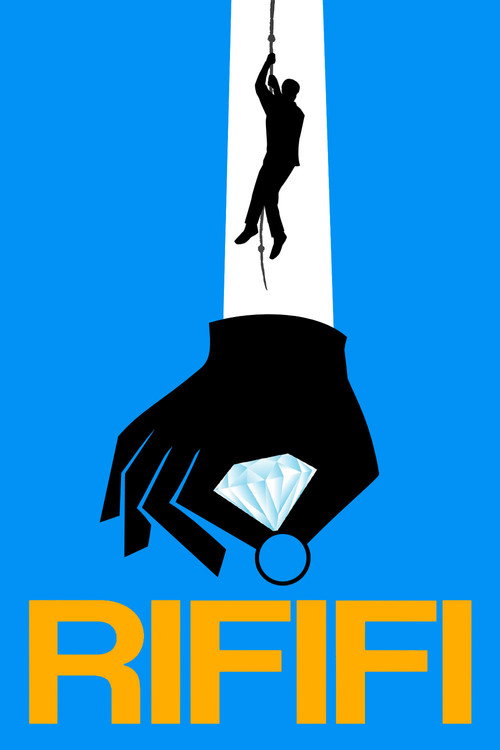
Jules Dassin's 1955 film Rififi follows Tony le Stéphanois, a professional jewel thief who has just served five years in prison. After his release, he refuses a quick job from his old partner Jo le Suedois until he learns that his former lover Mado is now involved with the ruthless gangster Louis Grutter. This personal betrayal pushes Tony to organize an elaborate heist that transforms a minor burglary into a high-stakes operation.
The narrative unfolds in the rain-slicked streets of Paris, where the crew must navigate a world governed by a fragile code of silence. Unlike many crime films of the era, the tension does not stem from car chases or gunfights but from the meticulous execution of a plan and the psychological weight of potential failure. The title itself refers to the French slang for trouble, foreshadowing the inevitable chaos that arises when human error intrudes upon a calculated scheme.
Stream
Availability and pricing can change. Confirm on the provider's site before purchasing.
Tony le Stéphanois stands on the precipice of retirement after spending five years behind bars for jewelry theft. He seeks a quiet life away from the criminal underworld, but his resolve crumbles when he discovers that Mado, the woman he once loved, has fallen under the control of Louis Grutter, known as Louis the Tattooed. Grutter runs a violent nightclub and treats Mado poorly, forcing her into a life of servitude. Driven by a protective instinct rather than greed, Tony decides to intervene by executing one final job that will secure enough money to get Mado out of the country and give him the funds to disappear entirely.
To pull off this feat, Tony assembles a team of specialists who represent the pinnacle of their respective trades. He recruits Jo le Suedois, a Swedish-born friend whose loyalty is tested by past grievances; Mario Ferrati, an Italian mechanic and safecracker who brings a jazz musician's patience to the task; and Pierre Grutter, the brother of the antagonist Louis, whose presence adds a layer of dangerous irony to the group dynamic. They target a jewelry store owned by a wealthy client, a location chosen for its security systems and the predictability of its schedule. The plan requires weeks of reconnaissance, studying alarm mechanisms, and rehearsing movements until they become muscle memory.
The preparation phase establishes a tone of absolute realism. The team avoids any spectacle, focusing instead on the mundane details of breaking and entering. They drill through the floor of the shop below the safe room, working in complete darkness to avoid detection. The script strips away the glamour often associated with bank robberies, showing the physical toll of the work: the strain of holding positions for hours, the discomfort of cramped spaces, and the constant fear of making a sound. Every tool is handled with care, and every movement is calculated to prevent even the slightest noise that could alert a guard or trigger a silent alarm.
As the night of the heist approaches, the interpersonal dynamics within the crew begin to fracture. Mario struggles with the monotony of waiting, while Jo harbors resentment toward Tony for past decisions. The looming threat of Louis Grutter hangs over them like a storm cloud, creating an atmosphere of paranoia where trust is a scarce commodity. The team knows that one slip-up could lead to their capture or death, yet they proceed, driven by a mix of camaraderie, necessity, and the need to save Mado. The setup builds a world where honor among thieves is fragile, and the stakes are higher than the value of the jewels they seek to steal.
The narrative moves toward a climactic sequence where the plan, designed to be flawless, faces the unpredictable nature of reality. The crew enters the shop, navigating a labyrinth of physical obstacles while maintaining absolute silence. The tension mounts as they work to crack the safe, relying on specialized tools and sheer concentration. The story creates a sense of impending doom, suggesting that despite their skill and planning, the chaotic nature of human existence will eventually intervene. The audience watches in anticipation, knowing that the perfect crime is a myth and that the true danger lies not in the police but in the men themselves.
Rififi (1955) ORIGINAL TRAILER [HD 1080p]
Rififi - Trailer
Critical Consensus
Critics universally praise Rififi for its groundbreaking approach to the heist genre, particularly the extended, dialogue-free sequence of the actual robbery. The film is celebrated for its atmospheric noir style, complex character dynamics, and the way it subverts expectations by focusing on the psychological toll of crime rather than action. It is often cited as a masterpiece of cinema that influenced generations of filmmakers.
“Rififi is the greatest heist movie ever made, not because of the plot, but because of the execution. The silence is deafening, and the tension is unbearable.”
Roger Ebert
Chicago Sun-Times
“A film of such intense concentration and visual clarity that it redefines the possibilities of the thriller genre. Dassin has created a masterpiece of suspense.”
Vincent Canby
The New York Times
“The heist sequence is a tour de force of editing and sound design, proving that less is often more in cinema. It is a film that demands your full attention and rewards it tenfold.”
Pauline Kael
The New Yorker
Jean Servais
Tony le Stéphanois
Carl Möhner
Jo le Suedois
Robert Manuel
Mario Ferrati
Janine Darcey
Louise
Pierre Grasset
Louis Grutter
Robert Hossein
Rémi Grutter
Marcel Lupovici
Pierre Grutter
Marie Sabouret
Mado
Jules Dassin
Cesar le Milanais
Director
Jules Dassin
Writers
Auguste Le Breton, René Wheeler, Jacques Larue, Jules Dassin
Composer
Georges Auric
Cinematographer
Philippe Agostini
Producers
Pierre Cabaud, René Bezard, Henri Bérard
Cannes Film Festival (1955)
Best Director: Won
Cannes Film Festival (1955)
Palme d'Or: Nominated
BAFTA Awards (1956)
Best Film from any Source: Nominated
Academy Awards (1956)
Best Writing, Story and Screenplay Based on Material from Another Medium: Nominated
Venice Film Festival (1955)
Best Actor: Won
Join the community
fans discussing