 Japan
Japan“Rashomon is a movie about an event perceived from different perspectives. Multiple incomplete observations show different stories about what happened, and the film forces us to question the very nature of truth.”
Roger Ebert
Chicago Sun-Times
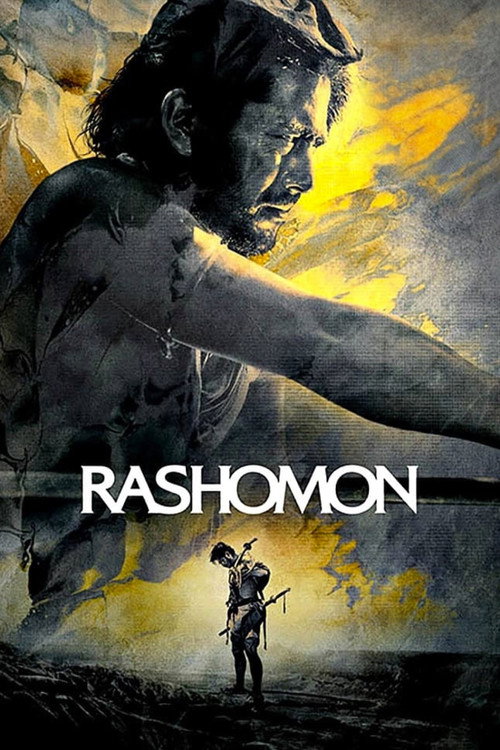
Akira Kurosawa's Rashomon shattered conventional storytelling when it arrived in Japanese theaters on August 26, 1950. The film follows four witnesses who stand near the Rashomon gate during a torrential downpour to recount the same violent event from their own perspectives. A samurai lies dead in the woods while his wife claims she was assaulted by a bandit named Tajômaru. Each character paints a different picture of the crime, forcing the audience to question whether truth exists at all or if everyone simply protects their own ego.
Toshirō Mifune delivers a wild performance as the bandit, while Machiko Kyō portrays the victim with haunting ambiguity. Takashi Shimura anchors the story as a weary woodcutter who witnessed the actual murder but kept silent. The production operated on a modest budget of $250,000 yet generated significant buzz through its innovative cinematography and psychological depth. Critics and audiences alike embraced the mystery, earning the film an impressive 8.03 out of 10 rating based on thousands of votes. This crime drama and mystery blend remains a cornerstone of international cinema for its bold exploration of human nature.
Availability and pricing can change. Confirm on the provider's site before purchasing.
The year is 12th-century Kyoto, and the great Rashomon Gate stands as a crumbling monument to a decaying society. Inside this shelter, three strangers huddle against a relentless monsoon storm: a common scavenger, a priest who has lost his faith, and a woodcutter who found bodies earlier that day. They discuss the moral rot spreading through Japan, noting how crime and dishonesty have become commonplace. Their conversation sets a grim stage before shifting to the forest where a brutal incident recently unfolded involving a young samurai, his wife, and a notorious bandit.
The narrative then fractures into three distinct accounts of the crime. First, the captured bandit Tajômaru tells his tale to the authorities. He describes himself as a fearless warrior who engaged the samurai in a fair duel. According to him, he defeated the nobleman in single combat after a fierce struggle. He claims the samurai's wife was so impressed by his prowess that she begged him to kill her husband so she could marry the bandit. In this version, the encounter is one of passion and honor, with the bandit emerging as a dominant figure who killed his opponent fairly.
The woodcutter then offers a conflicting story. He admits to hiding in the trees and watching the entire scene without intervening. His account strips away the heroism. He describes a clumsy, undignified fight where both men struggled poorly. The samurai was no match for the bandit, and the woman did not beg for death or offer herself. Instead, she demanded they fight to the death to decide her fate. The woodcutter implies the samurai died in a messy brawl rather than a glorious duel, painting a picture of cowardice and chaos rather than martial glory.
Finally, the wife Masako takes the stand. Her testimony shifts the blame entirely onto the bandit while portraying herself as a tragic figure. She says the bandit raped her and then asked her to choose between her husband and the criminal. When the two men fought over her, she fainted. Upon waking, she found her husband dead with a sword in his chest. She insists she does not know if he committed suicide or was killed in the scuffle, claiming she was too traumatized to see clearly. Each man tries to save his reputation, and the woman clings to her dignity, leaving the audience with a puzzle where every witness lies to make themselves look better.
The film builds tension through these shifting realities. The priest becomes increasingly disillusioned as each story reveals selfishness and deception. The group debates whether humanity can ever be trusted when everyone distorts the truth to protect their ego. The rain continues to pour outside the gate, mirroring the moral decay inside. The story forces the viewer to question the nature of justice and the reliability of memory without revealing the ultimate resolution of the woodcutter's silence or the final act of redemption that awaits them back at the gate.
BFI Re-Release Trailer
Rashômon (1950) ORIGINAL TRAILER [HD 1080p]
Critical Consensus
Akira Kurosawa's masterpiece shattered conventional storytelling norms by presenting a single event through four contradictory perspectives. It is a gripping psychological thriller that transcends its jidaigeki roots to explore the subjectivity of truth and the fragility of human morality. With revolutionary cinematography and powerhouse performances, it remains a timeless examination of the Rashomon Effect, proving that reality is often defined by the observer rather than the observed.
“Rashomon is a movie about an event perceived from different perspectives. Multiple incomplete observations show different stories about what happened, and the film forces us to question the very nature of truth.”
Roger Ebert
Chicago Sun-Times
“Kurosawa's truly daring film is still electrifying 70 years later. It is a visual symphony of light and shadow, a philosophical puzzle that never loses its power to disturb and delight.”
Peter Bradshaw
The Guardian
“A brilliant piece of cinema... Kurosawa has created a work of art that is both a thrilling mystery and a profound meditation on human nature.”
Howard Thompson
Variety
“One of the most fascinating films ever made... It is a story of murder and rape told from four different angles, each more convincing than the last.”
Bosley Crowther
The New York Times
Toshirō Mifune
Tajômaru
Machiko Kyō
Masako
Takashi Shimura
Woodcutter
Masayuki Mori
Takehiro
Minoru Chiaki
Priest
Kichijirō Ueda
Commoner
Director
Akira Kurosawa
Writers
Shinobu Hashimoto, Akira Kurosawa
Composer
Fumio Hayasaka
Cinematographer
Kazuo Miyagawa
Producer
Jingo Minoura
Golden Lion (1951)
Best Film: Won
Academy Awards (1952)
Best Foreign Language Film: Nominated
BAFTA Awards (1952)
Best Film from any Source: Won
National Board of Review (1952)
Top Ten Films: Won
Library of Congress National Film Registry (2006)
Preservation: Selected
Join the community
fans discussing