“A crushingly sad dementia drama that offers a startling portrait of intimacy. Binoche gives a performance of such quiet devastation that it leaves you breathless.”
Peter Bradshaw
The Guardian
 United Kingdom
User Score
4 votes
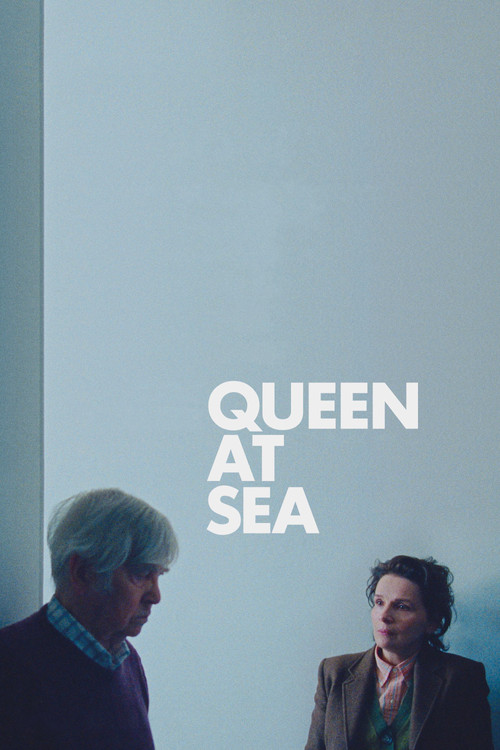
Lance Hammer returns to feature filmmaking after a twenty-year hiatus with Queen at Sea, a 2026 drama that dissects the erosion of identity caused by advanced dementia. The narrative centers on Amanda, a woman whose sharp wit and articulate voice slowly give way to confusion and silence. Her stepfather Martin assumes the role of primary caregiver following the death of Amanda's mother, creating a household charged with unspoken history and immediate medical urgency.
The film unfolds through the lens of Martin and Amanda's daughter Sara, who reenters the domestic sphere as her mother's condition deteriorates. Their interactions expose deep fractures in family dynamics as they grapple with the ethical weight of consent. When Amanda's autonomy clashes with necessary safety interventions, the trio faces a moral dilemma that spirals beyond their control, forcing them to question who truly holds authority over a mind that can no longer speak for itself.
Availability and pricing can change. Confirm on the provider's site before purchasing.
The story opens in a quiet British home where the routine of daily life is already disrupted by the subtle signs of decline. Amanda moves through rooms with a hesitation that suggests she is losing her footing in time and space. She speaks less often, and when she does, her words sometimes drift away from the conversation entirely. Martin watches these moments with a mixture of patience and exhaustion, knowing that the small gestures of care he performs now may soon be met with resistance or fear. The camera lingers on the silence between them, capturing the growing distance that forms not from malice but from the relentless progression of disease.
Sara arrives at the house with a sense of urgency that contrasts sharply with the slow pace of her mother's decline. She brings with her a desire to reconnect, yet her presence only highlights the generational divide in how the family processes grief and responsibility. Leslie, an older figure in their circle, adds further complexity to the situation with her own perspectives on aging and duty. As Amanda becomes more dependent, the boundaries between love and resentment blur. Small arguments over meals or clothing escalate into profound questions about dignity and control.
The tension reaches a breaking point when a specific decision regarding Amanda's living arrangements must be made. Martin believes one course of action is necessary for her safety, while Sara argues for preserving her remaining independence. This conflict draws in external forces, including social services represented by officers DC Emma Walker and PC Kate Brooks, who arrive to assess the situation. Their presence turns a private struggle into a public inquiry, adding legal and bureaucratic pressure to the emotional turmoil within the home.
As the days pass, Amanda's ability to navigate even simple tasks fades completely. She spends long periods staring out windows or sitting motionless, her mind wandering through fragments of memories that no longer make sense to those around her. The film captures these moments with a stark honesty, refusing to soften the blow of her disappearance. There are no dramatic explosions or sudden revelations; instead, the drama builds through the accumulation of small losses and the increasing isolation of the characters.
The final weeks of the narrative focus on the impossible choices the family must make. They debate the meaning of consent when the person unable to give it has already lost the capacity to understand. Martin and Sara find themselves at odds over every decision, from medical treatment to end-of-life care. The supporting cast, including characters like Jonathan and Victor, offer fleeting glimpses of alternative paths or shared burdens, but the core conflict remains centered on the three main figures. The story builds toward a confrontation where the characters must face the reality of their powerlessness, forcing them to accept that some things cannot be fixed.
Through intimate scenes of care and frustration, the film explores the limits of human endurance. It asks what remains of a person when their mind is gone and who truly owns their destiny. The narrative avoids offering easy answers, presenting instead a harrowing look at the ethical gray areas of caregiving. The journey is one of quiet devastation, leaving the audience to consider the heavy burden of making decisions for someone who can no longer participate in the conversation.
Official US Trailer
Official UK & IRE Trailer
Berlinale 2026 Clip
AFI Fest Preview
Critical Consensus
Shattering yet deeply compassionate, Queen at Sea confronts the emotional ravages of mental decline with unflinching honesty and outstanding performances. It is a masterclass in restraint, offering a portrait of intimacy that is both heartbreaking and necessary viewing for anyone facing the realities of aging.
“A crushingly sad dementia drama that offers a startling portrait of intimacy. Binoche gives a performance of such quiet devastation that it leaves you breathless.”
Peter Bradshaw
The Guardian
“Binoche anchors this boundary-pushing drama with a strength that feels almost physical. Hammer's unsentimental approach makes the emotional impact all the more potent.”
David Ehrlich
IndieWire
“Queen at Sea confronts old age with bitter empathy, refusing to offer false hope. It is a film that demands to be felt rather than just watched.”
Richard Brody
The New Yorker
“A powerful examination of consent and care. The chemistry between Binoche and Courtenay is electric with unspoken grief.”
Todd McCarthy
The Hollywood Reporter
“Hammer's second feature is a masterpiece of restraint. It captures the quiet tragedy of losing oneself in a way that feels both specific and universal.”
A.O. Scott
The New York Times
Juliette Binoche
Amanda
Tom Courtenay
Martin
Anna Calder-Marshall
Leslie
Florence Hunt
Sara
Steven Cree
Jonathan
Michelle Jeram
DC Emma Walker
Elizabeth Rushbrook
PC Kate Brooks
Noah Hunt Basden
Victor
Liani Samuel
Frida
Jean Pemberton
Gemma
Cody Molko
James
Joe Horsford
Luke
Director
Lance Hammer
Writer
Lance Hammer
Cinematographer
Adolpho Veloso
Producers
Tristan Goligher, Lance Hammer
Berlin International Film Festival (2026)
Best Actress: Won
Berlin International Film Festival (2026)
Golden Bear: Nominated
AFI Fest (2026)
Audience Award for Best Narrative Feature: Won
London Film Festival (2026)
Best British Film: Nominated
London Film Festival (2026)
Best Actress: Nominated
Join the community
fans discussing