 United Kingdom
Overview
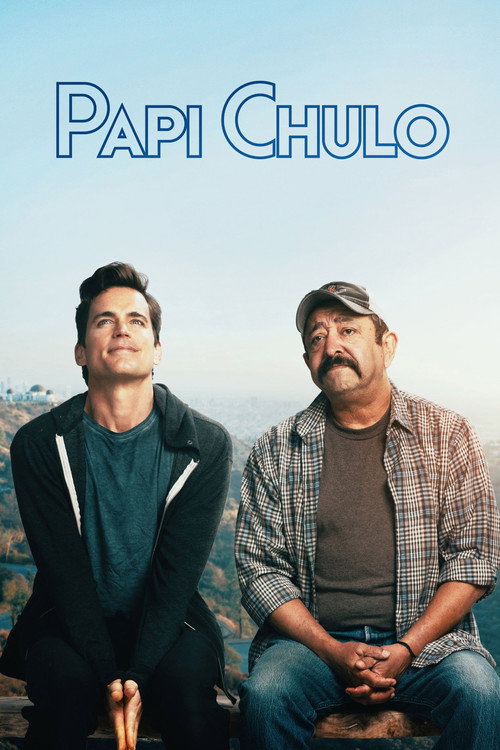
John Butler wrote and directed Papi Chulo, a comedy-drama that premiered at the Toronto International Film Festival in September 2018 and reached US theaters through Breaking Glass Pictures on June 7, 2019. Matt Bomer plays Sean, a Los Angeles television weatherman whose easy on-camera charm conceals a private collapse following a breakup. Alejandro Patiño is Ernesto, the day laborer Sean hires to repaint his deck and then keeps on the payroll for reasons that have little to do with carpentry.
The film is an Irish-British production shot in Los Angeles, a configuration Butler has described as a way to filter an American story through an outsider's eye. It runs 98 minutes, carries an R rating, and was made on a modest independent budget. Butler's previous features, The Stag and Handsome Devil, also trade in male loneliness and awkward social negotiation, though Papi Chulo strips away the ensemble structure to focus on two men and a deck.
Critical response divided along predictable lines. Reviewers praised Bomer's willingness to play unlikable and Patiño's steady, unshowy counterweight, while others found the employer-employee dynamic uncomfortable in ways the film did not fully interrogate. The IMDb rating sits at 5.3 from a small sample of 37 votes, a figure too thin to carry much weight. Wendi McLendon-Covey appears as Ash, Sean's producer, and Elena Campbell-Martinez plays Linda, filling out the professional world Sean is drifting away from.
PlotSpoiler-free
Sean works the weather desk at a Los Angeles television station, and he is good at it. He smiles, he gestures at maps, he makes small talk with the anchors. The job suits a certain kind of handsome, easy manner, and Sean has that manner in abundance. What the job does not suit is the rest of his life, which has recently come apart. A relationship ended, and Sean has not found a way to be alone with the aftermath. He cries in his car. He talks too much at parties. He cannot sit still.
The deck of his hillside house needs repainting, or so Sean decides one morning. Outside a hardware store he finds Ernesto, a middle-aged Latino day laborer waiting for work. Sean hires him. The job is straightforward, a few days at most, and Ernesto approaches it with the professional patience of a man who has painted many decks. He has a family, a routine, and a clear sense of where his working life ends and the rest of it begins. Sean, watching from the doorway, does not share that clarity.
What follows is a slow, excruciating campaign of extension. Sean overpays. He buys lunch and insists Ernesto eat it with him. He finds new tasks, new reasons for Ernesto to stay past the agreed hour. The painting becomes incidental. Sean is not really hiring a painter. He is trying to hire a friend, or a therapist, or someone who will sit with him without asking him to explain why he needs sitting with. Ernesto accepts the money and the work but keeps his distance, and the film watches Sean bump against that distance again and again.
At the station, Sean's producer Ash watches him with mounting concern. She has seen the cracks before, or thinks she has, and she is not sure what to do about them. Linda, Stan, Tom, Mike, and Devan drift through Sean's orbit, colleagues and acquaintances who sense something is wrong but lack the standing to name it. Sean's attempts to connect with them are as clumsy as his attempts to connect with Ernesto, though less expensive.
Butler shoots the deck scenes in long, patient takes, letting silences stretch. The comedy, when it comes, is uncomfortable rather than broad: Sean saying the wrong thing, Ernesto responding with a polite non-answer, the camera holding on both of them. The film is honest about the power imbalance at its center. Sean has money and mobility and the presumption of friendliness. Ernesto has a job and a family and a right to be left alone. Sean keeps forgetting that last part.
As the weeks pass, the painting slows to a crawl. Sean's neediness grows more overt, and Ernesto's patience thins. The film builds toward a confrontation that is not really a confrontation, more a quiet refusal, and it withholds the resolution that a conventional comedy would supply. Sean is left with himself, which is where he started, though perhaps with a slightly clearer view of what he has been doing.
Ending ExplainedSpoilers
Trailers
Papi Chulo (2019) Official Trailer | Breaking Glass Pictures Movie
PAPI CHULO - Official Trailer
Critical Reception
Critical Consensus
Reviews were mixed. Critics generally praised Bomer's against-type, vulnerable performance and the film's willingness to sit with loneliness and awkwardness, while faulting its uneven tone and its handling of the employer-employee dynamic between Sean and Ernesto. The film was seen as a small, character-driven piece whose central performances carry more weight than its plotting.
Top Cast
Matt Bomer
Sean
Alejandro Patiño
Ernesto
Elena Campbell-Martinez
Linda
Wendi McLendon-Covey
Ash
Michael Shepperd
Stan
Tommie Earl Jenkins
Tom
Shaughn Buchholz
Mike
Brandon Kyle Goodman
Devan
Top Characters
Crew
Director
John Butler
Writer
John Butler
Composer
John McPhillips
Cinematographer
Cathal Watters
Keywords
Sources
Facts
- Status
- Released
- Original Language
- EN
- Director
- John Butler
- Runtime
- 1h 38m
- Rating
- R
- Premiere
- Toronto International Film Festival, September 2018
- US Distributor
- Breaking Glass Pictures
Join the community
fans discussing