 Spain
Spain

“Mr. Almodóvar has made a film that is at once a celebration of his craft and a meditation on the costs of a life devoted to art.”
A.O. Scott
The New York Times
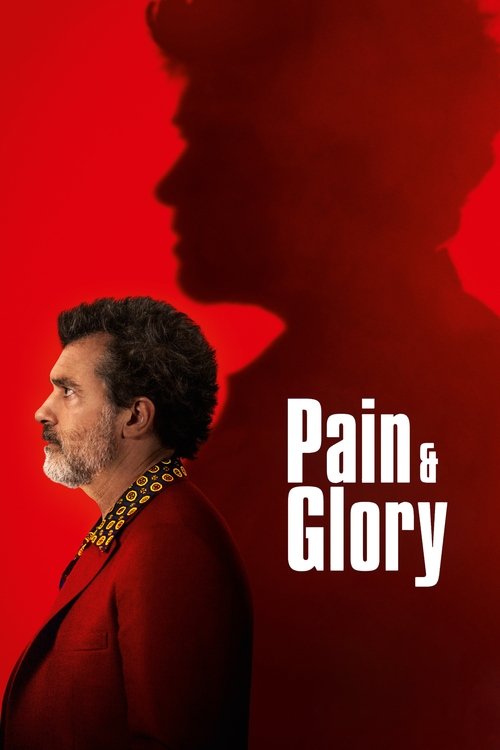
Pedro Almodóvar crafted a deeply personal drama that blurs the line between fiction and autobiography. The film follows Salvador Mallo, an aging filmmaker played by Antonio Banderas, who faces a creative crisis while grappling with physical pain and fading memories. Set against the backdrop of Spain from the 1960s to the present day, the story explores how a man's past shapes his artistic output when he can no longer separate his life from his work.
This project marks a significant moment for both the director and his long-time collaborator. Almodóvar channels his own history into the character, drawing on his childhood in Valencia and his struggles with back pain. The narrative structure mirrors Salvador's fractured psyche, oscillating between his present-day struggles and vivid flashbacks to different eras of his life. It is a meditation on the creative process, suggesting that true art requires the artist to be honest about their flaws and scars.
Stream
Availability and pricing can change. Confirm on the provider's site before purchasing.
Salvador Mallo exists in a state of suspended animation within a sterile, minimalist apartment in Madrid. Once the celebrated auteur of the 1960s and 70s, Salvador now lives haunted by chronic back pain that renders him nearly immobile. His physical suffering matches a creative drought; he has not made a film in years, his mind fogged by medication and his spirit dampened by the fading memories of his past. The narrative structure mirrors Salvador's fractured psyche, oscillating between his present-day struggles and vivid flashbacks to different eras of his life, creating a non-linear tapestry of memory and regret.
The story begins with Salvador's attempt to reconnect with his roots to spark his creativity. He travels to his childhood home in Paterna, Valencia, to meet his elderly mother, Jacinta, whose sharp wit and enduring love provide a grounding force amidst Salvador's chaos. Their relationship is complex, marked by a deep bond that Salvador both cherishes and feels guilty for neglecting as he pursued his career. This journey triggers a cascade of recollections, transporting the audience to the vibrant, sun-drenched streets of 1960s Spain. We see a young Salvador discovering cinema, falling in love with the art form, and forming a lifelong friendship with Federico Delgado, a charismatic but troubled actor who becomes the muse for Salvador's early films.
Federico represents the glory of Salvador's youth, wild, talented, and unapologetically alive. However, their relationship is complicated by Salvador's repressed homosexuality and the societal pressures of Francoist Spain. The film explores the duality of Salvador's existence: the public persona of the successful director versus the private man grappling with addiction, loneliness, and the fear of irrelevance. As Salvador attempts to remake his old movie, Sabor, he encounters new challenges, including working with a younger, arrogant actor named Alberto Crespo, who reminds Salvador of his own youthful arrogance and the fleeting nature of fame.
Throughout the film, Salvador is drawn into a web of relationships that define his identity. There is Zulema, a former lover and fellow artist who offers a different kind of emotional anchor, and Mercedes, a woman from his past who represents a path not taken. The central conflict is internal: Salvador must confront the pain of his past, the loss of loved ones, the shame of his secrets, and the physical deterioration of his body, to find the strength to create again. He realizes that his art cannot exist in a vacuum; it is inextricably linked to the people he has loved and lost.
As the plot progresses, Salvador's health worsens, forcing him to rely on others and face his mortality. He visits a doctor who prescribes powerful opioids, leading to a harrowing depiction of drug dependency and withdrawal. The narrative builds toward a moment of reckoning where Salvador must decide whether to let his pain consume him or to embrace the full spectrum of his experiences, both the glory and the agony. The film is a meditation on the creative process, suggesting that true art requires the artist to be honest about their flaws and scars. It is a story about the necessity of forgiveness, not just from others, but from oneself, as Salvador navigates the twilight of his career and the inevitable approach of death. The tension lies in whether he can reconcile his fragmented self and find the courage to make one last, meaningful work before time runs out.
Official Intrigue Trailer
Official Love and Family Trailer
Official Festival Trailer
Critical Consensus
Pain and Glory stands as a deeply personal masterpiece from Pedro Almodóvar, blending autofiction with universal themes of aging, memory, and redemption. Antonio Banderas delivers a career-defining performance, anchoring a visually stunning and emotionally resonant narrative that blurs the lines between the director's life and his art.
“Mr. Almodóvar has made a film that is at once a celebration of his craft and a meditation on the costs of a life devoted to art.”
A.O. Scott
The New York Times
“A bittersweet perfection, a film of such tender, heartbreaking honesty that it feels like a gift from the director to his audience.”
Peter Bradshaw
The Guardian
“Banderas gives a performance of rare depth and vulnerability, capturing the fragility of an aging artist with poignancy and grace.”
David Rooney
The Hollywood Reporter
“Almodóvar has crafted a film that is both a love letter to his own life and a profound exploration of the human condition.”
Owen Gleiberman
Variety
Antonio Banderas
Salvador Mallo
Asier Etxeandia
Alberto Crespo
Leonardo Sbaraglia
Federico Delgado
Nora Navas
Mercedes
Julieta Serrano
Old Jacinta
Penélope Cruz
Jacinta (Younger)
Cecilia Roth
Zulema
Asier Flores
Young Salvador
Director
Pedro Almodóvar
Writer
Pedro Almodóvar
Composer
Alberto Iglesias
Cinematographer
José Luis Alcaine
Producers
Esther García, Agustín Almodóvar
Academy Awards (2020)
Best Actor: Won
Academy Awards (2020)
Best Original Screenplay: Nominated
Cannes Film Festival (2019)
Best Actor: Won
Cannes Film Festival (2019)
Palme d'Or: Nominated
Golden Globe Awards (2020)
Best Foreign Language Film: Nominated
BAFTA Awards (2020)
Best Film Not in the English Language: Nominated
European Film Awards (2019)
Best Actor: Won
Join the community
fans discussing