 Italy
Italy“An intense and passionate Netflix love story that captures the soul of 1970s Rome.”
The Viewers Perspective
The Viewers Perspective
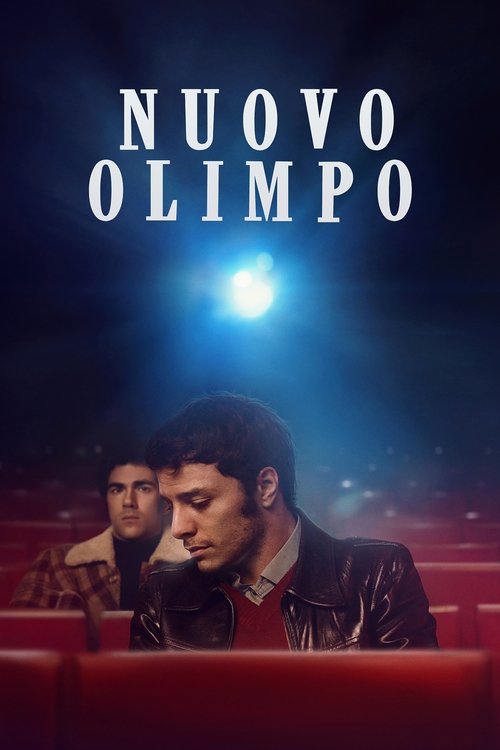
Ferzan Özpetek returns to the vibrant streets of 1970s Rome with Nuovo Olimpo, a tender drama that explores how love transcends time and memory. The film follows Enea, played by Damiano Gavino, whose life shifts when he meets Pietro, portrayed by Andrea Di Luigi, during a quiet evening at a cinema. Their connection sparks an intense romance that defies the social constraints of the era, yet their bond faces a devastating separation that tests the very nature of their relationship.
This production marks the director's first collaboration with Netflix, bringing his signature visual style to a global streaming audience. The narrative spans three decades, capturing the evolution of Italian society while focusing on the private world of two men separated by fate. Critics have noted the film's lush cinematography and the palpable chemistry between its leads as it navigates themes of longing and loss.
Availability and pricing can change. Confirm on the provider's site before purchasing.
The story unfolds in Rome during the late 1970s, a period defined by political unrest and shifting social norms. Enea finds himself drawn into a whirlwind romance with Pietro after their chance meeting at a local movie theater. Their attraction is immediate and overwhelming, leading to a passionate affair that serves as both a refuge and a rebellion against the conservative attitudes prevalent in Italy at the time. They immerse themselves in a secret world where they can be fully open with one another, sharing intimate moments amidst the bustling city streets and quiet corners of the capital.
As their relationship deepens, the couple builds a life together filled with youthful optimism and fierce devotion. They navigate the challenges of being a gay couple in a society that often turns a blind eye or actively opposes their existence. The film captures the texture of their days, from shared meals to stolen kisses, establishing a foundation of trust and understanding that seems unbreakable. Supporting characters like Titti and Giulia provide a window into the broader social circle, highlighting the isolation the pair feels despite being surrounded by people.
A sudden tragedy interrupts their happiness, forcing an abrupt end to their life together. The event that drives them apart is not a result of misunderstanding or external persecution but a tragic accident born of fear and bad timing. This separation casts a long shadow over their lives, leaving both men to grapple with profound grief and the question of whether they can ever find peace without the other. The narrative then shifts focus to follow their individual journeys over the next thirty years.
Enea attempts to rebuild his life, struggling with the void left by Pietro's absence while trying to form connections with others. He carries the weight of his lost love, finding it difficult to move forward when his heart remains anchored in the past. Meanwhile, Pietro deals with his own demons, haunted by the memory of what could have been. The film weaves through different eras of Italian history, reflecting the changing times while the core emotional truth of their separation remains constant.
Decades pass, marked by memories resurfacing and the quiet ache of longing that defines their existence. The tension builds toward a pivotal moment of reckoning as the question arises whether two souls so deeply connected can ever truly be separated by time and circumstance. Moments of near-reunion and shared glances suggest a pull that cannot be ignored. The story beats lead to a climax that forces both men to confront the reality of their aging selves and the time lost.
The film culminates in a powerful exploration of whether love, once lost, can be reclaimed or if it must remain a beautiful, painful ghost haunting the present. It serves as a meditation on the nature of memory and the idea that those we love never truly leave us, existing forever in the spaces between our thoughts and hearts. The narrative does not offer a traditional happy ending but rather a resolution rooted in acceptance and spiritual connection.
Official Trailer [Subtitled]
Critical Consensus
Critics widely praise Nuovo Olimpo for its lush visual style and the palpable chemistry between Damiano Gavino and Andrea Di Luigi. While some reviewers found the three-decade span occasionally turgid or melodramatic, the film is celebrated for its tender portrayal of queer love and its ability to evoke deep empathy for characters trapped by time and fate. Özpetek's direction is seen as a return to form, blending nostalgia with emotional depth.
“An intense and passionate Netflix love story that captures the soul of 1970s Rome.”
The Viewers Perspective
The Viewers Perspective
“Ferzan Özpetek returns to form with a remarkable Italian drama about the enduring power of love.”
Film Review Daily
Film Review Daily
“Smart but unsatisfying... a tale of longing that hits hard but lacks narrative punch.”
But Why Tho?
But Why Tho?
“A steamy new gay Netflix movie that succeeds in making the audience feel every beat of the heartbreak.”
Yahoo News
Yahoo News
Damiano Gavino
Enea
Andrea Di Luigi
Pietro
Luisa Ranieri
Titti
Greta Scarano
Giulia
Aurora Giovinazzo
Alice
Alvise Rigo
Antonio
Director
Ferzan Özpetek
Writers
Ferzan Özpetek, Gianni Romoli
Cinematographer
Gian Filippo Corticelli
Producers
Tilde Corsi, Gianni Romoli
Join the community
fans discussing