“Ford has made a movie that is as beautiful as it is brutal, a work of art that demands to be seen and felt.”
A.O. Scott
The New York Times
 United States
"Some stories hurt more than others."
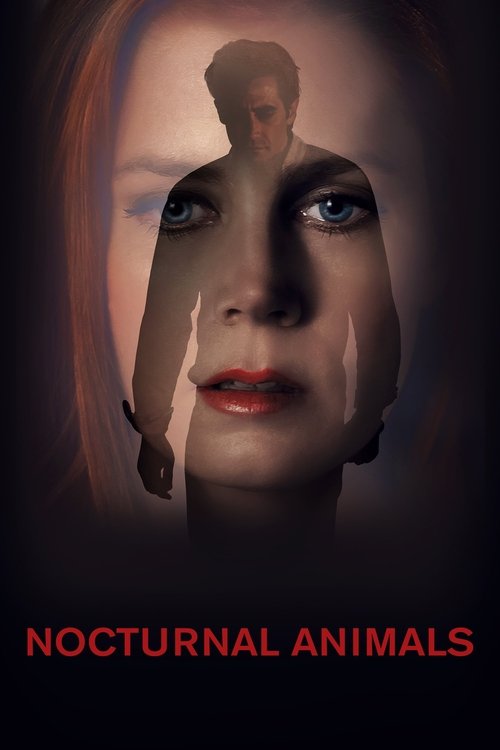
Tom Ford's directorial debut transforms Austin Wright's novel Tony and Susan into a visual masterpiece that dissects regret with surgical precision. The film premiered at the Venice Film Festival in September 2016, where it garnered immediate attention for its stark aesthetic and unflinching narrative structure. Ford brings his background in high fashion to the screen, creating a world of cold minimalism that contrasts violently with the raw brutality of the story within the story.
Amy Adams delivers a career-defining performance as Susan Morrow, a woman whose life of luxury feels increasingly hollow as she confronts her past. The movie explores how choices made decades ago can echo through time, leaving scars that never truly heal. With a budget of $22.5 million, the production achieved a look that feels both timeless and urgently modern, relying on lighting and composition rather than exposition to convey emotion.
Availability and pricing can change. Confirm on the provider's site before purchasing.
Susan Morrow lives a polished existence in an Upper East Side penthouse, surrounded by art and wealth but devoid of genuine connection. Her marriage to Hutton Morrow is a facade; he is an artist who has been unfaithful with Susan's best friend and sister-in-law, Laura Hastings. Despite the chaos in her personal life, Susan maintains a public image of composure while preparing for Hutton's new exhibition. The routine of her days shatters when a package arrives from Edward Sheffield, the man she left twenty years ago to chase social status. Edward is now a celebrated novelist, and he has sent her the manuscript of his latest book titled Nocturnal Animals.
As Susan begins reading the manuscript, the film shifts between two distinct realities. The first timeline follows Susan in her sterile apartment, where she reads the pages by lamplight while the city sleeps outside. The second timeline plunges us into the Texas desert, where Tony Hastings takes his wife Laura and their young daughter India on a road trip. What starts as a family vacation quickly devolves into a nightmare when they are stopped on a desolate highway by a gang of sadistic criminals led by Ray Marcus. The group attacks them with terrifying violence, resulting in the brutal murder of Tony's wife and child.
Tony survives the initial assault but is left traumatized and alone. He teams up with Bobby Andes, a detective with a unique, almost obsessive method of hunting down the killers. As Tony tracks the gang across the state, the tension builds toward a violent confrontation. Meanwhile, Susan becomes increasingly consumed by the story she is reading. The parallels between the fictional horror and her own emotional history become impossible to ignore. She sees herself in the victimized characters and recognizes the cruelty she once showed Edward. The narrative weaves these threads together, showing how the violence in the book mirrors the emotional destruction Susan caused in real life.
The story within the book intensifies as Tony closes in on Ray Marcus. The suspense mounts as the detective and the survivor navigate the dangerous landscape of the criminal underworld. Susan struggles to put the book down, yet she cannot stop turning the pages. Each revelation forces her to re-evaluate her past decisions and the person she became after abandoning Edward. The sleek, noir atmosphere of the film heightens the sense of dread, making every shadow feel threatening. By the time Susan reaches the final chapters, the line between her reality and the fiction she is reading has completely dissolved.
The climax of the book reveals the fate of the perpetrators in a way that shocks even the most hardened viewer. Tony does not simply kill the men who destroyed his life; he exacts a revenge that goes beyond death. He captures Ray Marcus and forces him to witness the destruction of his entire gang before leaving him alive to suffer the weight of his crimes. This act of calculated cruelty serves as a mirror for Susan's own life, reflecting the emptiness she created by choosing money over love. The film ends with Susan finishing the book and realizing the true nature of Edward's gift.
Official Trailer
Teaser Trailer
TV Spot
Critical Consensus
Critics praised Tom Ford's directorial debut for its stunning visual style, strong performances, and complex narrative structure. While some felt the pacing was slow or the emotional payoff ambiguous, the film was widely celebrated for its bold exploration of regret and revenge, anchored by Amy Adams' nuanced portrayal of a woman confronting her past.
“Ford has made a movie that is as beautiful as it is brutal, a work of art that demands to be seen and felt.”
A.O. Scott
The New York Times
“Amy Adams gives a career-best performance, and Jake Gyllenhaal is terrifyingly good in dual roles.”
Peter Travers
Rolling Stone
“A visually stunning and emotionally devastating thriller that lingers long after the credits roll.”
David Ehrlich
IndieWire
“Tom Ford's Nocturnal Animals is a masterclass in tension and atmosphere, proving that fashion can translate into cinema.”
Owen Gleiberman
Variety
Amy Adams
Susan Morrow
Jake Gyllenhaal
Tony Hastings / Edward Sheffield
Michael Shannon
Bobby Andes
Aaron Taylor-Johnson
Ray Marcus
Isla Fisher
Laura Hastings
Ellie Bamber
India Hastings
Armie Hammer
Hutton Morrow
Karl Glusman
Lou
Robert Aramayo
Turk
Laura Linney
Anne Sutton
Director
Tom Ford
Writers
Tom Ford, Austin Wright
Composer
Abel Korzeniowski
Cinematographer
Seamus McGarvey
Producers
Robert Salerno, Tom Ford
Venice Film Festival (2016)
Golden Lion: Nominated
Venice Film Festival (2016)
Volpi Cup for Best Actor: Won
Golden Globe Awards (2017)
Best Original Score: Nominated
BAFTA Awards (2017)
Best Cinematography: Nominated
Critics' Choice Movie Awards (2017)
Best Actress: Nominated
Satellite Awards (2016)
Best Original Screenplay: Won
Join the community
fans discussing