 United States
“A cool, stylish, and surprisingly moving blend of horror and Western that treats its vampires as broken people trapped in a cycle of violence.”
Roger Ebert
Chicago Sun-Times
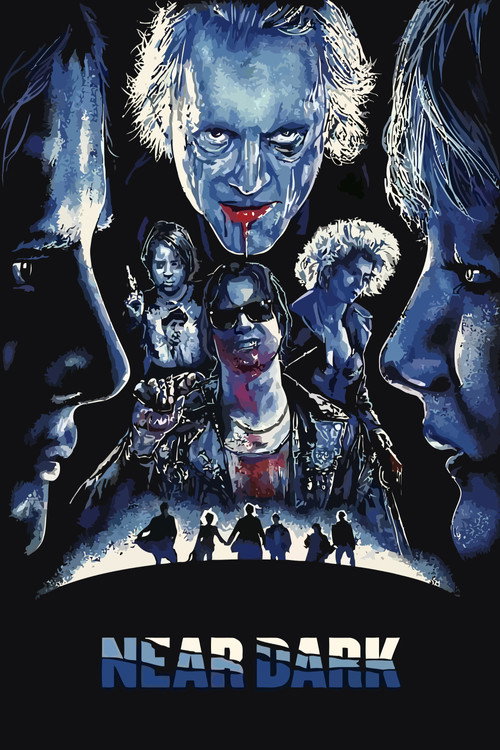
Kathryn Bigelow's Near Dark arrives in 1987 as a jarring collision of the American West and vampire mythology. The film follows Caleb Colton, a sheltered farmhand whose quiet life in Oklahoma dissolves after he picks up a hitchhiker named Mae. She introduces him to a nomadic gang of vampires who live by the sun, stealing cars and robbing gas stations before vanishing into the shadows at dawn. This is not a story about aristocratic monsters in castles but rather drunks and drifters surviving on the fringes of society.
The movie stands out for its gritty realism and neo-noir atmosphere. Bigelow directs with a cool detachment that lets the violence feel shocking yet inevitable. Bill Paxton steals scenes as Severen, a sadistic member of the clan whose cruelty threatens to expose the group to the law. With a soundtrack featuring Tangerine Dream and practical effects that emphasize the pain of sunlight, the film created a cult following that has only grown over the decades.
Availability and pricing can change. Confirm on the provider's site before purchasing.
Caleb Colton lives a monotonous existence on his family's farm in Oklahoma, where he works alongside his father Loy and younger brother Homer. His routine breaks one night when he stops to help a beautiful stranger named Mae hitchhike. She leads him to a local bar where she celebrates with her crew: Jesse Hooker, the charismatic leader; Severen, a volatile thug; Diamondback, a tough woman; and Homer, a gentle giant unrelated to Caleb. The evening seems like a typical night of drinking until the sun begins to rise.
The atmosphere shifts instantly as the group flees into the desert, seeking refuge in a motel before the morning light can touch them. Mae reveals the horrifying truth: she bit Caleb earlier that night, forcing him to drink her blood. He is now turning into a vampire himself. The rest of the film documents Caleb's desperate struggle to survive the day while grappling with the physical agony of his transformation. He witnesses the gang hunt humans during the night and scramble for cover as the sun climbs higher.
As the days pass, Caleb finds himself torn between his old life and this new, terrifying reality. He bonds with Mae, finding a strange kinship with the outlaws despite their violent nature. The tension builds as Severen's erratic behavior draws police attention, forcing the gang to move deeper into the Southwest. They rob gas stations and steal vehicles, living entirely off the grid. Caleb must decide whether to embrace his new identity or fight to return to the world of the living. The narrative explores themes of alienation and the loss of innocence against a backdrop of neon diners and desolate highways.
The journey takes the group across the American landscape, highlighting the contrast between the harsh daylight and the freedom of the night. Caleb learns the rules of their existence: they cannot enter homes without invitation, they are vulnerable to fire and sunlight, and they must feed to survive. The film blends Western aesthetics with supernatural horror, creating a unique tone that feels both nostalgic and modern. As the gang faces internal friction and external threats from the law, the clock ticks toward a final confrontation that will determine Caleb's fate.
Near Dark (1987) ORIGINAL TRAILER
Near Dark (1987) - International Trailer
Critical Consensus
Bigelow blends Western tropes with supernatural terror to create a unique tone that feels both gritty and romantic. The film transcends typical B-movie tropes to deliver a haunting tale of alienation and forbidden love. While initially overlooked commercially, its reputation has grown significantly, cementing its status as a cult classic.
“A cool, stylish, and surprisingly moving blend of horror and Western that treats its vampires as broken people trapped in a cycle of violence.”
Roger Ebert
Chicago Sun-Times
“Bigelow directs with a cool detachment that allows the violence to feel both shocking and inevitable, creating a distinct visual style.”
Variety Staff
Variety
“Bill Paxton gives a career-defining performance as the sadistic Severen, bringing a terrifying unpredictability to the role that anchors the chaos.”
Empire Magazine
Empire
Adrian Pasdar
Caleb Colton
Jenny Wright
Mae
Lance Henriksen
Jesse Hooker
Bill Paxton
Severen
Jenette Goldstein
Diamondback
Tim Thomerson
Loy Colton
Joshua John Miller
Homer Colton
Director
Kathryn Bigelow
Writers
Eric Red, Kathryn Bigelow
Composers
Paul Haslinger, Christopher Franke, Edgar Froese
Cinematographer
Adam Greenberg
Producer
Steven-Charles Jaffe
Fangoria Chainsaw Awards (1988)
Best Supporting Actor: Won
Fangoria Chainsaw Awards (1988)
Best Makeup: Won
Saturn Awards (1988)
Best Horror Film: Nominated
Join the community
fans discussing