 Ireland
“Day-Lewis gives a performance of such intensity and truth that it transcends the role itself, becoming a testament to the power of the human spirit.”
Roger Ebert
Chicago Sun-Times
Part of a Collection
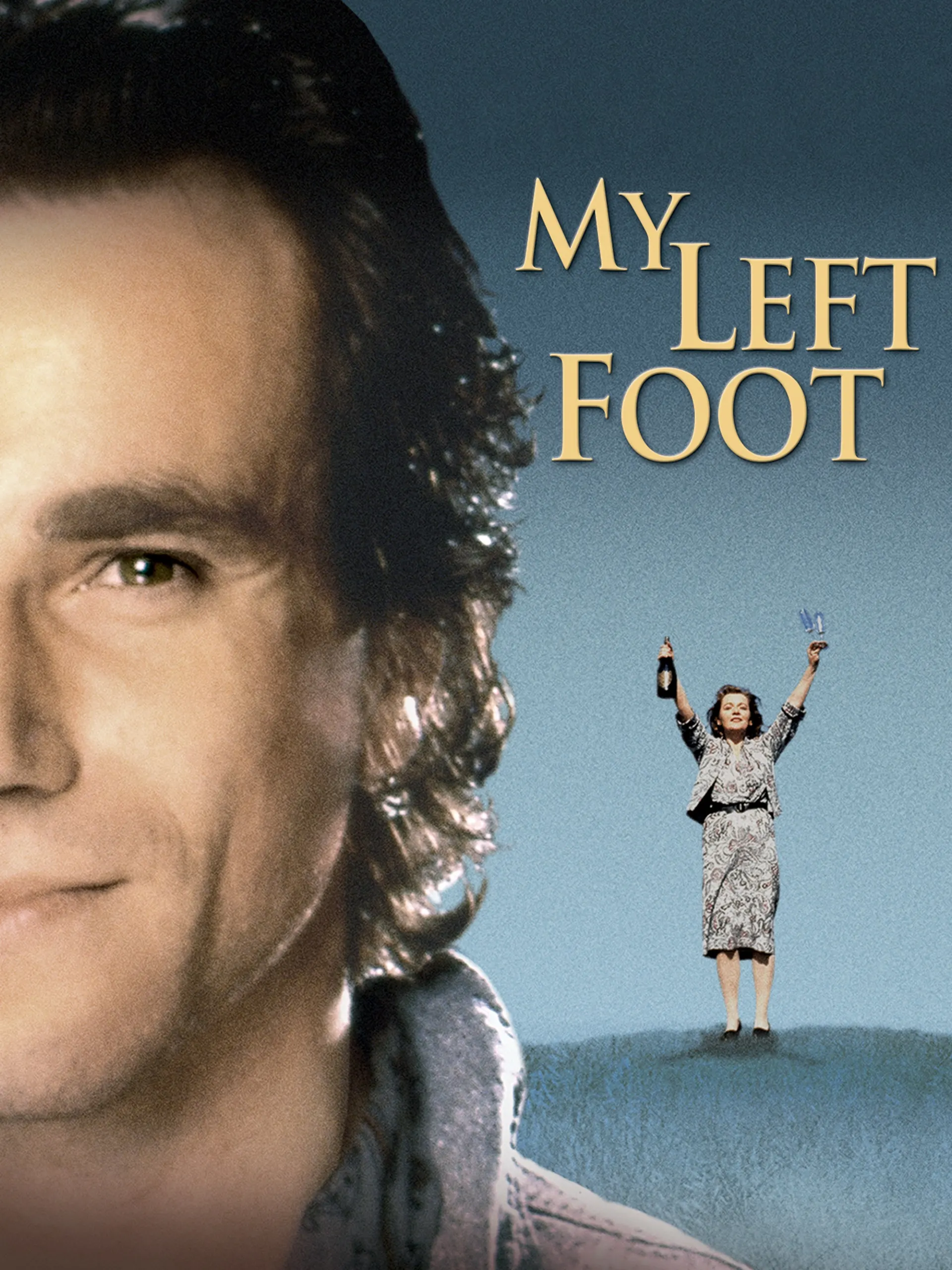
Jim Sheridan's directorial debut transforms Christy Brown's 1954 memoir into a gripping biographical drama that balances raw hardship with moments of dark humor. Set in Dublin during the mid-20th century, the story follows a man born with severe cerebral palsy who finds his only means of expression through his left foot. Daniel Day-Lewis delivers a career-defining performance as Brown, supported by Brenda Fricker as his fiercely protective mother and Ray McAnally as his father.
The film operates on a modest budget yet achieves an emotional resonance that feels expansive. It proves that intimate character studies can outshine big-budget spectacles by focusing entirely on the human spirit's ability to transcend physical confines. The narrative avoids pity, instead highlighting the sharp wit and fierce intelligence of a boy trapped inside a body that refuses to obey him.
Stream
Availability and pricing can change. Confirm on the provider's site before purchasing.
The story opens in a cramped tenement in Dublin during the 1920s, where Mary Brown gives birth to her eleventh child. Doctors tell her husband Paddy that the infant will never live or function normally. While Paddy views the baby as a burden to be hidden away, Mary insists on treating him with dignity despite the chaos of their large, loud family. For years, Christy remains trapped inside his own body, unable to speak or move any part of himself except for his left foot. The family assumes he is mentally retarded due to his inability to articulate thoughts, leaving him isolated in silence.
Frustration boils over when Christy accidentally knocks a bottle off a table using only his left foot. This small act shocks his parents into realizing he possesses consciousness and intent. His father eventually allows him to use chalk to draw on the floor, discovering that Christy can control his left foot well enough to write letters. This breakthrough ignites a fierce determination in Christy to learn how to read and write, transforming his existence from one of silence to one of expression. He begins to communicate through written notes, revealing a sharp, witty, and often angry intellect that surprises those around him.
As Christy grows, the narrative shifts to his education and artistic development. With the help of a dedicated teacher, Miss Eileen, he learns to paint and write poetry. However, his journey is not without significant obstacles. His physical limitations make simple tasks agonizingly difficult, and his temper flares when others underestimate his capabilities or treat him like a child. The film explores the tension between his desire for independence and the protective, sometimes smothering nature of his family.
A major subplot involves Christy's romantic life. As he matures, he develops feelings for a woman named Sheila. Their relationship is fraught with difficulty; while Christy falls deeply in love, the societal stigma surrounding his disability and the practical realities of their lives create barriers that seem insurmountable. The story delves into the complexities of intimacy and the fear of rejection that plagues Christy.
Throughout the film, the audience witnesses Christy's evolution from a helpless infant to a celebrated artist and writer. He publishes books and holds art exhibitions, gaining fame outside of Dublin. Yet, despite his external success, the internal struggle continues. The film captures the raw emotion of a man fighting against the constraints of his biology, driven by a relentless will to prove his humanity. It balances moments of dark humor, derived from the absurdity of his situation and the boisterous dynamics of the Brown family, with scenes of profound sorrow and triumph. The narrative builds toward a climax where Christy must confront the ultimate limits of his existence, testing the strength of his spirit and the bonds of his family against the inevitability of his condition.
Official Trailer
Teaser
Critical Consensus
Daniel Day-Lewis delivers a career-defining performance in this gripping biographical drama, supported by Brenda Fricker's Oscar-winning portrayal. Director Jim Sheridan masterfully balances the harsh realities of cerebral palsy with moments of dark humor and deep humanity, creating an intimate character study that resonates far beyond its modest budget.
“Day-Lewis gives a performance of such intensity and truth that it transcends the role itself, becoming a testament to the power of the human spirit.”
Roger Ebert
Chicago Sun-Times
“A masterpiece of acting and direction, 'My Left Foot' is a film that leaves you breathless with its emotional depth and technical brilliance.”
Variety Staff
Variety
“Jim Sheridan has crafted a film that is both a tribute to a remarkable life and a searing indictment of societal neglect.”
Janet Maslin
The New York Times
“Daniel Day-Lewis's transformation is nothing short of miraculous, bringing Christy Brown to life with a vulnerability and strength that is unforgettable.”
Peter Bradshaw
The Guardian
Daniel Day-Lewis
Christy Brown
Brenda Fricker
Mary Brown
Ray McAnally
Paddy Brown
Fiona Shaw
Miss Eileen / Sheila
Hugh O'Conor
Seamus Brown
Cyril Cusack
Father Byrne
Director
Jim Sheridan
Writers
Jim Sheridan, Shane Connaughton
Composer
Van Morrison
Cinematographer
Chris Menges
Producers
John Grillo, Jim Sheridan
Academy Awards (1990)
Best Actor: Won
Academy Awards (1990)
Best Supporting Actress: Won
Academy Awards (1990)
Best Picture: Nominated
BAFTA Awards (1990)
Best Actor: Won
Golden Globe Awards (1990)
Best Actor - Drama: Won
Join the community
fans discussing