 United States
“Gooding gives a performance of such intensity and vulnerability that he makes you believe in the possibility of Brashear's triumph.”
Roger Ebert
Chicago Sun-Times
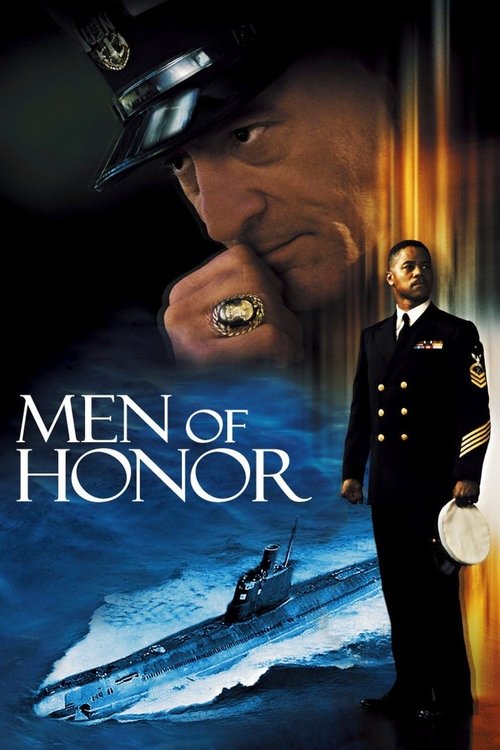
Carl Brashear steps into a world where his skin color marks him as an outsider in the U.S. Navy, yet he refuses to let that stop him from becoming the first African American master diver. Director George Tillman Jr. guides this true story with a focus on grit and determination rather than easy sentimentality. Robert De Niro plays Master Chief Leslie W. Sunday, an instructor who initially clashes with Brashear, while Cuba Gooding Jr. brings raw intensity to the lead role of Senior Chief Carl Brashear. Charlize Theron adds depth as Gwen Sunday, bridging the gap between the two men.
Released in September 2000 by Fox 2000 Pictures, the film operated on a $32 million budget and earned over $82 million at the box office. Critics responded well to the performances, giving it a solid rating near 7.5 out of 10. The movie stands as a powerful drama about overcoming systemic barriers through sheer willpower.
Availability and pricing can change. Confirm on the provider's site before purchasing.
In 1944, sixteen-year-old Carl Brashear leaves his family's sharecropping farm in rural Kentucky to enlist in the United States Navy. His dream is specific and ambitious: he wants to become a diver. This profession requires working underwater with specialized gear, a path closed to almost everyone outside of a small elite circle. Carl arrives at Naval Air Station Pensacola in Florida, ready to prove himself against the toughest training regimen the military offers. He quickly learns that the Navy of the late 1940s operates under strict segregation laws. When he applies for the Diver program, Captain Pullman rejects him outright because he is Black. Pullman tells him flatly that divers are white men.
Carl does not give up. He petitions higher command and eventually forces the Navy to reconsider, though they accept him only after significant pressure. Once inside the program, he faces a gauntlet of prejudice designed to break his spirit. His primary instructor becomes Master Chief Leslie W. Sunday, known as Billy. Played by Robert De Niro, Billy is a gruff, alcoholic veteran who has lost faith in the system. He treats Carl with disdain, pushing him to quit and viewing his presence as a mistake. Their relationship is defined by conflict. Billy constantly challenges Carl's physical limits during breath-holding drills and high-pressure tank tests while simultaneously questioning his mental fortitude.
A central emotional thread involves Carl's relationship with Gwen Sunday, played by Charlize Theron. She serves as a bridge between the two men, offering Carl a safe haven and a glimpse of a life beyond the barracks. She recognizes Carl's potential and encourages him to persist despite the odds stacked against him. Meanwhile, Carl struggles with the isolation of being the only Black man in his unit. He faces verbal abuse, exclusion, and even physical intimidation from fellow recruits and officers who refuse to acknowledge his humanity.
The narrative builds through a series of escalating trials. Carl must prove himself worthy of the uniform and the title of "Master Diver" in a world that refuses to acknowledge his rights. The tension peaks during advanced training where Carl is pitted against his own doubts and the systemic barriers designed to break him. The film focuses heavily on the theme of honor, not just the honor of the service, but the personal integrity required to stand up for oneself when the world says you do not belong. As Carl pushes through the pain and prejudice, he begins to earn the grudging respect of some, though the ultimate goal remains elusive. The story depicts a man who refuses to let the color of his skin define his capabilities or his destiny, setting the stage for a historic struggle that will test the very limits of human endurance.
Men of Honor (2000) Original Trailer
Critical Consensus
While Men of Honor suffers from a predictable script and occasional sentimentality, it is elevated by powerhouse performances from Cuba Gooding Jr. and Robert De Niro. The film effectively captures the grit and determination required to overcome systemic racism, delivering an emotionally resonant experience that transcends its formulaic structure.
“Gooding gives a performance of such intensity and vulnerability that he makes you believe in the possibility of Brashear's triumph.”
Roger Ebert
Chicago Sun-Times
“Mr. Gooding... brings a raw, electric energy to the role, making Carl Brashear's struggle feel both personal and universal.”
Janet Maslin
The New York Times
“De Niro and Gooding have a chemistry that crackles, turning a standard inspirational drama into something much more compelling.”
Peter Travers
Rolling Stone
Cuba Gooding Jr.
Senior Chief Carl Brashear
Robert De Niro
Master Chief Leslie W. Sunday
Charlize Theron
Gwen Sunday
Hal Holbrook
'Mr. Pappy'
Michael Rapaport
GM1 Snowhill
Powers Boothe
Captain Pullman
David Keith
Captain Hartigan
Dulé Hill
Red Tail
Director
George Tillman Jr.
Writer
Scott Marshall Smith
Composer
Mark Isham
Cinematographer
Anthony B. Richmond
Producers
Robert Teitel, Bill Badalato
Academy Awards (2001)
Best Actor in a Leading Role: Nominated
NAACP Image Awards (2001)
Outstanding Motion Picture: Won
NAACP Image Awards (2001)
Outstanding Actor in a Motion Picture: Won
Black Reel Awards (2001)
Best Actor: Won
Join the community
fans discussing