 United States
“Halloween is a horror film that is so good it almost seems to be a new genre all by itself. It's not about blood and gore, but about the slow, deliberate buildup of suspense.”
Roger Ebert
Chicago Sun-Times
Part of a Collection
Halloween Collection
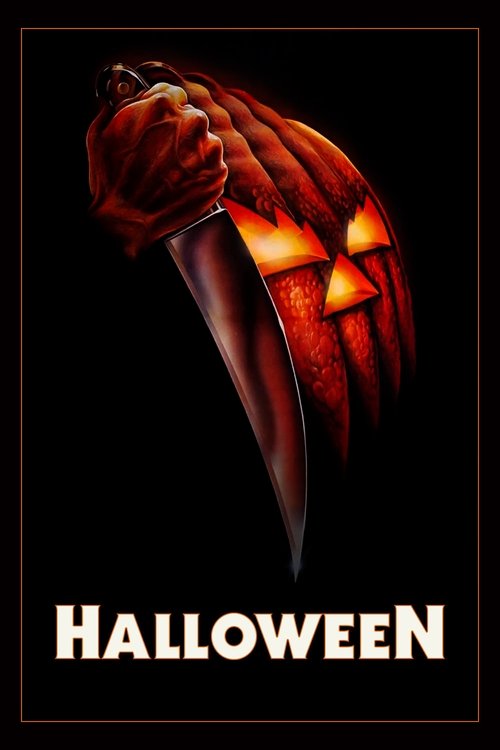
John Carpenter's Halloween is a landmark of horror cinema, a low-budget independent film that redefined the genre and set the template for the modern slasher. Released in 1978, the film follows the terrifying return of Michael Myers, a patient who escapes from a mental institution and stalks the teenagers of Haddonfield, Illinois on Halloween night. With a budget of just $325,000, Carpenter crafted a masterclass in suspense, using minimal gore and a haunting, minimalist score to create an atmosphere of pure dread.
The film introduced the world to Jamie Lee Curtis in her feature debut as Laurie Strode, the resourceful babysitter who becomes Michael's target. Donald Pleasence delivers a memorable performance as Dr. Samuel Loomis, the psychiatrist who has spent years trying to treat Myers and who understands the true nature of the evil that has returned to Haddonfield. The film's iconic score, composed by Carpenter himself in just three days, has become one of the most recognizable themes in cinema history.
Halloween was a massive box office success, grossing over $70 million worldwide and becoming one of the most profitable independent films ever made. In 2006, it was selected for preservation in the United States National Film Registry by the Library of Congress for being culturally, historically, or aesthetically significant. The film spawned an extensive franchise with multiple timelines, sequels, and remakes, but the original remains the most celebrated and influential entry.
Stream
Peacock
Availability and pricing can change. Confirm on the provider's site before purchasing.
Halloween opens on October 31, 1963, in the quiet town of Haddonfield, Illinois. Through a first-person point-of-view shot, viewers witness a six-year-old boy stalk through his family home, retrieve a large kitchen knife, and brutally stab his older sister Judith to death after she sends her boyfriend home. The boy's parents arrive to find him standing outside, still holding the bloody knife, dressed in a clown costume and mask. He is subsequently institutionalized at Smith's Grove Sanitarium.
Fifteen years later, on October 30, 1978, Dr. Samuel Loomis, Michael's psychiatrist, arrives at the sanitarium to transport Michael to a court hearing. Loomis has long believed that Michael is pure evil and has repeatedly warned authorities that he should never be released. When Loomis and a nurse arrive, they discover that Michael has escaped, having stolen a car and killed the driver during his flight.
The film then introduces Laurie Strode, a quiet, responsible high school student who is babysitting on Halloween night. She is contrasted with her more sexually active and carefree friends, Annie Brackett and Lynda Van Der Klok. Laurie has an uneasy feeling that someone is watching her throughout the day, though she dismisses it as paranoia. She notices a mysterious figure in a pale mask and dark coveralls appearing at various locations around town, seemingly stalking her.
Dr. Loomis arrives in Haddonfield and warns Sheriff Leigh Brackett that Michael has returned to his hometown and will kill again. Loomis is convinced that Michael has come home to continue his murderous rampage. Meanwhile, Laurie continues her babysitting duties at the Doyle house, watching over young Tommy Doyle while Annie babysits Lindsey Wallace across the street, and Lynda prepares for a rendezvous with her boyfriend Bob at the Wallace house.
Throughout the evening, Michael systematically stalks the teenage babysitters. Annie is attacked while picking up her boyfriend Paul, Lynda and Bob are killed in the Wallace house, and Michael uses the bodies to lure Laurie to the house across the street. Tommy repeatedly warns Laurie that the boogeyman is outside, but she dismisses his fears. As the night progresses, Laurie becomes increasingly aware that something is terribly wrong, setting up the film's central conflict between the innocent babysitter and the seemingly unstoppable force of evil that is Michael Myers.
Official Arrow Trailer
Official Trailer
Official Trailer
Critical Consensus
Halloween is a masterclass in suspense and atmosphere, proving that what you don't see is often more frightening than what you do. John Carpenter's low-budget independent film revolutionized the horror genre, establishing the slasher template while delivering genuine, sustained terror through its iconic score, minimalist camerawork, and Jamie Lee Curtis's grounded performance.
“Halloween is a horror film that is so good it almost seems to be a new genre all by itself. It's not about blood and gore, but about the slow, deliberate buildup of suspense.”
Roger Ebert
Chicago Sun-Times
“John Carpenter's Halloween is a low-budget horror film that is surprisingly effective, not because of what it shows but because of what it suggests. The movie is a model of economy and skill.”
Vincent Canby
The New York Times
“Carpenter demonstrates a sure hand in building suspense, using the widescreen frame and the Panaglide camera to create a sense of impending doom that is almost unbearable.”
Variety Staff
Variety
“The film that defined the slasher genre, Halloween remains a landmark of horror cinema. Carpenter's use of the widescreen frame and his minimalist score create an atmosphere of pure dread.”
Kim Newman
Empire Magazine
“Halloween is the great-granddaddy of all slasher films, and it still works because Carpenter understands that the most terrifying monster is the one you barely see.”
Owen Gleiberman
Entertainment Weekly
Donald Pleasence
Loomis
Jamie Lee Curtis
Laurie
Nancy Kyes
Annie
Director
John Carpenter
Writers
Debra Hill, John Carpenter
Composer
John Carpenter
Cinematographer
Dean Cundey
Producers
Debra Hill, Moustapha Akkad
Avoriaz Fantastic Film Festival (1979)
Grand Prize: Won
Avoriaz Fantastic Film Festival (1979)
Critics Award: Won
Saturn Awards (1979)
Best Horror Film: Nominated
Saturn Awards (1979)
Best Director: Nominated
Saturn Awards (1979)
Best Actress: Nominated
Saturn Awards (1979)
Best Supporting Actor: Nominated
Saturn Awards (1979)
Best Music: Nominated
National Film Registry (2006)
Culturally, Historically, or Aesthetically Significant: Inducted
Join the community
fans discussing