 United States
“The filmed staging keeps the focus where it belongs, on the performances and on Mitchell's songs, and that turns out to be more than enough.”
Daily Northwestern
Daily Northwestern
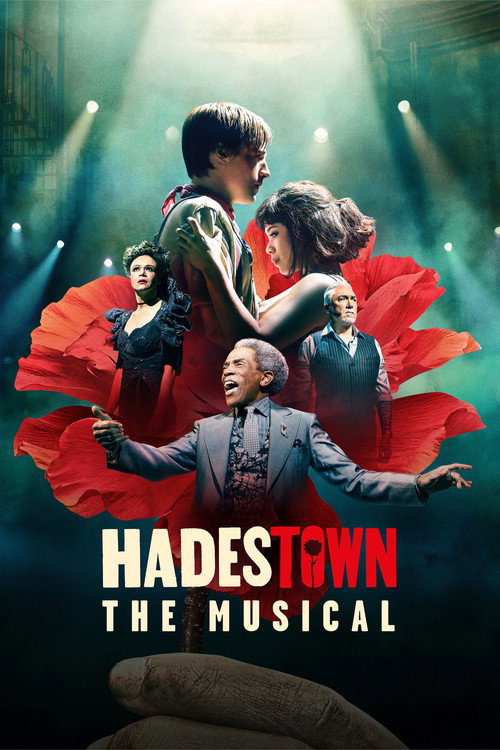
Brett Sullivan's camera settles into London's Lyric Theatre and never really leaves. Hadestown: The Musical is a live capture of Anaïs Mitchell's folk-opera, and the cast is the one that made it famous: Reeve Carney, Eva Noblezada, André De Shields, Patrick Page, Amber Gray. No replacements, no stunt casting. Bleecker Street put it in theaters on July 23, 2026, and it cleared $20.6 million worldwide on a $5 million budget, a ratio that got the attention of every producer on Broadway with a show and a spare weekend.
What Sullivan films is not a concert. It is Rachel Chavkin's staging, with Michael Krass's costumes and Rachel Hauck's set, rebuilt for the Lyric and shot with enough close attention that you can see Hermes's cufflinks and the dust on Orpheus's shoes. The score moves from acoustic guitar to brass-heavy New Orleans stomp without ever feeling like a jukebox. Mitchell wrote the book, music, and lyrics, and the songs carry the story rather than interrupting it.
The film opened at Tribeca in 2026 before its wide release, and the early audience score sat at 8.9 on IMDb from a small sample. That number will settle, but the enthusiasm behind it tracks with what the stage show does to people. This is a recording for the people who never got a ticket, and for the ones who did and want to see the Fates circle the stage one more time.
In theatres
Availability and pricing can change. Confirm on the provider's site before purchasing.
Hermes walks out first. André De Shields in a shimmering suit, hat tipped, voice like a warm radio signal. He tells the audience this is an old song, a sad song, and that they should sing it anyway. Then he steps aside and lets the story start.
The world is a Depression-era company town where the seasons have stopped behaving. Orpheus (Reeve Carney) is a broke musician with a lyre and a song that, we are told, can make the world move. Eurydice (Eva Noblezada) is a drifter who has learned not to trust promises. They meet, they fall, and for a little while the town seems to soften. Orpheus promises her music and meaning. Eurydice wants those things, but she also wants a meal and a warm room, and she has been hungry long enough to know the difference between a dream and a plan.
Above them, the gods are having their own marital trouble. Persephone (Amber Gray) comes up for spring, tired and glowing and ready for a drink. Hades (Patrick Page) comes with her, low-voiced and possessive, and the gap between them is the second love story the show is telling. Hades has built a wall around his kingdom and a factory inside it. The workers down there forget their own names. Persephone remembers everything, and that is the problem.
Hadestown itself is a walled industrial city under the town, all gears and smoke and fluorescent light. Hades has been recruiting. He offers work, food, a place to belong, and he makes the pitch to Eurydice when she is at her coldest and most doubtful. She takes it. She signs, or she steps through the door, and she is gone.
Orpheus does not accept it. With Hermes as his guide, he finds the road down and walks it. The Fates (Bella Brown, Madeline Charlemagne, Allie Daniel) follow him the whole way, whispering that he is a fool, that she is already lost, that the song will not work. They are the voice in his head and they are very good at their job.
What follows is the center of the musical: Orpheus in front of Hades, asking for Eurydice back. He does not have an army. He has a song. The question the show builds toward is whether a song can do anything against a man who owns a factory and a wall and the labor of the dead. Persephone watches. Hermes watches. The Fates watch. And Hades, who has heard every kind of plea, listens to this one.
Official Trailer
Critical Consensus
Early notices treat the film as a faithful, emotionally potent capture of a stage musical that already had a devoted following. Critics single out the original cast and the intimacy of Sullivan's filming, while noting that no proshot can fully replace the electricity of a live room. NPR reported the film was a hit and that other Broadway shows were watching its release strategy closely.
Reeve Carney
Orpheus
Eva Noblezada
Eurydice
André De Shields
Hermes
Patrick Page
Hades
Amber Gray
Persephone
Bella Brown
Fate
Madeline Charlemagne
Fate
Allie Daniel
Fate
Lauren Azania
Worker
Tiago Dhondt Bamberger
Worker
Waylon Jacobs
Worker
Christopher Short
Worker
Director
Brett Sullivan
Writer
Anaïs Mitchell
Composer
Anaïs Mitchell
Cinematographer
Clayton Jacobsen
Producers
Mara Isaacs, Dale Franzen, Hunter Arnold, Tom Kirdahy
Tribeca Festival (2026)
Official Selection: Selected
Join the community
fans discussing