“Whitaker is magnificent, playing the role with a stillness that is both terrifying and beautiful. The film is a rare beast, a crime movie that is also a meditation on the soul.”
Roger Ebert
Chicago Sun-Times
 United States
"A hitman follows an ancient code in a modern city."
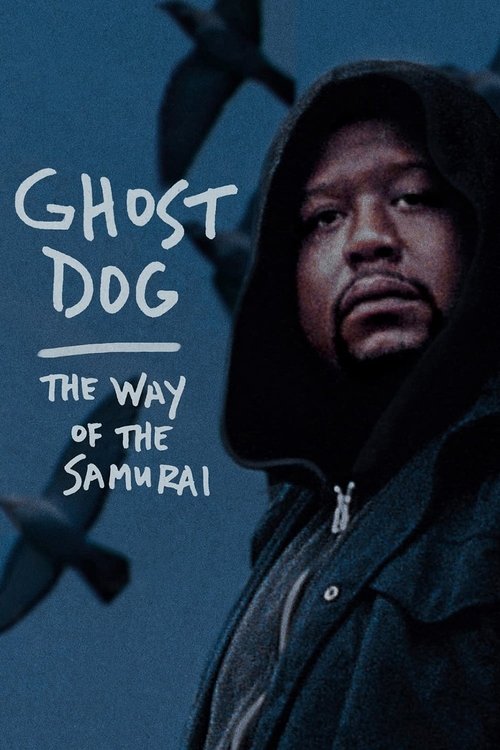
Jim Jarmusch crafted a unique crime drama that places a contract killer inside the rigid moral framework of feudal Japan. Forest Whitaker stars as Ghost Dog, an African American man who lives in isolation near an abandoned airfield and adheres strictly to The Hagakure, a 17th-century text on the way of the samurai. His existence is defined by silence, carrier pigeons, and an unwavering loyalty to the local Mafia family he serves.
The film arrived in 1999 with a modest budget of two million dollars but earned nearly ten million at the box office. Critics praised the unique tone and Whitaker's magnetic performance, which helped secure a solid rating of 7.3 out of 10. RZA provides a hip-hop score that contrasts sharply with the traditional setting, creating a soundscape that feels both timeless and contemporary. This international co-production between France, Germany, Japan, and the United States stands apart from standard gangster movies.
Stream
Availability and pricing can change. Confirm on the provider's site before purchasing.
In the rain-slicked streets of Newark, New Jersey, a man known only as Ghost Dog moves through the criminal underworld with the precision of a ghost. He works for the Valerio crime family, executing hits with surgical efficiency while living in a sparse trailer filled with books and carrier pigeons. His life operates under the strict guidelines of The Hagakure, a Japanese text written in the 1600s that dictates how a warrior should live and die. Unlike typical mobsters, Ghost Dog speaks little, communicates primarily through his birds, and maintains a stoic demeanor even when violence erupts around him.
His relationship with the mob is built on years of quiet service. Louie, a low-level associate, acts as the liaison between the killer and the aging boss Sonny Valerio. Despite being Black in a predominantly white hierarchy, Ghost Dog commands a mix of fear and reverence because of his legendary reputation. The organization relies on his skills, yet they treat him as a tool rather than a person. When Sonny dies unexpectedly, the power dynamic shifts immediately. The new leadership, led by Ray Vargo and his son Raymond, views Ghost Dog as an obsolete relic who no longer fits their modern, profit-driven strategy.
Tension escalates when the new bosses order Ghost Dog to kill a young girl who witnessed a recent murder. This task violates his personal interpretation of the code regarding innocents. His hesitation is interpreted as weakness or betrayal, leading the Valerios to issue a hit on him. Suddenly, the very organization he served becomes his enemy. Ghost Dog remains unfazed, continuing his daily routine of tending to his pigeons, reading poetry, and eating ice cream while Pearline, a young Haitian girl who runs an ice cream truck, watches over him.
As the conflict intensifies, Ghost Dog engages in a series of tense standoffs and shootouts. He utilizes his mastery of firearms and his understanding of urban terrain to outmaneuver the mobsters hunting him. The narrative shifts from a simple crime thriller to a meditation on isolation and the clash between ancient tradition and modern chaos. The story explores the cost of living by a code that offers no protection against the betrayal of one's own masters. Ghost Dog’s journey becomes a slow march toward a confrontation he seems to have anticipated all along, driven by a philosophical resolve that transcends the immediate danger.
The film avoids the typical revenge tropes found in action movies. Instead, it focuses on the internal state of a man who has accepted his fate. Every interaction highlights the disconnect between Ghost Dog's spiritual world and the corrupt reality of the city. The mobsters grow increasingly frustrated as their attempts to capture or kill him fail repeatedly. The tension builds not from the threat of death, but from the inevitability of the final encounter. Ghost Dog prepares for his end with the calmness of a warrior accepting his destiny, knowing that his time has come.
Official Trailer
Critical Consensus
Jim Jarmusch's Ghost Dog blends noir aesthetics with Eastern philosophy, anchored by Forest Whitaker's mesmerizing performance. The film redefines the hitman genre by infusing it with spiritual depth and a unique visual style, making it a standout entry in both Jarmusch's and Whitaker's filmographies.
“Whitaker is magnificent, playing the role with a stillness that is both terrifying and beautiful. The film is a rare beast, a crime movie that is also a meditation on the soul.”
Roger Ebert
Chicago Sun-Times
“Jarmusch has created a film that is as cool and detached as its protagonist, yet deeply moving in its exploration of loyalty and honor. It is a triumph of atmosphere over action.”
A.O. Scott
The New York Times
“Forest Whitaker gives a career-defining performance. He is a ghost dog, a creature of the night who moves through the world with a grace that is both haunting and hypnotic. A must-see.”
Peter Travers
Rolling Stone
“A stylish, cerebral, and surprisingly emotional crime drama. Jarmusch proves once again that he is a master of tone, creating a world that feels both timeless and utterly contemporary.”
Kenneth Turan
Los Angeles Times
“Ghost Dog is a film that lingers in the mind long after the credits roll. Its blend of hip-hop and samurai culture is seamless, creating a unique cinematic experience that challenges expectations.”
Manohla Dargis
The Guardian
Forest Whitaker
Ghost Dog
John Tormey
Louie
Cliff Gorman
Sonny Valerio
Frank Minucci
Big Angie
Richard Portnow
Handsome Frank
Tricia Vessey
Louise Vargo
Henry Silva
Ray Vargo
Gene Ruffini
Old Consigliere
Frank Adonis
Valerio's Bodyguard
Victor Argo
Vinny
Isaach de Bankolé
Raymond
Camille Winbush
Pearline
Director
Jim Jarmusch
Writers
Jim Jarmusch, Sara Driver
Composer
RZA
Cinematographer
Robby Müller
Producers
Jim Jarmusch, Richard Guay
Cannes Film Festival (1999)
Palme d'Or: Nominated
Independent Spirit Awards (1999)
Best Male Lead: Won
Independent Spirit Awards (1999)
Best Director: Nominated
Independent Spirit Awards (1999)
Best Screenplay: Nominated
Independent Spirit Awards (1999)
Best Cinematography: Nominated
Chicago Film Critics Association Awards (1999)
Best Actor: Nominated
Los Angeles Film Critics Association Awards (1999)
Best Supporting Actor: Won
Satellite Awards (2000)
Best Motion Picture – Drama: Nominated
Bodil Awards (2000)
Best Non-European Film: Won
César Awards (2000)
Best Foreign Film: Nominated
Join the community
fans discussing