 United States
“Nolan's direction is confident and assured, and the film's non-linear structure adds a layer of complexity that rewards careful viewing.”
Roger Ebert
Chicago Sun-Times
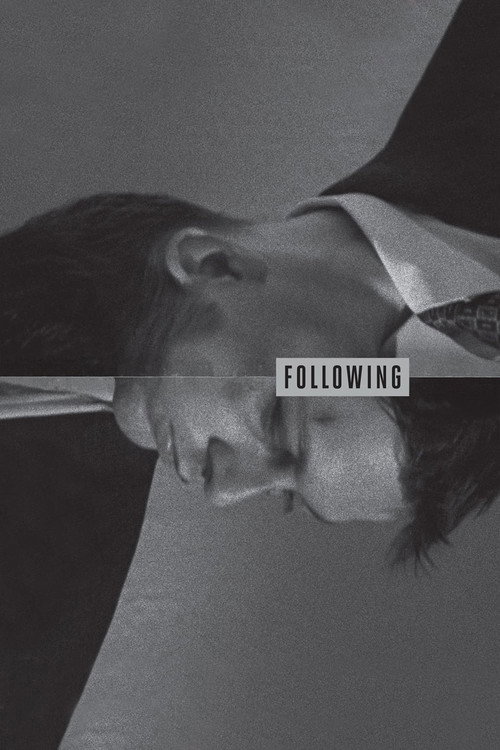
Christopher Nolan's Following marks the directorial debut of a filmmaker who would later dominate global cinema. Shot in black and white on a shoestring budget of just $6,000, this British-American thriller follows an unemployed aspiring writer named Bill as he stalks strangers through London to find inspiration for his novel. The project began as a student exercise but evolved into a tight narrative exploring voyeurism and identity.
The film premiered at the Edinburgh Film Festival in August 1998 before receiving a wider UK release in April 1999. Its non-linear structure forces viewers to piece together the timeline alongside the protagonist, creating a sense of disorientation that mirrors Bill's own fractured perception of reality. This debut feature established Nolan's signature style long before he tackled big-budget blockbusters like The Dark Knight.
Availability and pricing can change. Confirm on the provider's site before purchasing.
Bill is an unemployed writer living in London who suffers from a severe lack of inspiration for his first novel. He believes that to write about people authentically, he must know them intimately. His solution is to adopt a methodical approach: he begins stalking strangers in the streets, observing their habits, routines, and lives from a distance. He follows them into their homes, watches them through windows, and tracks their movements, treating them as characters in a story he has not yet written. This voyeuristic behavior becomes an addiction, offering him a sense of detachment and control over his chaotic life.
Bill's routine is interrupted when he begins following a mysterious man known only as Cobb. Unlike the other targets, Cobb is elusive and seems to be watching Bill back. Intrigued by this mutual observation, Bill decides to break into Cobb's apartment to learn more about him, hoping to find material for his book. Inside, he discovers a collection of stolen goods, realizing Cobb is a professional burglar. Instead of reporting him, Bill is drawn into Cobb's world. Cobb, who appears charming but dangerous, takes Bill under his wing, teaching him the art of breaking and entering.
Cobb introduces Bill to a blonde woman, whom he claims is his girlfriend. She is beautiful, enigmatic, and seemingly unaware of Cobb's criminal activities. As Bill spends time with both Cobb and the blonde, he becomes increasingly entangled in their double lives. Cobb teaches Bill how to pick locks, disable alarms, and steal valuables, pushing Bill to participate in actual burglaries. Bill finds himself torn between his desire for literary authenticity and the moral implications of his actions. He begins to blur the lines between observer and participant, stealing not just for the thrill but to understand the psychology of the thief.
The tension escalates as Bill's obsession deepens. He starts to suspect that Cobb and the blonde are using him, perhaps as a pawn in a larger game. The narrative structure of the film mirrors the confusion of memory and perception; scenes are presented out of chronological order, forcing the audience to piece together the timeline alongside Bill. Bill's relationship with the blonde becomes complicated, as she seems to have her own secrets and motivations. Meanwhile, Cobb's influence over Bill grows stronger, leading Bill to commit crimes he never imagined he would.
As the plot thickens, Bill realizes that he may be the one being followed. The lines between victim and perpetrator begin to dissolve. He finds himself in a situation where he cannot trust anyone, including the woman he is falling for and the mentor who taught him everything. The central conflict shifts from Bill's search for inspiration to a desperate struggle for survival and identity. He is trapped in a web of deception, where every action has consequences, and every character is hiding something. The story builds towards a climax where Bill must confront the reality of his situation, facing the terrifying truth about who he has become and who he thought he was. The film explores themes of voyeurism, identity, and the destructive nature of obsession, all set against the gritty backdrop of London's underworld.
Original Trailer
Modern Trailer
Critical Consensus
Christopher Nolan's directorial debut is a lean, mean, neo-noir thriller that showcases his early talent for complex storytelling and visual style. While the acting is amateurish, the film's tight script, non-linear narrative, and atmospheric black-and-white cinematography make it a compelling watch for fans of mystery and psychological drama.
“Nolan's direction is confident and assured, and the film's non-linear structure adds a layer of complexity that rewards careful viewing.”
Roger Ebert
Chicago Sun-Times
“A smart, stylish debut that hints at the potential of a filmmaker who would go on to dominate the industry.”
Variety Staff
Variety
“Following is a masterclass in low-budget filmmaking, proving that creativity can overcome financial limitations.”
Peter Bradshaw
The Guardian
“Nolan's ability to weave a complex narrative while maintaining tension is impressive for a first-time director.”
Empire Staff
Empire Magazine
Jeremy Theobald
The Young Man
Alex Haw
Cobb
Lucy Russell
The Blonde
John Nolan
The Policeman
Dick Bradsell
The Bald Guy
Director
Christopher Nolan
Writer
Christopher Nolan
Composer
David Julyan
Cinematographer
Christopher Nolan
Producers
Jeremy Theobald, Christopher Nolan, Emma Thomas
Edinburgh International Film Festival (1998)
Best British Feature Film: Won
Sitges - Catalan International Film Festival (1998)
Best Director: Won
London Independent Film Awards (1999)
Best British Independent Film: Nominated
Join the community
fans discussing