 France
“Visconti's Death in Venice is a film of such visual beauty and such sadness that it seems almost to exist in a dream.”
Roger Ebert
Chicago Sun-Times
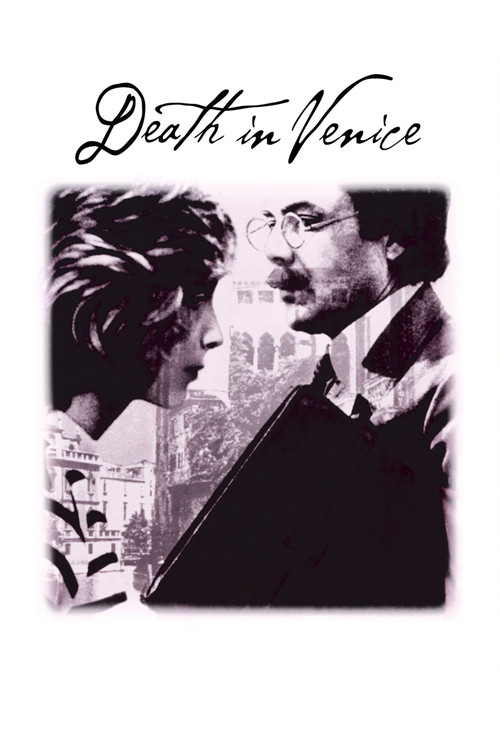
Luchino Visconti's Death in Venice (1971) is a film about looking. Dirk Bogarde plays Gustav von Aschenbach, a German composer who arrives at the Grand Hôtel des Bains on the Lido in 1911, his health failing and his discipline worn thin. He watches a Polish boy named Tadzio (Björn Andrésen) and keeps watching, and the film watches him watch. Visconti, working from Thomas Mann's 1912 novella, builds the drama out of glances, slow camera moves, and the Adagietto from Mahler's Fifth Symphony rather than out of dialogue or incident.
Bogarde's performance is a study in restraint, his Aschenbach a man who has spent a lifetime organizing his passions and now finds them reorganizing him. The supporting cast includes Silvana Mangano as Tadzio's mother, Romolo Valli as the hotel manager, and Mark Burns as Alfred, a friend who appears in flashbacks to voice the arguments Aschenbach can no longer make to himself. Pasqualino De Santis shot the film, and his images of Venice in decline, its canals and hotels going quietly wrong, do much of the narrative work.
The Italian-French production was nominated for the Palme d'Or at Cannes in 1971 and won the festival's 25th Anniversary Prize. It earned an Academy Award nomination for Piero Tosi's costume design and two BAFTA nominations, for Bogarde's performance and De Santis's cinematography. Its reputation has held: the film sits at 80 percent on Rotten Tomatoes and 74 on Metacritic, and the Criterion Collection has released a restored edition.
Availability and pricing can change. Confirm on the provider's site before purchasing.
A steamer carries Gustav von Aschenbach across to the Lido, and the first thing the film gives us is his face: drawn, careful, a little afraid of what the trip has already cost him. He is a composer of some standing, and he has come to Venice on doctor's orders, or something close to them. At the Grand Hôtel des Bains he takes a suite, arranges his days, and tries to recover a self that has been eroding for some time. The hotel is full of families and noise and sunlight, none of which he has much use for.
Then he sees Tadzio. The boy is perhaps fourteen, Polish, traveling with his mother, his sisters, and a governess. He is beautiful in a way that stops conversation. Aschenbach does not introduce himself. He does not engineer an introduction. He simply begins to arrange his day around the boy's, taking his meals at the same hour, sitting on the beach where Tadzio plays, walking the corridors when Tadzio walks them. Visconti shoots much of this at a remove, with Aschenbach in the background of a shot or at the edge of the frame, which keeps the desire at the distance Aschenbach himself maintains.
Flashbacks interrupt the present. Alfred, a fellow composer and old friend, appears in these remembered scenes to argue with Aschenbach about art, discipline, and the danger of letting feeling off its leash. Alfred's position is clear and unyielding: beauty is a trap, and the artist who surrenders to it surrenders his work. Aschenbach has no good answer, and the film does not supply one for him. The arguments echo forward into the Venetian scenes, where Aschenbach's behavior grows steadily less defensible by his own standards.
Venice is sick. A cholera outbreak has taken hold, and the city authorities, anxious about the tourist season, are saying as little as possible. The signs accumulate: a smell in the air, a warning posted and then removed, a doctor's evasions, the barber's chatter, the increasing presence of disinfectant and cremation smoke. Aschenbach learns the truth and decides to stay. Leaving would mean leaving Tadzio, and that is not a trade he is willing to make. He also begins to alter his appearance, visiting the barber for dye and powder, trying to close the gap between the man he is and the youth he is watching.
The film's middle stretch is a patient study of a man losing an argument with himself in real time. Aschenbach follows Tadzio through the city, once nearly speaks to him, and then does not. He sits in the hotel lobby and watches. He goes to the beach and watches. The heat rises, the city empties of tourists, and the hotel grows quiet. Alfred's voice returns in memory, sharper each time. Aschenbach's health declines in ways the film registers without underlining: a nosebleed, a moment of dizziness, a hand that will not do what he asks. Tadzio, for his part, seems aware of being watched, and the film leaves the question of what the boy understands deliberately unresolved.
By the final third, the epidemic is impossible to ignore and Aschenbach is visibly ill. He considers leaving, inquires about trains, and then reverses himself. The film's last movement is set almost entirely in and around the hotel and the beach, and it builds toward a single sustained sequence of watching and being watched that resolves nothing in the way a conventional drama would. Where the story goes from there, and what Aschenbach's vigil finally costs him, is the film's to reveal.
Death in Venice (1971) ORIGINAL TRAILER [HD 1080p]
Critical Consensus
Critics have generally treated Visconti's adaptation as a triumph of atmosphere over plot, with Dirk Bogarde's controlled performance and Pasqualino De Santis's cinematography carrying the weight of Mann's interior novella. Some reviewers find the pacing glacial and the film's refusal to dramatize its central desire frustrating, while others regard that same restraint as the point. The Mahler Adagietto, used almost as a narrator, draws both admiration and charges of overstatement.
“Visconti's Death in Venice is a film of such visual beauty and such sadness that it seems almost to exist in a dream.”
Roger Ebert
Chicago Sun-Times
“It is a movie of extraordinary visual beauty, but it is also a movie of great emotional distance.”
Vincent Canby
The New York Times
“Visconti has created a work of art that is as much a meditation on the nature of beauty as it is a narrative film.”
Variety Staff
Variety
“Bogarde's performance is a masterclass in restraint, conveying the character's inner turmoil through the smallest gestures.”
Peter Bradshaw
The Guardian
Dirk Bogarde
Gustav von Aschenbach
Björn Andrésen
Tadzio
Romolo Valli
Hotel Manager
Mark Burns
Alfred
Silvana Mangano
Tadzio's Mother
Nora Ricci
Tadzio's Governess
Marisa Berenson
Aschenbach's Wife
Carole André
Esmeralda, the Brothel Prostitute
Leslie French
Travel Agent
Franco Fabrizi
Barber
Antonio Apicella
Vagrant
Sergio Garfagnoli
Jaschu, a Polish Youth
Director
Luchino Visconti
Writers
Luchino Visconti, Nicola Badalucco, Thomas Mann, Roger Webb
Composers
Gustav Mahler, Ludwig van Beethoven, Modest Mussorgsky
Cinematographer
Pasqualino De Santis
Producer
Luchino Visconti
Academy Awards (1972)
Best Costume Design (Piero Tosi): Nominated
BAFTA Awards (1972)
Best Actor (Dirk Bogarde): Nominated
BAFTA Awards (1972)
Best Cinematography (Pasqualino De Santis): Nominated
Cannes Film Festival (1971)
Palme d'Or: Nominated
Cannes Film Festival (1971)
25th Anniversary Prize: Won
Join the community
fans discussing