 Mexico
“A sumptuous and devastating historical drama that shines a light on one of Mexico's darkest chapters. Alfonso Herrera gives a performance of quiet intensity.”
Peter Debruge
Variety
Part of a Collection
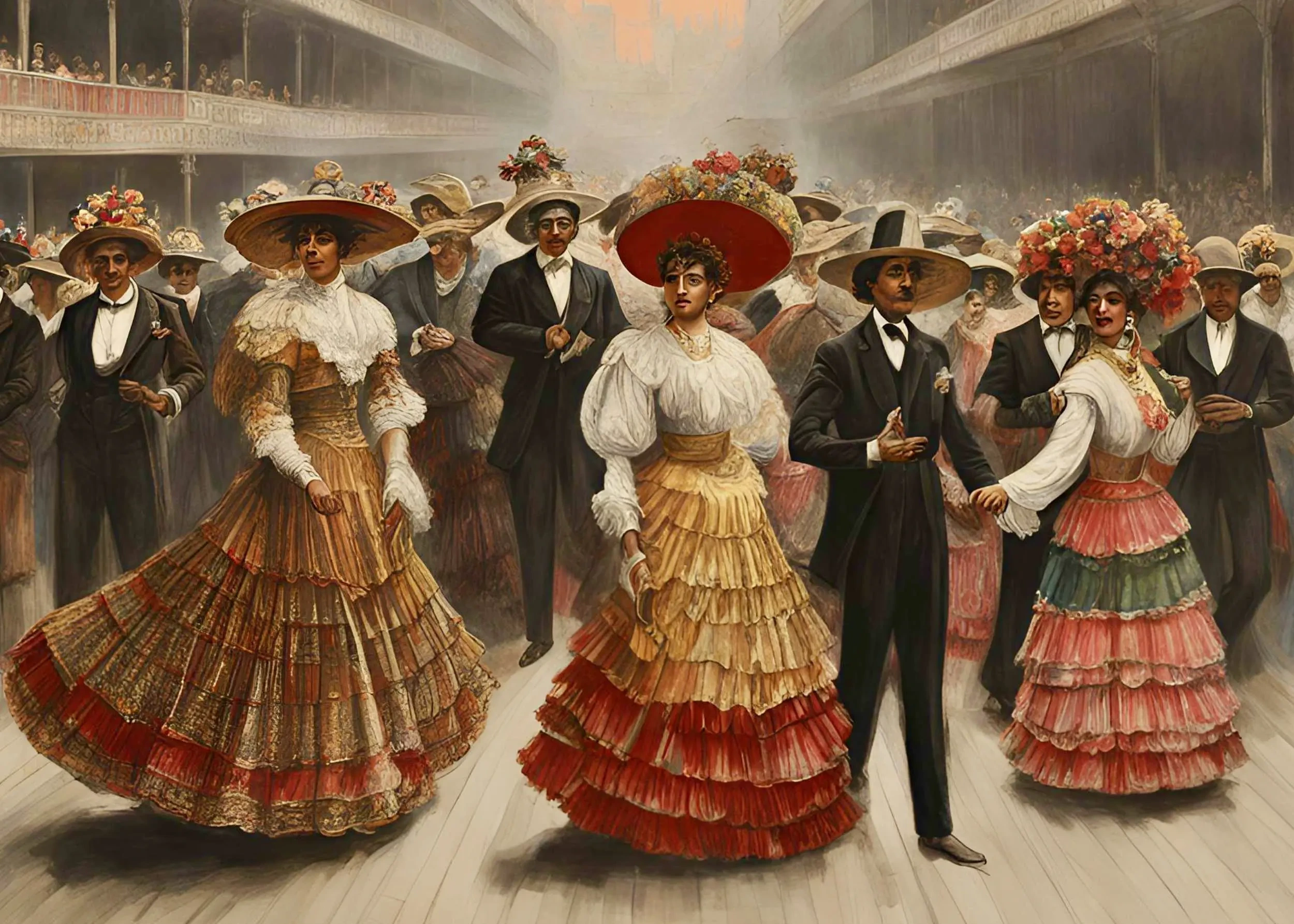
On November 28, 1901, a private residence on La Paz Street in Mexico City became the stage for one of the most infamous scandals in Latin American history. The film Dance of the 41 reconstructs this event where police raided a masquerade ball attended by forty-one men, many of whom were prominent figures in society. The raid exposed their identities and led to their arrest, effectively erasing them from public life through exile or institutionalization.
Director David Pablos brings this suppressed chapter to light with a visually rich narrative that contrasts the opulence of the Porfiriato era against the brutality of state repression. The story centers on Don Luis G. Urbina, a wealthy congressman and son-in-law of President Porfirio Díaz, who navigates the dangerous double life of a closeted gay man in a deeply conservative political climate. His relationship with Carlos Contreras adds a personal stakes to the historical drama as the couple faces the imminent threat of exposure.
Stream
Availability and pricing can change. Confirm on the provider's site before purchasing.
The narrative begins in late 1901, establishing the suffocating atmosphere of Mexico City under the long dictatorship of Porfirio Díaz. Don Luis G. Urbina appears to be a pillar of the establishment: a respected member of Congress married to the President's daughter. Behind closed doors, however, he leads a secret existence within a circle of gay men who gather at his home on La Paz Street. These gatherings are masked balls where attendees dress in elaborate drag costumes, mocking the rigid gender roles enforced by the state. The film meticulously details the preparations for an upcoming gathering, highlighting the tension between the joy of community and the constant fear of discovery.
Carlos Contreras enters the picture as a young, charismatic lover who becomes the focal point of Urbina's affection. Their relationship develops amidst the backdrop of the impending party, which serves as both a celebration of identity and a political act of defiance. The attendees include politicians, artists, and intellectuals who rely on their high social standing to feel safe. Yet the regime watches closely, and the moral panic surrounding homosexuality is palpable. The script explores how these men navigate a world where their very existence is considered a crime against the state.
As the night of the dance arrives, the mood shifts from festive anticipation to dread. The film captures the electric energy of the masked guests before the inevitable collapse of their sanctuary. Police officers, acting on intelligence or a pretext to crack down on perceived immorality, prepare to storm the venue. The narrative builds slowly, focusing on the psychological toll of living a lie and the camaraderie among the men who share a common secret. The camera lingers on the lavish costumes and the intimate moments between characters, making the impending violence feel even more jarring.
The evening unfolds with a sense of claustrophobia as the line between safety and danger blurs. Characters react to the growing threat with a mix of denial, bravado, and terror. The film does not rush to the climax but instead immerses the viewer in the emotional landscape of the participants. It highlights the human cost of state-sponsored homophobia and the fragility of life under an authoritarian regime. The story follows the group as they face the reality that their high status offers no real protection against the wrath of the government.
The buildup culminates in the arrival of the authorities, transforming the private sanctuary into a scene of chaos. The film documents the immediate aftermath of the raid, showing how the men are dragged out of the house and subjected to public humiliation. This sequence sets the stage for the broader consequences of the event, illustrating how the incident became a tool for the government to reinforce conservative values. The narrative leaves the audience with a profound understanding of the tragedy that unfolded that night and its lasting impact on Mexican society.
Official Trailer
Critical Consensus
Critics praise Dance of the 41 for its stunning visual reconstruction of 1901 Mexico and its unflinching portrayal of state-sponsored homophobia. Alfonso Herrera delivers a career-defining performance, balancing charm and vulnerability. The film transforms a historical scandal into a poignant meditation on identity and oppression, marking a vital addition to Latin American cinema.
“A sumptuous and devastating historical drama that shines a light on one of Mexico's darkest chapters. Alfonso Herrera gives a performance of quiet intensity.”
Peter Debruge
Variety
“David Pablos constructs a world of velvet and violence, where the masks worn by the guests reveal more truth than the faces beneath them.”
A.O. Scott
The New York Times
“A magnificent piece of filmmaking that uses the past to illuminate the present. A haunting reminder of the cost of silence.”
Robbie Collin
The Telegraph
Alfonso Herrera
Don Luis G. Urbina
Emiliano Zurita
Carlos Contreras
Mabel Cadena
María
Héctor Bonilla
President Porfirio Díaz
Luis Gerardo Méndez
Supporting Role
Director
David Pablos
Writer
Monika Revilla
Composer
Gustavo Santaolalla
Cinematographer
Alejandro Katz
Producers
José Antonio Varela, David Pablos
Premios Ariel (2021)
Best Picture: Won
Premios Ariel (2021)
Best Director: Won
Premios Ariel (2021)
Best Actor: Won
International Film Festival Rotterdam (2021)
Tiger Award: Nominated
Join the community
fans discussing