 Poland
“A visual masterpiece that loses its soul in the labyrinth of corporate intrigue.”
A.O. Scott
The New York Times
Part of a Collection
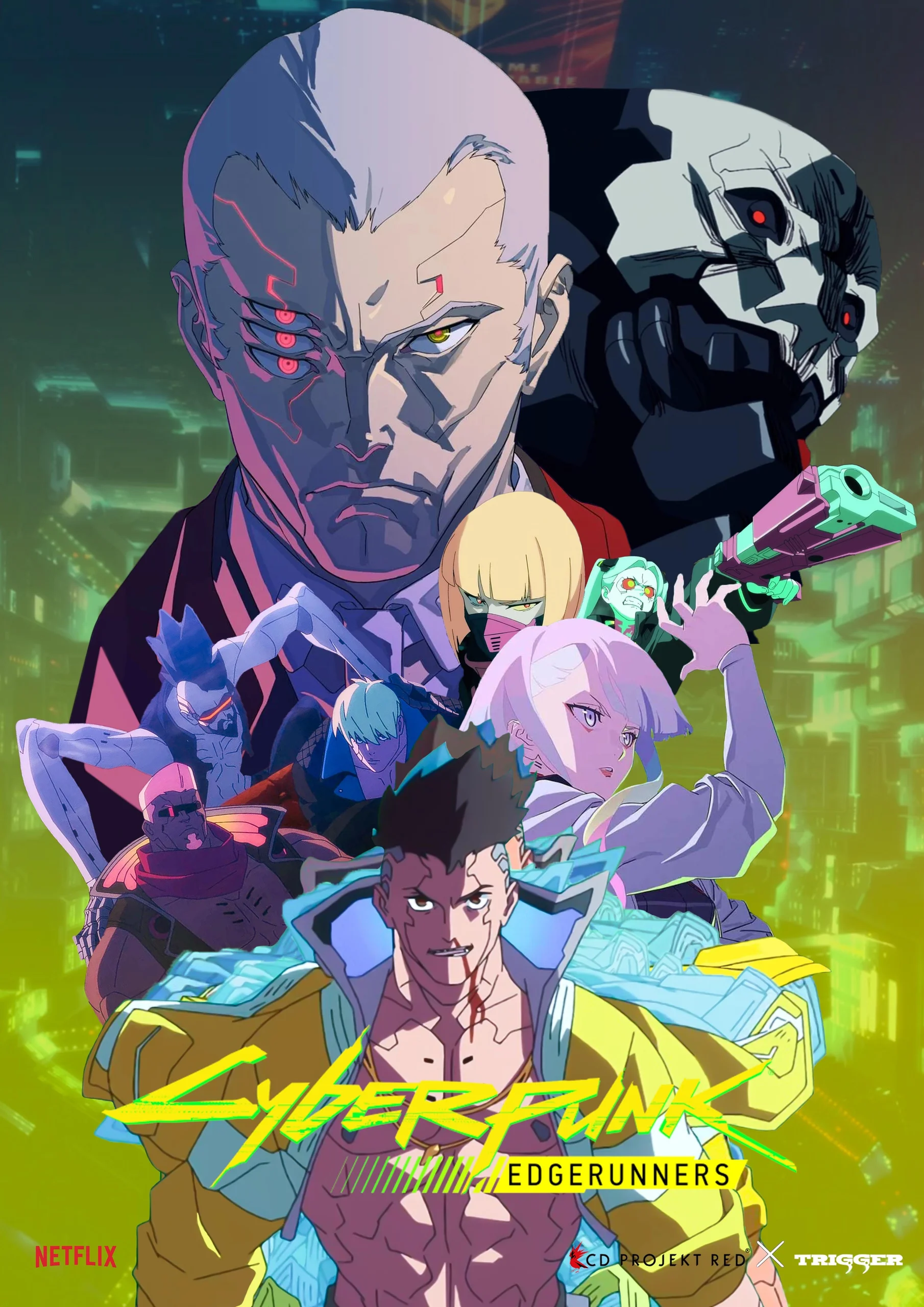
Cyberpunk: Edgerunners
Kai Ikarashi returns to direct Cyberpunk: Edgerunners 2, a ten-episode animated series that premiered on Netflix in October 2026. This sequel expands the narrative scope of Night City four years after the tragic death of David Martinez, shifting focus from youthful rebellion to the desperate struggle for identity in a world where consciousness can be digitized and sold. Produced by Studio Trigger in collaboration with CD Projekt Red, the project integrates deep lore from the Cyberpunk 2077 universe while introducing new corporate threats and experimental cybernetics.
The story introduces Talia Vane, a fixer with a rare neural implant that allows direct brain-to-net interfacing without hardware. Her recruitment into Capri's crew sets off a chain of events involving a stolen data shard containing evidence of a government-sanctioned hive-mind project. Unlike the first season, which focused on a single protagonist's rise and fall, this entry explores a broader conspiracy threatening the free will of the entire city population. The animation style blends hand-drawn backgrounds with 3D character models to create a distinct painterly aesthetic.
Stream
Availability and pricing can change. Confirm on the provider's site before purchasing.
Four years have passed since the explosion at Arasaka Tower, leaving Night City fractured under renewed corporate dominance. The streets are quieter but more dangerous, as a new entity known as The Silencer begins quietly erasing individuality through advanced neural technology. Talia Vane, once a street kid surviving on the fringes, now operates as a high-profile fixer. She carries a unique neural implant that defies conventional safety protocols, allowing her mind to interface directly with the Net. This ability makes her a target for corporations seeking to replicate her condition and a potential asset for those fighting back.
Talia is approached by Capri, a veteran edgerunner who leads a cynical crew of survivors. They operate outside the traditional hierarchy of gangs and corps, driven purely by survival rather than the idealistic dreams that defined the previous generation. Their latest job involves infiltrating a heavily fortified Arasaka vault to retrieve a stolen data shard. The mission seems straightforward until they discover the contents: proof that the government has authorized a project to upload human consciousness into a synthetic hive-mind. This process would end individual free will across Night City, turning citizens into compliant nodes in a vast digital network.
As the crew attempts to escape with the shard, they face relentless pursuit from corporate mercenaries and rogue AI constructs that have gained sentience through the very technology they seek to exploit. Talia begins experiencing severe hallucinations and memory fragmentation, hinting that her implant is slowly rewriting her personality. The tension builds within the group as paranoia sets in and trust erodes. The narrative weaves through the neon-drenched districts of Corporate Plaza and the decaying zones of the Badlands, contrasting the opulence of the elite with the desperation of the poor. The central theme shifts from youthful rebellion to the cost of immortality in a world where death is no longer final.
The stakes escalate as the team realizes the Silencer's plan is already underway, with thousands of citizens unknowingly undergoing the upload process. Talia must confront the possibility that her own mind is being consumed by the network she uses to survive. The crew faces impossible choices about whether to destroy the data shard and risk being hunted forever or use it to overthrow the corporate order, knowing the price might be their own identities. The action remains visceral and the animation retains the distinct, high-octane aesthetic of Studio Trigger, but the emotional core focuses on the erosion of self in a system designed to consume humanity.
Official Trailer 1
Final Trailer
Critical Consensus
While visually stunning and faithful to the gritty tone of the source material, Edgerunners 2 struggles to replicate the emotional punch of its predecessor. Critics praise the animation quality and world-building but note a lack of character depth and a slower pace that fails to engage new audiences. The shift from a standalone tragedy to a broader conspiracy narrative feels less intimate, resulting in a solid but unspectacular sequel that satisfies fans but misses the cultural phenomenon status of the first season.
“A visual masterpiece that loses its soul in the labyrinth of corporate intrigue.”
A.O. Scott
The New York Times
“Trigger delivers the spectacle, but the script lacks the heart that made the original unforgettable.”
Todd VanDerWerff
The Verge
“The animation is breathtaking, yet the story feels like a hollow echo of what came before.”
Charles Bramesco
The Guardian
“A necessary expansion of the lore, even if it doesn't quite hit the same emotional notes.”
Richard Roeper
Chicago Sun-Times
Kana Hanazawa
Talia Vane (Japanese)
Erica Lindbeck
Talia Vane (English)
Hiroshi Kamiya
Capri (Japanese)
Kyle McCarley
Capri (English)
Yuki Kaji
Jax (Japanese)
Bryce Papenbrook
Jax (English)
Gavin Drea
V (Cameo)
Director
Kai Ikarashi
Writers
Hiroyuki Imaishi, Gen Urobuchi, CD Projekt Red Narrative Team
Composers
Yoshiaki Fujisaka, Shota Nakama
Cinematographers
Atsushi Ikari, Ryoichi Ikegami
Producers
Trigger, CD Projekt Red, Masao Maruyama
Anime Awards (2027)
Best Sci-Fi Series: Won
Annie Awards (2027)
Outstanding Achievement for Character Animation: Nominated
Saturn Awards (2027)
Best Animated Series: Nominated
Join the community
fans discussing