“Saura's film is a work of great subtlety and beauty, using the eyes of a child to explore the dark corners of a repressive society.”
Roger Ebert
Chicago Sun-Times
 Spain
Spain"Raise ravens and they will pluck out your eyes."
User Score
12000 votes
Part of a Collection
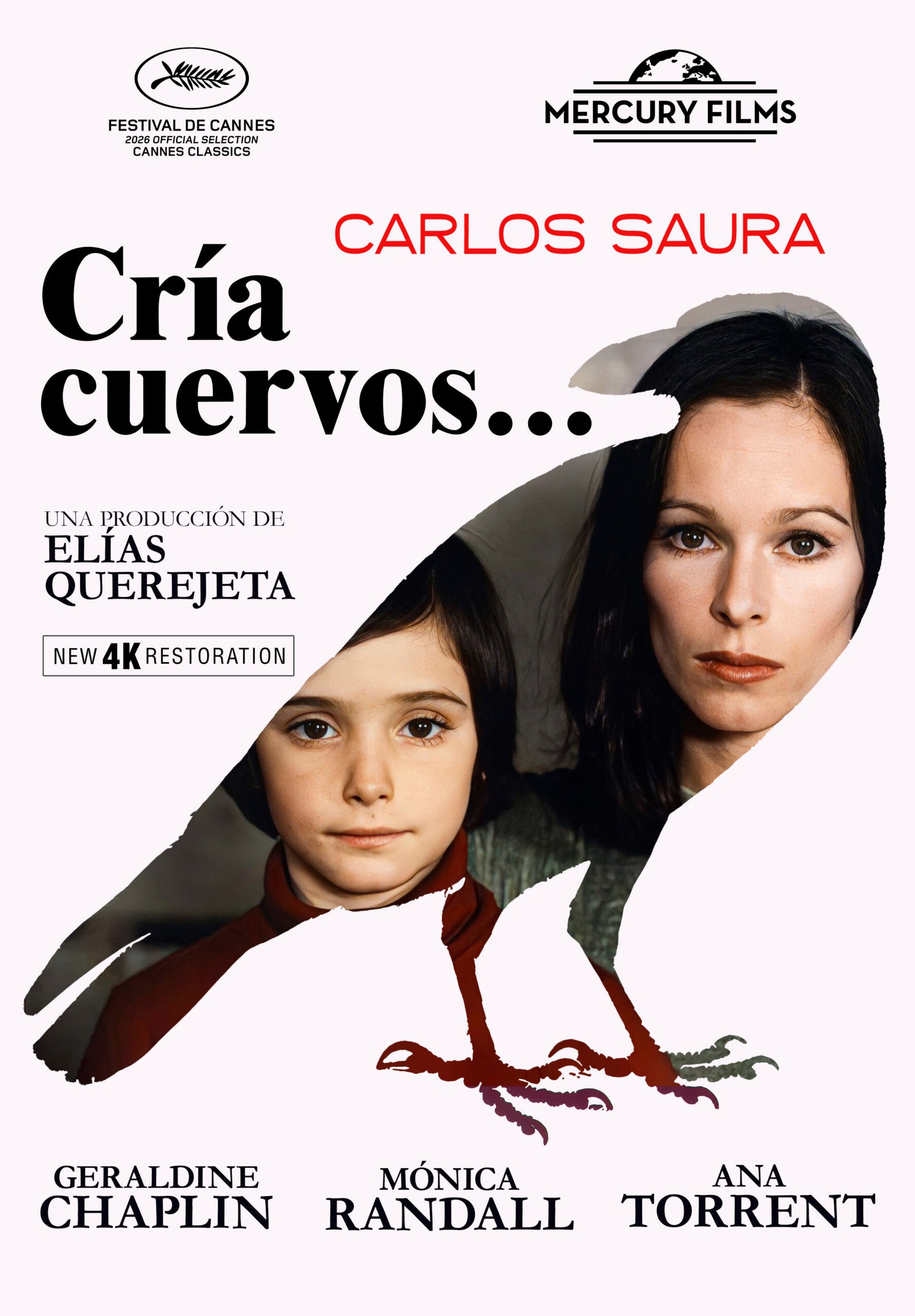
In the summer of 1975, as Francisco Franco's regime neared its end, Carlos Saura made a film that would become a cornerstone of Spanish cinema. Cría Cuervos (Raise Ravens) is a psychological drama seen through the eyes of eight-year-old Ana, played by Ana Torrent. After her father's sudden death, Ana retreats into a world of memory and fantasy, haunted by the ghost of her mother and the oppressive presence of her aunt.
Saura, a leading figure in Spain's art cinema, wrote and directed this allegorical story. Geraldine Chaplin plays dual roles as Ana's mother and her adult self, adding a layer of temporal ambiguity. The film won the Grand Prix at the 1976 Cannes Film Festival and was Spain's submission for the Academy Award for Best Foreign Language Film. With its dreamlike structure and haunting piano score by Federico Mompou, Cría Cuervos remains a profound meditation on childhood trauma and the legacy of authoritarianism.
Availability and pricing can change. Confirm on the provider's site before purchasing.
Eight-year-old Ana lives in a crumbling Madrid mansion with her two older sisters, Irene and Maite, and their stern Aunt Paulina. The story begins with the death of Ana's father, Anselmo, a military officer whose authoritarian presence defined the household. The narrative weaves between the present, the days after the funeral, and fragmented memories, creating a nonlinear, dreamlike flow that mirrors Ana's inner world.
Ana's mother, also named Ana, died of a mysterious illness years earlier. In her grief, the girl imagines her mother as a ghostly presence who offers comfort. Aunt Paulina, who has taken charge, is strict and cold, contrasting sharply with Rosa, the warm-hearted maid who shows the children genuine affection. Ana discovers a white powder in her father's study, which she believes may have been used to poison her mother. She secretly hoards it, contemplating its use as a means of escape from the oppressive adults around her.
Ana's relationship with her sisters is complex. Irene, the eldest, is rebellious and dreams of leaving home. Maite is quieter, more withdrawn. The youngest sister, who is mute, shares a silent bond with Ana. The film follows their daily routines: playing in the garden, attending school, and navigating the tense atmosphere of the household. Ana's fantasies blur with reality as she imagines confronting her aunt and father, using the powder to free herself.
A key sequence shows the girls dancing and singing to Jeanette's song "¿Por qué te vas?" in the garden, a moment of fleeting joy that contrasts with the gloom inside. The tension builds as Aunt Paulina becomes increasingly controlling, and Ana's obsession with the powder grows. The narrative builds toward a confrontation where Ana must decide whether to act on her dark impulses or remain trapped in her fantasies.
Critical Consensus
A haunting masterpiece of Spanish cinema, Cría Cuervos uses a child's perspective to explore trauma and political repression. Ana Torrent's performance is astonishing, and Saura's direction creates a dreamlike atmosphere that lingers long after the credits roll.
“Saura's film is a work of great subtlety and beauty, using the eyes of a child to explore the dark corners of a repressive society.”
Roger Ebert
Chicago Sun-Times
“Carlos Saura has made a film that is both deeply personal and politically resonant, a meditation on memory and loss.”
Vincent Canby
The New York Times
“Saura's direction is masterful, creating a claustrophobic atmosphere that mirrors the psychological imprisonment of his characters.”
Variety Staff
Variety
“A haunting, elliptical masterpiece that uses the conventions of the gothic melodrama to explore the legacy of Franco's Spain.”
David Parkinson
Empire Magazine
Ana Torrent
Ana (young)
Geraldine Chaplin
Ana's mother / Ana (adult)
Mónica Randall
Aunt Paulina
Héctor Alterio
Anselmo (father)
Florinda Chico Martín-Mora
Rosa (maid)
Conchi Pérez
Irene (sister)
Maite Sánchez
Maite (sister)
Mirta Miller
Amelia
Germán Cobos
Nicolás
Josefina Díaz
Grandmother
María Clara
Aunt Mercedes
Director
Carlos Saura
Writer
Carlos Saura
Composer
Federico Mompou
Cinematographer
Teo Escamilla
Producer
Elías Querejeta
Cannes Film Festival (1976)
Grand Prix du Jury: Winner
Cannes Film Festival (1976)
Palme d'Or: Nominee
CEC Awards (1977)
Best Film: Winner
CEC Awards (1977)
Best Director: Winner
CEC Awards (1977)
Best Actress: Winner
Fotogramas de Plata (1977)
Best Spanish Film: Winner
Sant Jordi Awards (1977)
Best Spanish Film: Winner
Academy Awards (1978)
Best Foreign Language Film: Nominee (submission)
National Board of Review (1978)
Top Foreign Films: Included
Join the community
fans discussing