 France
“It is a film that captures the essence of childhood wonder and the bittersweet passage of time, making you feel like you are watching your own memories come to life.”
Roger Ebert
Chicago Sun-Times
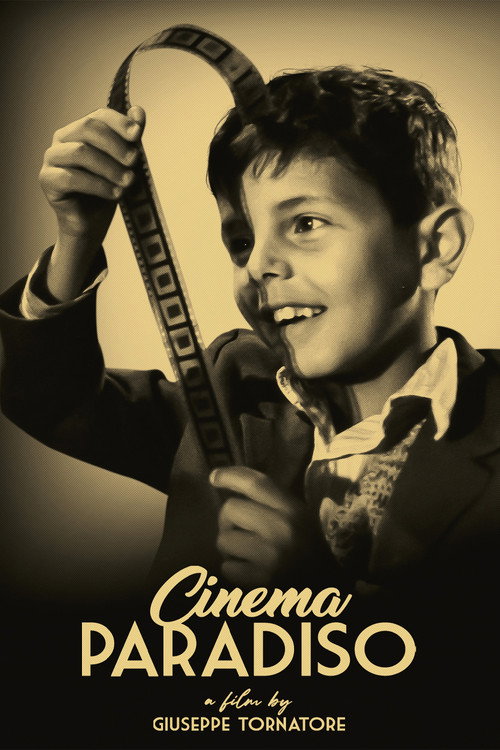
Giuseppe Tornatore's 1988 film Cinema Paradiso serves as a vibrant love letter to the golden age of Italian cinema. Set in a sun-drenched Sicilian village, the story follows Salvatore Di Vita as he looks back on his youth spent behind the screens and within the projection booth. The film blends drama and romance with a touch of nostalgia that resonates deeply with audiences worldwide. Philippe Noiret delivers a career-defining performance as Alfredo, the gruff yet kind-hearted projectionist who shapes young Totò's destiny. Marco Leonardi and Salvatore Cascio portray the boy at different stages of his growth, while Jacques Perrin brings maturity to the adult protagonist.
Produced on a modest budget of $5 million, the movie struck a chord globally, earning nearly $36 million at the box office and securing an impressive rating of 8.4 out of 10 from nearly 5,000 voters. Its blend of heartfelt storytelling and Ennio Morricone's soaring score created an emotional experience that feels both intimate and epic. The narrative structure frames the childhood memories through the eyes of an adult director returning home for a funeral, creating a layered exploration of memory and loss.
Availability and pricing can change. Confirm on the provider's site before purchasing.
The narrative opens in the fictional Sicilian village of Giancaldo during the final years of World War II. Young Salvatore Di Vita, known affectionately as Totò, is an imaginative boy who spends his days wandering the sun-drenched streets of his hometown. His life shifts irrevocably when he discovers the magic of the movies inside the dilapidated but beloved Cinema Paradiso. There, he forms an unlikely but profound friendship with Alfredo, a gruff yet deeply kind-hearted projectionist who has worked at the theater since before the war. Alfredo becomes a father figure to the orphaned Totò, teaching him not only how to operate the complex film projector but also imparting wisdom about life, love, and the power of storytelling.
Their bond deepens as they spend countless hours together in the projection booth, surrounded by reels of celluloid and the smell of burning film. Through their relationship, Totò learns to see the world through the lens of a filmmaker, while Alfredo finds renewed purpose in mentoring the boy. However, their time together faces external threats. The Catholic Church, represented by Father Adelfio, views the movies as a corrupting influence on the youth. Consequently, the church imposes strict censorship on the films shown at the theater, leading to the infamous scene where a reel of romantic kisses is cut out, leaving the projectionist and audience with a jarring sequence of characters staring blankly at one another. Despite these restrictions, the theater remains a sanctuary for the community, a place where people from all walks of life escape their daily struggles to dream.
As Totò grows into adolescence, his feelings for the beautiful Elena Mendola blossom into a first love. He pursues her with the intensity of a young man in love, but their romance faces significant obstacles due to class differences and societal expectations. Meanwhile, the war ends, and the town begins to modernize. The arrival of television and the construction of a new, multiplex-style cinema threaten the existence of the old Cinema Paradiso. The theater falls into disrepair, and the community begins to drift away from the magic of the silver screen. Alfredo, seeing the changing times and recognizing that Totò's destiny lies beyond the small confines of Giancaldo, makes a difficult decision regarding the boy's future. He encourages Totò to leave his home, pursue his dreams of becoming a filmmaker, and never look back. This advice, delivered with a mix of sternness and affection, sets the stage for the central conflict: the tension between the pull of home and the call of ambition. Totò eventually leaves, driven by the desire to create art and the belief that he must experience the world to understand it fully.
Years pass, and the town transforms, the old theater closes, and Totò builds a successful career in Rome, though he remains haunted by memories of his past and the woman he left behind. The story culminates in his return for Alfredo's funeral, setting the emotional stage for the revelation of what happened to the boy's love and the true nature of the mentorship that shaped his life. The original theatrical version runs for 124 minutes, while the restored Director's Cut extends the runtime to 173 minutes to include more depth regarding the romance and town history.
Cinema Paradiso Official Trailer
Cinema Paradiso Official 25th Anniversary trailer from Arrow Films
Critical Consensus
Giuseppe Tornatore crafted a masterfully nostalgic ode to the magic of film. Philippe Noiret anchors the tender direction with an unforgettable performance, supported by Ennio Morricone's soaring score. The film explores memory and loss with a universal resonance that transcends language barriers.
“It is a film that captures the essence of childhood wonder and the bittersweet passage of time, making you feel like you are watching your own memories come to life.”
Roger Ebert
Chicago Sun-Times
“A magnificent, emotionally resonant tribute to the movies, featuring a performance by Philippe Noiret that stands as a benchmark for character acting.”
Janet Maslin
The New York Times
“Tornatore has created a work of art that transcends language barriers, offering a universal message about the importance of dreams and the cost of leaving them behind.”
Variety Staff
Variety
“A visually stunning and deeply moving film that celebrates the power of cinema to heal and inspire, with a score by Morricone that is pure poetry.”
Peter Bradshaw
The Guardian
Philippe Noiret
Alfredo
Jacques Perrin
Salvatore 'Totò' Di Vita (adult)
Marco Leonardi
Salvatore 'Totò' Di Vita (teen)
Salvatore Cascio
Salvatore 'Totò' Di Vita (child)
Agnese Nano
Elena Mendola (teen)
Brigitte Fossey
Elena Mendola (adult)
Antonella Attili
Maria Di Vita (young)
Pupella Maggio
Maria Di Vita (aged)
Enzo Cannavale
Spaccafico
Isa Danieli
Anna
Leo Gullotta
Ignazio (Usher)
Leopoldo Trieste
Father Adelfio
Director
Giuseppe Tornatore
Writers
Giuseppe Tornatore, Vanna Paoli
Composer
Ennio Morricone
Cinematographer
Blasco Giurato
Producers
Giovanni Romagnoli, Franco Cristaldi
Academy Awards (1990)
Best Foreign Language Film: Won
Academy Awards (1990)
Best Original Screenplay: Nominated
Cannes Film Festival (1989)
Grand Prix du Jury: Won
BAFTA Awards (1990)
Best Film Not in the English Language: Won
Golden Globe Awards (1990)
Best Foreign Language Film: Won
David di Donatello Awards (1989)
Best Film: Won
David di Donatello Awards (1989)
Best Director: Won
David di Donatello Awards (1989)
Best Actor: Won
Join the community
fans discussing