“Wells has made a film that is both a portrait of a father and a eulogy for the past, with a precision that makes every frame ache.”
Anthony Lane
The New Yorker
 United States
"Memory burns."
User Score
140,000 votes
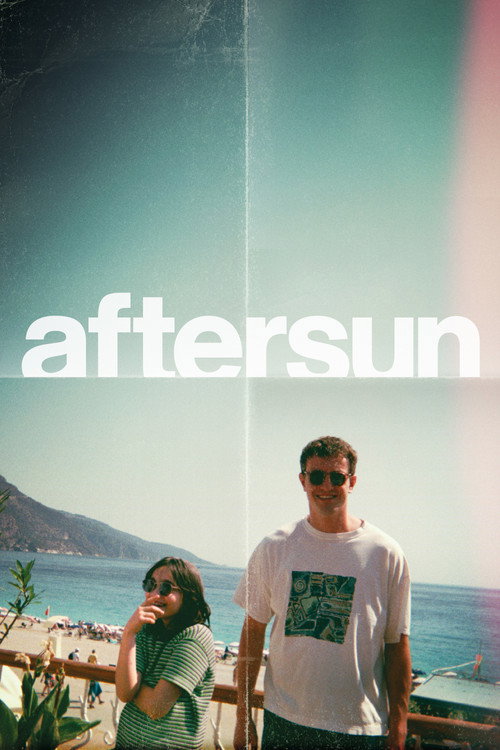
Charlotte Wells made her feature directorial debut with a film that reimagines the summer vacation movie through the lens of grief and memory. The story follows Sophie, now an adult, as she sifts through home video footage from a 1999 trip to Turkey to understand her father Calum better. What begins as a nostalgic look at a family holiday slowly transforms into a heartbreaking investigation into the invisible struggles of a man who hid his pain behind a smile.
The film avoids melodrama in favor of quiet observation. It captures the specific texture of the late nineties with its camcorder aesthetic, grainy visuals, and period-specific songs. Paul Mescal delivers a performance defined by restraint, showing a father who is loving yet distant, present yet absent. The narrative structure mirrors how memory actually works: not as a linear timeline, but as a collection of fragmented moments that we try to piece together after the fact.
Stream
Rent
Availability and pricing can change. Confirm on the provider's site before purchasing.
The story opens in the present day with Sophie (Celia Rowlson-Hall) sitting in front of a computer screen, watching grainy footage recorded twenty years earlier. These tapes capture a summer vacation in Çeşme, Turkey, where eleven-year-old Sophie (Frankie Corio) and her twenty-nine-year-old father Calum (Paul Mescal) spent their last days together. The setting is a fading resort hotel where the sun beats down on turquoise waters and neon signs flicker against the night sky. The camera work mimics the limitations of a consumer camcorder from 1999, complete with low-light artifacts and shaky handheld movements that make every moment feel intimate and unpolished.
Calum presents himself as the perfect dad during this trip. He teaches young Sophie tai chi in the hotel room, takes her swimming in the pool, and encourages her to explore the local markets. They share cheap meals, laugh over karaoke nights, and watch fireworks light up the harbor. There is a palpable warmth between them, yet the atmosphere is often undercut by moments of silence. Calum frequently retreats to the balcony or sits alone in the bar, staring into space while engaging in brief, intense conversations with strangers that hint at a deep internal struggle. He seems to be fighting a battle that no one else can see.
Sophie navigates the awkward transition from childhood to adolescence. She is largely unaware of the gravity of her father's condition, viewing him with a mix of adoration and teenage embarrassment. She records her own footage of the trip, capturing the mundane details of their holiday without realizing the significance of what she is documenting. The film focuses on small interactions: a conversation about dreams late at night, a moment of vulnerability while applying sunscreen, or a fleeting look exchanged across a crowded room. These moments accumulate to create a portrait of a man desperately trying to create a perfect memory for his daughter before the end of the trip.
As the vacation draws to a close, the tone shifts from carefree to melancholic. The bond between father and daughter feels both incredibly strong and terrifyingly fragile. Sophie continues to record the final hours, unaware that these tapes will become the only bridge she has to understand the man who shaped her life. The narrative leaves the audience with a profound sense of loss and the haunting realization that sometimes, the people we love most are the ones we know least until it is too late. The film does not show a dramatic crisis; instead, it shows the slow erosion of hope and the quiet tragedy of a mind closing off.
Official Trailer
Official Trailer #2
Official US Trailer
Critical Consensus
A masterfully crafted meditation on memory and loss, Aftersun delivers a quietly devastating performance from Paul Mescal. Charlotte Wells' debut feature is a triumph of understated storytelling, using the passage of time and the fragmentation of memory to explore the invisible burdens carried by those we love.
“Wells has made a film that is both a portrait of a father and a eulogy for the past, with a precision that makes every frame ache.”
Anthony Lane
The New Yorker
“Mescal gives a career-defining performance, conveying a depth of sorrow that is almost unbearable to watch. It is a masterpiece of restraint.”
David Ehrlich
IndieWire
“A haunting, beautiful film that lingers long after the credits roll, proving that the most powerful stories are often the ones told in whispers.”
Manohla Dargis
The New York Times
“Paul Mescal is extraordinary, and Charlotte Wells has created a film that is both deeply personal and universally resonant.”
Peter Bradshaw
The Guardian
“A stunning debut that captures the complexity of father-daughter relationships with a sensitivity that is rare in cinema.”
Owen Gleiberman
Variety
Paul Mescal
Calum
Frankie Corio
Young Sophie
Celia Rowlson-Hall
Adult Sophie
Brooklyn Toulson
Michael
Sally Messham
Belinda
Director
Charlotte Wells
Writer
Charlotte Wells
Composer
Oliver Coates
Cinematographer
Gregory Oke
Producers
Adele Romanski, Mark Ceryak, Barry Jenkins, Amy Jackson
BAFTA Awards (2023)
Best British Film: Won
Academy Awards (2023)
Best Actor: Nominated
Cannes Film Festival (2022)
Queer Palm Award: Won
Independent Spirit Awards (2023)
Best Feature: Won
Golden Globe Awards (2023)
Best Motion Picture – Drama: Nominated
Join the community
fans discussing