 France
“Kahn combines compassion with coolly detailed forensic scrutiny in this genre-challenging film which puts a troubled love story at the center of a chaotic psych ward.”
Peter Debruge
Variety
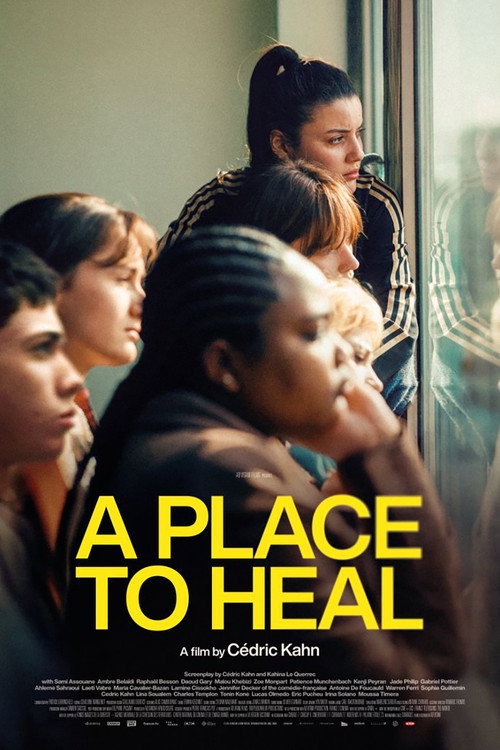
Cédric Kahn returns to the stark corridors of French public health with A Place to Heal, a drama that refuses to offer easy answers for the fractured minds of adolescence. The film drops viewers directly into an adolescent psychiatry unit where the only constant is the erratic rhythm of teenagers entering and leaving, often carrying heavy emotional baggage that weighs down the medical staff just as much as the patients. Malou Khebizi leads the cast as Lucia, a young girl who knows these sterile hallways too well after being brought back by police yet again. She reunites with her friend Éloise, played by Zoé Monpart, while navigating a chaotic environment filled with peers like Enzo, Ulysse, Charline, and Yasmine, each fighting their own private storms.
Produced on a modest $4 million budget by Ad Vitam Production and France 2 Cinéma, the film captures the raw, unvarnished reality of mental health care without relying on Hollywood melodrama. Writers Kahn and Kahina Le Querrec crafted a script that feels less like a structured narrative and more like a slice of life, focusing on the small moments of laughter and fragile hope that punctuate the darkness. The tone remains grounded and intimate, driven by Patrick Ghiringhelli's naturalistic cinematography and Gael Rakotondrabe's subtle score. While the arrival of a new patient threatens to shatter the delicate balance within the ward, the story focuses on the relentless cycle of treating, listening, and confronting suffering that defines this specific corner of the healthcare system.
Stream
Canal+
Availability and pricing can change. Confirm on the provider's site before purchasing.
The narrative unfolds within the white-walled confines of a French public hospital, specifically an adolescent psychiatry unit where the architecture itself seems to enforce a rigid order upon the chaos of human emotion. The film does not follow a single protagonist through a linear journey but instead presents a rhythmic, episodic observation of daily life in a ward where the only true constant is the ebb and flow of teenagers entering and leaving. These young people arrive carrying heavy emotional burdens that weigh down both themselves and the overworked medical staff assigned to them. Lucia, portrayed by Malou Khebizi, returns to this facility yet again, having been brought back by police. For her, these sterile hallways are a familiar, if unwelcome, home; she knows the routines, the rules, and the faces of the staff better than most. Her return marks a reunion with her friend Éloise, played by Zoé Monpart, whose presence offers a fragile anchor in an otherwise turbulent environment.
The ward is populated by a diverse ensemble of troubled youths, each fighting their own private storms. There is Enzo, a volatile young man grappling with his temper, and Ulysse, who seems detached from reality. Charline navigates complex family dynamics while Yasmine deals with deep-seated trauma. Other residents include Marvin, James, Camélia, Zoran, Mélissa, and André. Each character brings a unique set of symptoms, triggers, and coping mechanisms to the table, creating a microcosm of adolescent dysfunction. The staff, led by a dedicated but weary doctor and his team, attempts to maintain order while providing genuine care, often finding themselves caught between professional detachment and human empathy. They manage the daily logistics of medication, therapy sessions, and conflict resolution, all while trying to see the person behind the diagnosis.
The central conflict arises not from a single external villain but from the cumulative pressure of the environment itself. As new patients arrive and old ones leave, the delicate equilibrium of the group is constantly threatened. The narrative focuses on the small, often overlooked moments of connection, a shared laugh in the cafeteria, a silent understanding in the hallway, or a moment of vulnerability during therapy, that punctuate the darkness. However, the arrival of a particularly difficult new patient threatens to shatter the existing bonds and test the limits of the staff's patience and resources. Writer-director Cédric Kahn, collaborating with Kahina Le Querrec, crafts a script that refuses to offer easy answers or Hollywood-style resolutions. Instead, the film immerses the viewer in the raw, unvarnished reality of mental health care.
Through Patrick Ghiringhelli's naturalistic cinematography and Gael Rakotondrabe's subtle score, the audience is drawn into the intimate lives of these teenagers. The story explores themes of resilience, the failure of systems, and the search for identity amidst chaos. As the days pass, the characters must confront their pasts and face the uncertain future, all while trapped within the walls of this "place to heal." The film builds tension through the accumulation of small crises and the slow unraveling of personal defenses. It documents the struggle to find moments of grace amidst the chaos, showing how the act of showing up, listening, and enduring together becomes a form of healing in itself, even when the institution remains flawed and the outcomes uncertain.
Critical Consensus
Cédric Kahn delivers a rawly sensitive and visually grounded drama that eschews melodrama for a hauntingly authentic portrayal of adolescent mental health. While occasionally uneven in pacing, the film's powerful ensemble cast and compassionate direction create a deeply moving study of resilience within a fractured system, offering no easy answers but plenty of heart.
“Kahn combines compassion with coolly detailed forensic scrutiny in this genre-challenging film which puts a troubled love story at the center of a chaotic psych ward.”
Peter Debruge
Variety
“A heartfelt, docu-realist study of a French teen psychiatric facility that manages to find beauty in the bleakness without ever becoming maudlin.”
Peter Bradshaw
The Guardian
“An uneven but ultimately triumphant teen psych ward drama that busts taboos with a rare mix of intimacy and brutal honesty.”
David Ehrlich
IndieWire
“Kahn's immersion in the facility pays off in a performance-driven narrative that feels less like a movie and more like a window into a hidden world.”
Scott Foundas
Los Angeles Times
“A terrific ensemble piece that captures the daily tumult of an adolescent psychiatric ward with a sensitivity that rarely fails to move.”
Todd McCarthy
The Hollywood Reporter
Malou Khebizi
Lucia
Zoé Monpart
Éloise
Kenji Peyran
Enzo
Raphaël Besson
Ulysse
Patience Munchenbach
Charline
Ahleme Sahraoui
Yasmine
Jade Philip
Camélia
Laeti Vabre
André
Daoud Gary
Marvin
Sami Assouane
Zoran
Ambre Belaidi
Mélissa
Gabriel Pottier
James
Director
Cédric Kahn
Writers
Cédric Kahn, Kahina Le Querrec
Composer
Gael Rakotondrabe
Cinematographer
Patrick Ghiringhelli
Producer
Alexandra Henochsberg
Venice Film Festival (2026)
Golden Lion: Nominated
Venice Film Festival (2026)
Best Actress: Won
Venice Film Festival (2026)
FIPRESCI Prize: Won
Toronto International Film Festival (2026)
People's Choice Award (Midnight Madness): Nominated
César Awards (2027)
Best First Feature Film: Nominated
César Awards (2027)
Best Actress: Nominated
César Awards (2027)
Best Original Screenplay: Nominated
Join the community
fans discussing