 Egypt
EgyptAbout
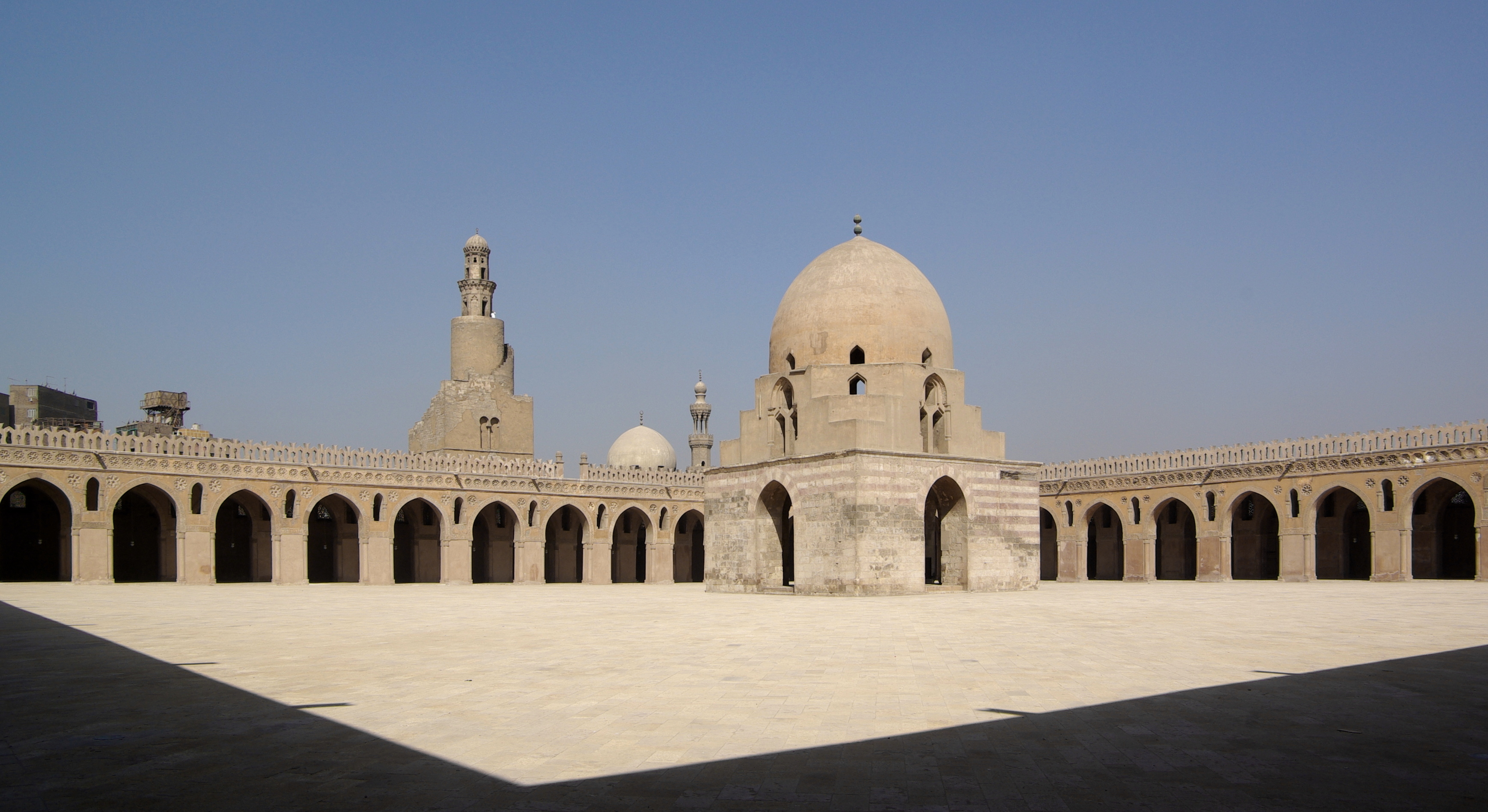
The Mosque of Ibn Tulun rises from the heart of Islamic Cairo as the oldest mosque in Egypt that has survived in its original form. Built between 876 and 879 CE, it was commissioned by Ahmad ibn Tulun, the founder of the Tulunid dynasty, who governed Egypt with considerable autonomy under the Abbasid caliphate. The mosque's design draws heavily from the great mosques of Samarra, the Abbasid capital in Iraq, making it a rare and precious example of classical Abbasid architecture outside of Iraq. Its vast courtyard, spiral minaret, and distinctive crenellations have made it a favorite subject for photographers and a must-see for anyone interested in Islamic art and history.
The mosque is not just an architectural relic; it remains a functioning place of worship and a popular tourist attraction. Its sheer scale is impressive, with a courtyard large enough to hold thousands of worshippers. The structure is built of red brick, a material typical of Abbasid-era buildings, and covered with a layer of stucco carved with intricate geometric and floral patterns. The minaret, with its unique spiral staircase that wraps around the outside, is one of the most recognizable in Cairo.
While the mosque has no box office or budget, its cultural and historical value is immeasurable. It has been meticulously restored over the centuries and is now a UNESCO World Heritage Site as part of Historic Cairo. For visitors, it offers a quiet, contemplative space away from the bustling city, and its elevated position provides panoramic views of the surrounding area. The Mosque of Ibn Tulun is a testament to the ingenuity and artistic vision of the Tulunid era, and it continues to inspire awe in all who visit.
Mission
The mosque's original purpose was to serve as the main congregational mosque for Ibn Tulun's new capital, al-Qata'i, providing a grand space for Friday prayers and religious gatherings. Today, its mission encompasses multiple functions: it remains a functioning place of worship for Cairo's Muslim community, serves as a major tourist destination for visitors interested in Islamic art and architecture, and operates as a living museum of Abbasid-era design. During Ramadan, the mosque participates in Egypt's rich tradition of historic mosques hosting spiritual activities and gatherings, as Cairo is home to more than 400 Islamic landmarks representing a diverse heritage of architectural styles.
History
The mosque was built between 876 and 879 CE on Jebal Yashkur, a hill where tradition holds Noah's Ark came to rest after the Great Flood. Ahmad ibn Tulun, a Turkish governor of Egypt and Syria, commissioned the structure as the main congregational mosque for al-Qata'i, the new capital he founded adjacent to the older settlement of Fustat. The choice of red brick was deliberate, Ibn Tulun selected the material to reduce the risk of fire damage, a concern that shaped many Abbasid-era buildings.
After the Tulunid dynasty fell in 905, the Abbasids razed al-Qata'i, but the mosque survived, and most of the city was lost to history. Over the centuries, the mosque underwent numerous restorations, with significant work carried out in the Fatimid, Mamluk, and Ottoman periods. It has endured political upheaval and natural decay, remaining one of the few surviving structures from Ibn Tulun's ambitious capital. In the modern era, the Egyptian government has taken responsibility for its preservation, and it now forms part of Historic Cairo, a UNESCO World Heritage Site. The surrounding area has seen cultural revitalization in recent years, including the restoration of Beit Tulun, a historic house near the mosque that reopened as a cultural space in 2025.
Notable People
Ahmad ibn Tulun
Founder and patron · c. 835–884
Founded the Tulunid dynasty and commissioned the mosque as the centerpiece of his new capital, al-Qata'i.
Reem Bassiouney
Novelist · 21st century
Her novel about Ibn Tulun's reign brought renewed public attention to this period of Egyptian history.
Milestones
876–879
Construction of the mosque under Ahmad ibn Tulun
905
Fall of the Tulunid dynasty; most of al-Qata'i destroyed, but the mosque survives
1979
Historic Cairo, including the mosque, designated a UNESCO World Heritage Site
2025
Beit Tulun, a nearby historic house, reopens as a cultural center in partnership with D-CAF
Sources
Organization Info
- Founded
- 879
- Headquarters
- Ahmad Ibn Tulun Square, Sayyida Zaynab, Cairo, Egypt
- Country
- Egypt
- Parent
- Ministry of Tourism and Antiquities (Egypt)
- Type
- Religious
- Architectural style
- Abbasid
- Material
- Red brick with stucco
Join the community
fans discussing