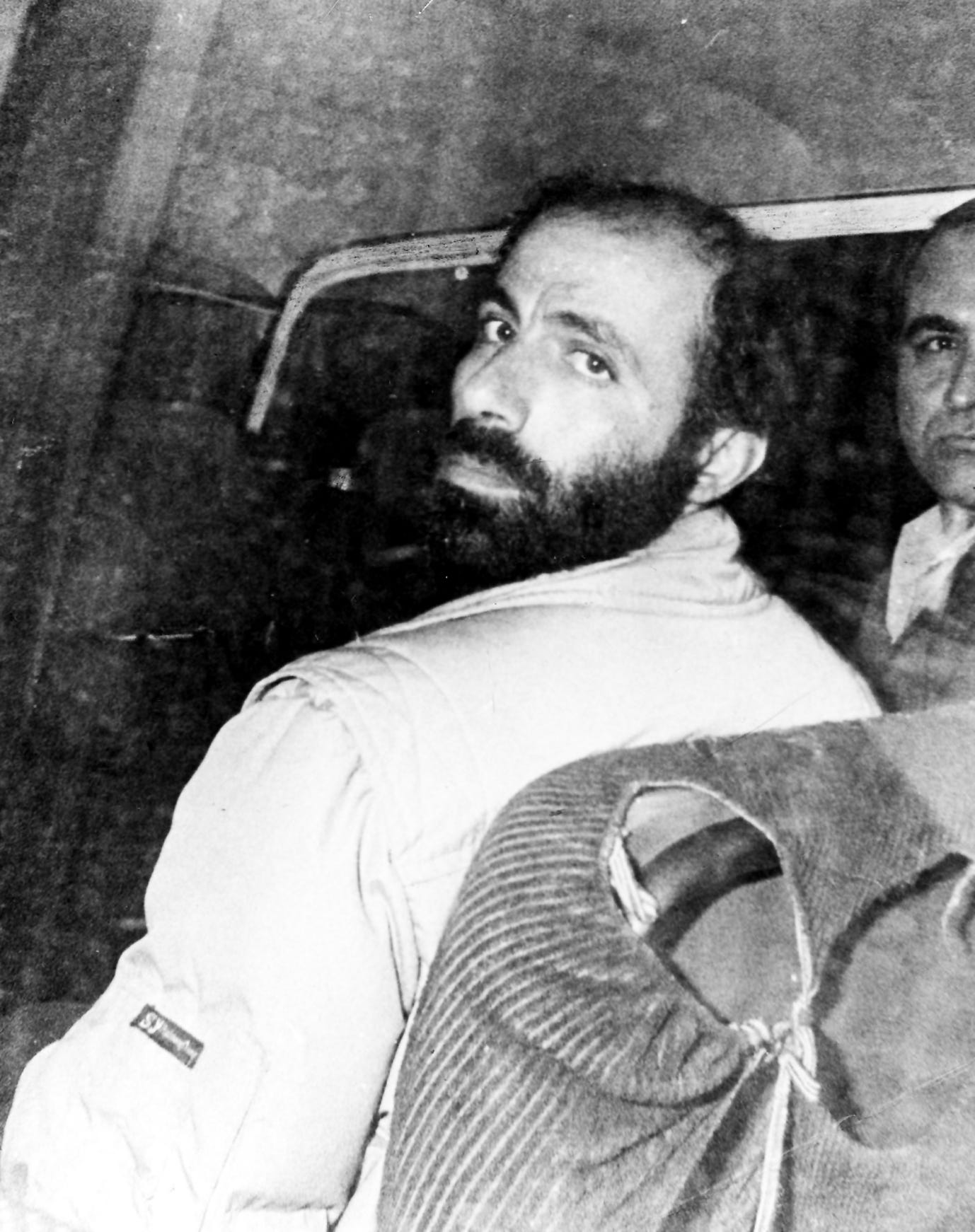
Mordechai Vanunu
 Morocco
former nuclear technician•whistleblower•peace activist
Also known as: Mordechai Vanunu, Mordehay Vanunu
Birthday
October 13, 1954
Birth Sign
Libra
Birthplace
Marrakech, Morocco
Age
72 years old
About
Mordechai Vanunu is an Israeli former nuclear technician and peace activist who became one of the most consequential whistleblowers of the Cold War era. In 1986, he exposed the inner workings of Israel's secret nuclear weapons program at Dimona, providing the world with photographs and detailed testimony that had never been seen before. His actions shattered the veil of secrecy around Israel's nuclear capabilities and ignited a global debate about nuclear proliferation and state transparency.
Today, Vanunu lives in Israel under restrictions that have followed him since his release from prison in 2004. He remains a polarizing figure: celebrated by disarmament advocates as a moral hero, and condemned by many in Israel as a traitor. His life story, marked by abduction, secret trial, and 18 years of imprisonment, continues to resonate with activists and journalists worldwide. Vanunu's case has become a reference point in discussions about whistleblowing, government accountability, and the human cost of speaking truth to power.
Early Life & Background
Mordechai Vanunu was born in Marrakech, Morocco, on October 13, 1954, into a Jewish family. The family immigrated to Israel in 1963, settling in a working-class neighborhood in Ramat Gan. Growing up in a large family, Vanunu was known as a quiet and studious child. He attended a local religious school before moving to a secular high school, where he developed an interest in science and technology.
After completing his mandatory military service in the Israel Defense Forces, Vanunu studied at a technical college in Tel Aviv, earning a degree in mechanical engineering. In 1976, he applied for a position at the Dimona nuclear facility, one of the most secretive installations in Israel. He was accepted and underwent extensive security vetting. For the next nine years, he worked as a technician, handling plutonium and monitoring reactor operations. During this period, he became increasingly troubled by the military nature of the program and what he saw as the potential for catastrophic consequences. His growing moral objections eventually led him to resign in 1985, setting the stage for his later disclosures.
Career Growth
Vanunu's decision to go public came in 1986. After leaving Dimona, he traveled to Australia, where he converted to Christianity and met a journalist who helped him connect with the British press. In September 1986, the London newspaper The Sunday Times published his story, complete with photographs he had secretly taken inside the Dimona facility. The revelations were explosive: they proved that Israel had a substantial nuclear arsenal, contradicting its official policy of nuclear ambiguity.
The fallout was immediate. Vanunu was lured to Rome by a Mossad agent, drugged, and abducted. He was smuggled back to Israel on a cargo ship and held incommunicado. His trial was held behind closed doors, and in 1988 he was convicted of treason and espionage, receiving an 18-year prison sentence. He served over 11 years in solitary confinement, a punishment that drew international condemnation from human rights groups. Released in 2004, he was barred from contacting foreign media and leaving the country. In 2010, he was briefly returned to solitary confinement after meeting with a foreign national, a move criticized by Amnesty International. Vanunu has since become a symbolic figure for nuclear disarmament, receiving the Right Livelihood Award in 2010.
Career Timeline
Public Image & Style
Mordechai Vanunu is seen by many as a whistleblower in the tradition of Daniel Ellsberg and Edward Snowden, a man who risked everything to expose state secrets he believed were dangerous to humanity. His gaunt appearance and quiet demeanor, often captured in photographs, have come to symbolize the personal cost of dissent. He has been embraced by peace activists and nuclear disarmament campaigns, who frequently cite his case as an example of the persecution faced by those who challenge the military-industrial complex.
In Israel, however, his image is far more negative. He is widely viewed as a traitor who endangered national security, and his name is often invoked in debates about loyalty and patriotism. The government's continued restrictions on him, including a ban on leaving the country, have kept him in the public eye, making him a recurring subject of commentary in both Israeli and international media.
Fame & Fandom (iFAMOUS Rankings)
Mordechai Vanunu stands as a singular figure in the annals of modern dissent, currently holding the position of the 25th most famous person from Morocco according to the iFANN Global Fame Rankings. This placement reflects a global consciousness that recognizes his impact far beyond his birthplace, anchoring him firmly within the history of Cold War whistleblowing. His profile is tracked across media coverage, search trends, and consumption signals worldwide, cementing his status as a historical icon rather than a fleeting celebrity. While his fame is rooted in serious political activism, the reach of his story ensures he remains a prominent name in international discourse.
Despite his global recognition, Vanunu does not possess a traditional fandom or fanbase. There is no organized group of supporters who refer to themselves by a specific name, nor are there fan-driven campaigns, birthday celebrations, or ritualistic gatherings dedicated to his memory. The individuals who champion his cause identify primarily as peace activists, human rights advocates, and members of organizations like the Campaign for Nuclear Disarmament. In London, the CND office bears his name, reflecting institutional solidarity rather than the fervor of a fan community. His supporters operate as a dispersed network of journalists, legal aid groups, and anti-nuclear campaigners who view him as a symbol of moral courage rather than an entertainer to be adored.
Interesting Facts and Legends
The photographs Vanunu provided to The Sunday Times were deemed so sensitive that nuclear experts reviewed them before publication, triggering a massive manhunt by Israeli authorities once his disappearance was noted. During his captivity, he was held in a windowless special cell where guards were forbidden from speaking to him, communicating with lawyers only by sliding notes under the door. His case inspired the 2004 documentary Mordechai Vanunu: The Whistleblower and served as the subject of Motti Lerner's play Vanunu. After release, he lived under Anglican Church protection in Jerusalem and has consistently stated he feels no regret for acting on his moral obligation to humanity.
A defining legend surrounding Vanunu involves the dramatic abduction that led to his imprisonment. He was lured to Italy by an Israeli agent posing as a wealthy woman, drugged, and smuggled back to Israel in a staged kidnapping scenario. Upon return, he faced a secret trial and was sentenced to 18 years, spending 11 of those years in solitary confinement. This narrative of state repression against a lone technician has become a central pillar of his mythology, transforming him into a global symbol of the cost of whistleblowing. Even after his 2004 release, stories persist of his continued struggle against strict travel bans and surveillance, reinforcing his image as a prisoner of conscience who sacrificed liberty for the truth.
Notable Quotes
“I did not do it for money or for any other reason. I did it because I believe in the future of the world.”
“I am not a traitor. I am a patriot who loves his country and wants to save it from itself.”
“The nuclear weapon is a weapon of mass destruction, and I think it's against the Jewish religion to have such a weapon.”
Family & Personal Life
Mordechai Vanunu was born into a family of nine children. His father, Shlomo, was a rabbi, and his mother, Mazal, was a homemaker. The family immigrated to Israel in 1963, and Vanunu has described his childhood as poor but happy. He has rarely spoken publicly about his family, and their lives have remained largely out of the spotlight.
Vanunu married Kristin Joachimsen, a Norwegian academic, in 2004, shortly after his release from prison. The couple met while Joachimsen was involved in advocacy for his release. Their marriage attracted media attention, but they have kept the details of their personal life private. Vanunu has no known children. He currently resides in Israel, where he continues to face travel and communication restrictions imposed by the government.
Notable Connections
Vanunu's story is intertwined with several notable figures and organizations. His wife, Kristin Joachimsen, a Norwegian scholar, became his advocate and partner after his release. The journalist Peter Hounam, who wrote the initial story for The Sunday Times, played a key role in bringing Vanunu's revelations to the world. The Right Livelihood Award Foundation, which honored Vanunu in 2010, recognized his courageous stand against nuclear proliferation. Amnesty International has repeatedly called for his full rights to be restored, and the Anglican Church in Jerusalem provided him refuge after his imprisonment.
Relationships & Dating History
Mordechai Vanunu's personal life has been shaped by his years of confinement and the aftermath of his revelations. He was married to Kristin Joachimsen, a Norwegian academic, in 2004, shortly after his release from prison. The couple met through Joachimsen's advocacy work on his behalf, and their relationship was closely followed by the media. They lived together in Jerusalem, but the marriage faced strain due to Vanunu's legal restrictions and the intense public scrutiny.
Before his marriage, Vanunu had no publicly known relationships, as his life was dominated by his work and subsequent imprisonment. Following his release, he was also romantically linked to a Norwegian woman in 2009, which led to his brief return to solitary confinement, but this relationship did not result in marriage. As of 2026, Vanunu remains married to Joachimsen, though they have kept their personal life out of the spotlight in recent years.
- MarriedKristin Joachimsen2004 - presentCurrentMarried shortly after Vanunu's release from prison; the couple met through Joachimsen's advocacy work.
Salary, Net Worth In 2026
$1 Million
iFANN Editorial Team estimate
Mordechai Vanunu's financial situation has never been publicly detailed, and he is not known to have accumulated significant wealth. Per iFANN's editorial analysis, his net worth is estimated at around $1 million as of 2026, a figure that reflects a lifetime of activism rather than commercial success. His primary income sources have been modest: speaking fees from universities and peace organizations, royalties from his autobiography and documentary appearances, and donations from supporters. During his imprisonment, Vanunu received compensation from the Israeli government for his wrongful detention, though the amount was not disclosed. After his release, he has lived simply, often relying on the support of friends and advocacy groups. His financial profile is a stark contrast to the high-profile whistleblowers of the digital age, underscoring the personal sacrifices he made for his beliefs.
Awards Won (1)
Mordechai Vanunu's courageous act of whistleblowing has been recognized by several humanitarian and peace organizations. In 2010, he received the Right Livelihood Award, often referred to as the 'Alternative Nobel Prize,' for his efforts to expose Israel's nuclear weapons program and his advocacy for disarmament. This award is among the most prestigious honors for activists, and Vanunu's selection highlighted the global significance of his actions. He has also been honored by various peace groups, though no other major awards are documented.
2010 · Peace and Human Rights
Exposing Israel's nuclear weapons program and advocating for disarmament
Known For
Exposing Israel's Nuclear Program
1986 · Whistleblower
Right Livelihood Award
2010 · Award Recipient
Keywords
Sources
Quick Facts
- Profession
- former nuclear technician, whistleblower, peace activist
- Born
- October 13, 1954
- Birthplace
- Marrakech, Morocco
- Gender
- Male
- Spouse
- Kristin Joachimsen
- Birth Sign
- Libra
Personal Details
- Full Name
- Mordechai Vanunu
- Spouse
- Kristin Joachimsen
Frequently Asked Questions
Who is Mordechai Vanunu?
What is Mordechai Vanunu's net worth in 2026?
Is Mordechai Vanunu still active in 2026?
Why is Mordechai Vanunu famous?
How did Mordechai Vanunu expose Israel's nuclear program?
Similar People
Join the community
fans discussing