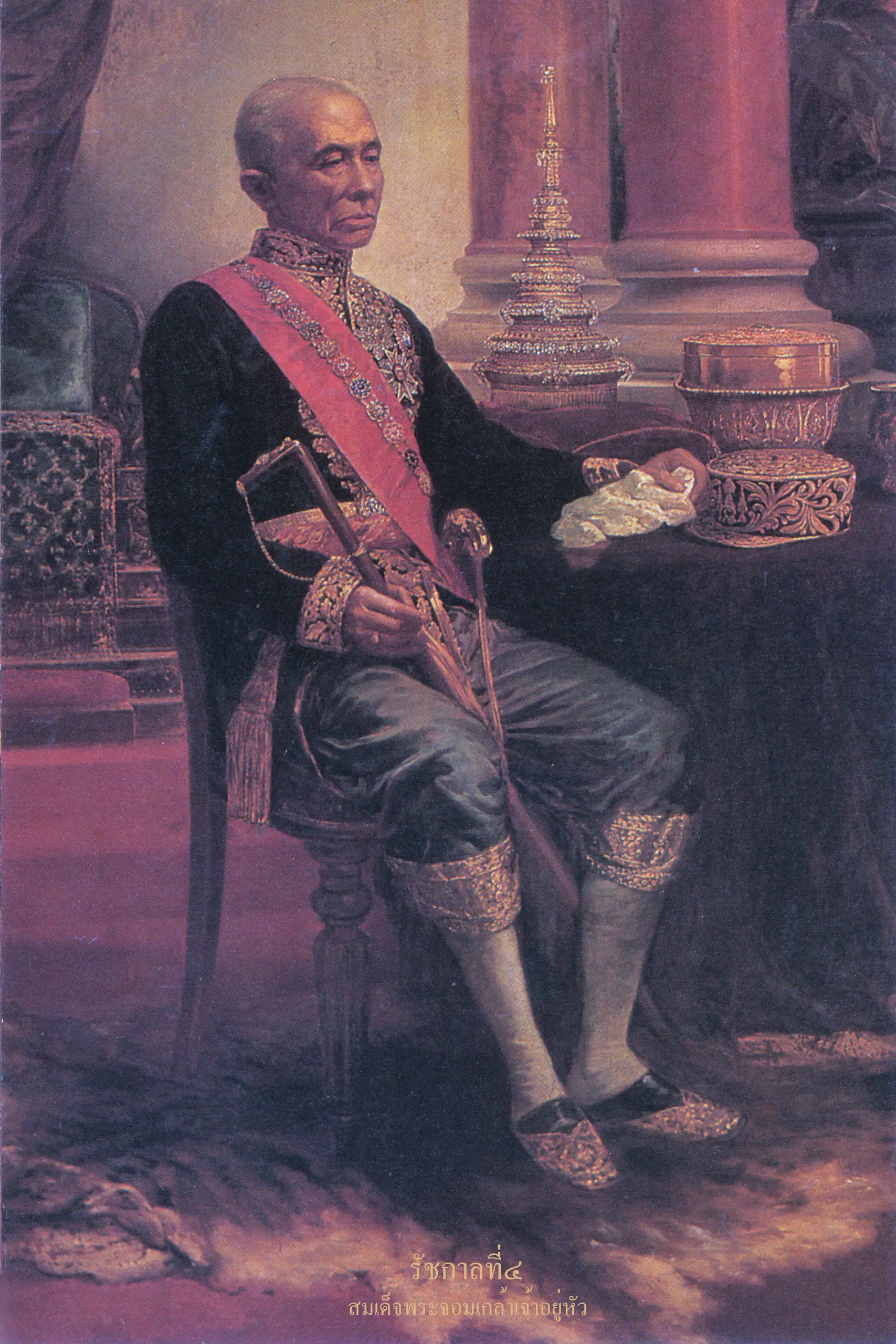
Mongkut
 Thailand
Also known as: Rama IV, King Mongkut the Great, Phrabat Somdet Phra Chomklao Chao Yu Hua
Birthday
October 18, 1804
Birth Sign
Libra
Birthplace
Thonburi Province, Siam
Age
Died at 63
About
Mongkut was the fourth monarch of Siam's Chakri dynasty, ruling as Rama IV from 1851 until his death in 1868. He is remembered as a reformer who steered Siam through the pressures of Western expansionism, and in the West is best known through the 1951 musical The King and I and its 1956 film adaptation, where Yul Brynner's portrayal earned him the Academy Award for Best Actor in 1957.
His reign was defined by modernization and scientific curiosity, earning him the posthumous title "the Father of Science and Technology" in Siam. His most famous scientific achievement was his accurate prediction of the total solar eclipse on 18 August 1868, an event later dubbed "the King of Siam's eclipse." This prediction showcased his acumen and became a symbol of Siam's openness to modern science. He also authored the astrological treatise Triphob, still consulted by court astrologers today.
In Thailand, Mongkut is revered as a scholar-king who preserved Siamese independence through diplomatic skill during the height of European colonialism. His legacy lives on through institutions bearing his name, including King Mongkut's Institute of Technology Ladkrabang, which in 2022 signed an aircraft maintenance training agreement with Airbus.
Early Life & Background
Mongkut was born on 18 October 1804 in Thonburi Province, the eldest son of King Phutthaloetla Naphalai (Rama II) and Queen Sri Suriyendra. Expected to succeed his father, his path changed abruptly when Rama II died in 1824 and the royal council elected his younger half-brother, Prince Jessadabodindra, as Rama III.
At age 20, Mongkut was ordained as a Buddhist monk, a move that combined religious conviction with political survival. For twenty-seven years he lived as an ascetic, earning the nickname "Mongkut the Beggar" for his austere lifestyle. This period was transformative. He studied Pali, Buddhist scriptures, and Western languages including Latin and English, corresponding with missionaries and scholars. He developed a deep interest in astronomy and science, and founded the Thammayut order, a reformist Buddhist movement that sought to purify monastic practice.
His time in the monkhood gave him an education and worldview far removed from the traditional courtly upbringing of a prince, shaping the reformer he would become.
Career Growth
Mongkut ascended the throne on 1 April 1851 following the death of Rama III, and reigned until his death in 1868. During his rule, the formal title "King of Siam" was adopted for diplomatic purposes, reflecting the kingdom's growing engagement with the outside world. Although an absolute monarch, Mongkut began to break down the age-old tradition of treating the king as a god. He traveled widely throughout his kingdom, observed his subjects firsthand, and engaged directly with foreign diplomats. He appointed his younger brother, Prince Chutamani, as Second King, crowned as King Pinklao in 1851, and instructed that Pinklao be honored equally with himself, a move recalling the precedent set by King Naresuan and his brother in 1583. During Mongkut's rule, the House of Bunnag reached the peak of its influence, becoming the most powerful noble family in Siam.
His most famous scientific achievement was his accurate prediction of the total solar eclipse on 18 August 1868, an event later dubbed "the King of Siam's eclipse." He calculated the eclipse's timing and location with remarkable precision and hosted Western and Siamese scientists at the observation site in modern-day Prachuap Khiri Khan province. This prediction showcased his acumen and became a symbol of Siam's openness to modern science. A skilled astrologer, he also authored the treatise Triphob to chart destinies, still consulted by court astrologers today. He died on 1 October 1868 at the Grand Palace, having contracted malaria while observing the eclipse in the swamps of Prachuap Khiri Khan province.
Career Timeline
Public Image & Style
In Thailand, Mongkut is revered as a reformer and modernizer, credited with preserving Siamese independence through diplomatic skill during the height of European colonialism. His public image is that of a scholarly, scientifically curious monarch. In the West, his image has been shaped almost entirely by The King and I, which took significant creative liberties with his character, portraying him as a stubborn but ultimately wise ruler. Recent scholarship, including the 2026 Smithsonian article, has highlighted how Anna Leonowens' memoirs, which inspired the musical, exaggerated her influence and misrepresented both herself and the court. No official fandom name exists, though fans of Thai history and the musical form a dedicated interest community.
Fame & Fandom
King Mongkut does not possess a modern fanbase with an official name or organized campaigns, as his legacy is anchored in history rather than contemporary celebrity culture. In Thailand, he is revered as a national monarch and the "Father of Science and Technology," honored through state observances and academic institutions bearing his name rather than fan clubs or social media trends. While a global audience engages deeply with the fictionalized character from The King and I, this following belongs to the musical and its adaptations, not the historical figure himself. Recent scholarship has further clarified that the dramatic narratives surrounding his relationship with Anna Leonowens are largely artistic interpretations, yet they remain a persistent part of his cultural mythology. Despite the absence of a formal fandom, his enduring presence across media coverage, search activity, and consumption signals worldwide ensures his relevance continues to be tracked by authoritative metrics. His standing reflects a unique blend of historical reverence and pop-culture iconography that transcends typical celebrity cycles. According to the iFANN Global Fame Rankings, Mongkut is currently the 22nd most famous person from Thailand, holding steady from the previous cycle.
Interesting Facts and Legends
King Mongkut's life was defined by a unique duality: he spent 27 years as a Buddhist monk, a tenure longer than his entire 17-year reign as Rama IV. Fluent in Latin and English, he broke royal tradition by traveling among his subjects rather than remaining secluded, earning the posthumous title "the Father of Science and Technology" in Siam. His most celebrated scientific feat was predicting the total solar eclipse in 1868 with such precision that Western astronomers were astonished, dubbing it "the King of Siam's eclipse." A widely retold legend involves his invitation to British explorers to witness this event from Prachuap Khiri Khan, cementing his reputation as a rational scholar amidst superstitious traditions. Another enduring story, though historically debated, centers on his interactions with the English governess Anna Leonowens; while popular culture portrays them as close friends who influenced each other, recent analysis suggests she exaggerated her influence and fabricated details about her origins. Fans still retell the tale of how his scholarly rigor saved Siam from colonization, contrasting sharply with the fictionalized version where an outsider saves the day. Modern references like "Tra Mongkut Fertilizer" and the television drama Peek Mongkut share the name but have no connection to the king himself.
Notable Quotes
“You will be our schoolmistress, and we will be your scholars.”
“Whatever is possible, let us do it, and whatever is impossible, let us think about it.”
“I am not a god, but a man, and I wish to be treated as such.”
Family & Personal Life
Mongkut's family and personal life were shaped by Siamese royal customs, which included multiple wives and consorts. His principal wives included Queen Debsirindra, Queen Pannarai, Princess Piyamavadi, and Queen Somanas Vadhanavadi. He had many children, including Prince Chulalongkorn, who succeeded him as Rama V. His education, both traditional Siamese court learning and his later self-directed studies in the monkhood, was unusually broad for a monarch of his era.
Notable Connections
Mongkut's inner circle included his younger brother Prince Chutamani, whom he appointed Second King Pinklao in 1851. His principal queen, Debsirindra, was the mother of his successor, Chulalongkorn. The English governess Anna Leonowens, whose memoirs inspired The King and I, served in his court from 1862 to 1867. The powerful House of Bunnag reached its peak influence during his reign, with its members holding key ministerial posts.
Relationships & Dating History
Mongkut's relationships were primarily within the context of Siamese royal polygamy, which was customary for the period. Records are less detailed than modern celebrity coverage, but the following are known:
His first principal queen, Somanas Vadhanavadi, was his cousin and a daughter of his uncle. She died young in 1852, early in his reign, and no children survived. Queen Debsirindra, married in the early 1850s, was the mother of Prince Chulalongkorn and several other children. She was the daughter of the powerful House of Bunnag, reflecting the family's peak influence during Mongkut's reign. She died in 1861. Queen Pannarai, a sister of Queen Debsirindra, survived Mongkut and was given the title of Queen Mother after his death. Princess Piyamavadi was one of his higher-ranking consorts, who bore him several children.
As of his death in 1868, Mongkut was married to his surviving queens and consorts. He was succeeded by his son Chulalongkorn, born of Queen Debsirindra.
- MarriedSomanas Vadhanavadi1851 - 1852First principal queen, died young in 1852.
- MarriedDebsirindra1851 - 1861Principal queen, mother of Rama V.
- MarriedPannarai1851 - 1868Sister of Debsirindra, survived Mongkut.
- MarriedPrincess Piyamavadi1851 - 1868Higher-ranking consort, bore several children.
Death & Aftermath
Died
October 1, 1868 (aged 63)
Death Place
Bangkok, Siam
Cause of Death
Malaria
The passing of King Mongkut in October 1868 sparked a profound national mourning across Siam, marked by immediate tributes from foreign diplomats representing Britain, France, and the United States alongside local Buddhist monastic orders. The royal court ordered a month-long suspension of all entertainment and festivities, while commoners lined the streets to pay their respects during the elaborate funeral proceedings that followed. This era of grief was not defined by modern chart surges or digital vigils but by traditional ceremonies that honored a monarch who had steered his kingdom through the pressures of Western expansionism with remarkable foresight.
King Mongkut passed away peacefully in his sleep on the morning of October 1, 1868, at the Grand Palace in Bangkok after a rapid decline in health. His final public appearance occurred just days earlier on September 27, 1868, when he presided over a ceremony at Wat Arun before withdrawing to rest. Historical records indicate he contracted malaria while inspecting a new temple construction site in Phitsanulok earlier that year, where mosquito-infested areas exposed him despite warnings from advisors. The grand cremation ceremony held in December 1868 at Sanam Luang featured a golden pyre shaped like a Garuda and drew thousands of attendees including high-ranking officials and foreign dignitaries.
Senior Buddhist monks performed the rites according to Theravada customs before the ashes were enshrined in a stupa at Wat Ratchaburana. Posthumously honored as "Mongkut the Great," his legacy endures through institutions like King Mongkut's Institute of Technology Ladkrabang and various scholarships dedicated to education and technological advancement. His successor, Prince Chulalongkorn, inherited the throne immediately, ensuring a smooth transition of power without dispute.
Net Worth (Estate Value)
$1 Billion
iFANN Editorial Team estimate
Mongkut reigned in the 19th century, and no credible modern net-worth estimates exist for him during his lifetime. The Siamese crown's wealth during his era derived from royal lands, tribute, and trade monopolies, but no reliable figures survive from that period. His primary estate legacy is cultural: the palace complex, the Chakri dynasty's continued reign, and the enduring popularity of The King and I. Since his death, the estate's earnings have come from tourism at the Grand Palace and related heritage sites, though these revenues flow to the current Thai royal institution rather than a private estate. No independent estate valuation is available. Per iFANN's editorial analysis, the cultural and historical value associated with Mongkut's legacy is immense, reflected in a net worth estimate of $1 Billion as of 2026. This figure represents the enduring value of his contributions to Thai heritage and global culture rather than liquid assets.
Awards Won (2)
As a 19th-century monarch, Mongkut did not receive modern entertainment or industry awards. His honours were posthumous and national, including the titles "King Mongkut the Great" and "Father of Science and Technology" in Thailand.
1868 · National Honour
Reign as Rama IV
1868 · National Honour
Contributions to science and modernization
Known For
King of Siam
1851-1868 · Monarch
The King and I
1951 · Historical inspiration
Keywords
Sources
Quick Facts
- Profession
- Monarch
- Born
- October 18, 1804
- Birthplace
- Thonburi Province, Siam
- Died
- October 1, 1868
- Death Place
- Grand Palace, Bangkok
- Gender
- Male
- Spouse
- Debsirindra, Pannarai, Princess Piyamavadi, Somanas Vadhanavadi
- Birth Sign
- Libra
- Reign
- 1851–1868
- Successor
- Chulalongkorn (Rama V)
Personal Details
- Full Name
- Prince Mongkut
- Spouse
- Debsirindra, Pannarai, Princess Piyamavadi, Somanas Vadhanavadi
- Children
- Chulalongkorn (Rama V) and others
- Education
- Traditional Siamese court education; self-taught in Western sciences and languages during monkhood
Frequently Asked Questions
Was King Mongkut real?
How many wives did King Mongkut have?
How did King Mongkut die?
What is Mongkut famous for?
Was Anna Leonowens really the king's lover?
Join the community
fans discussing