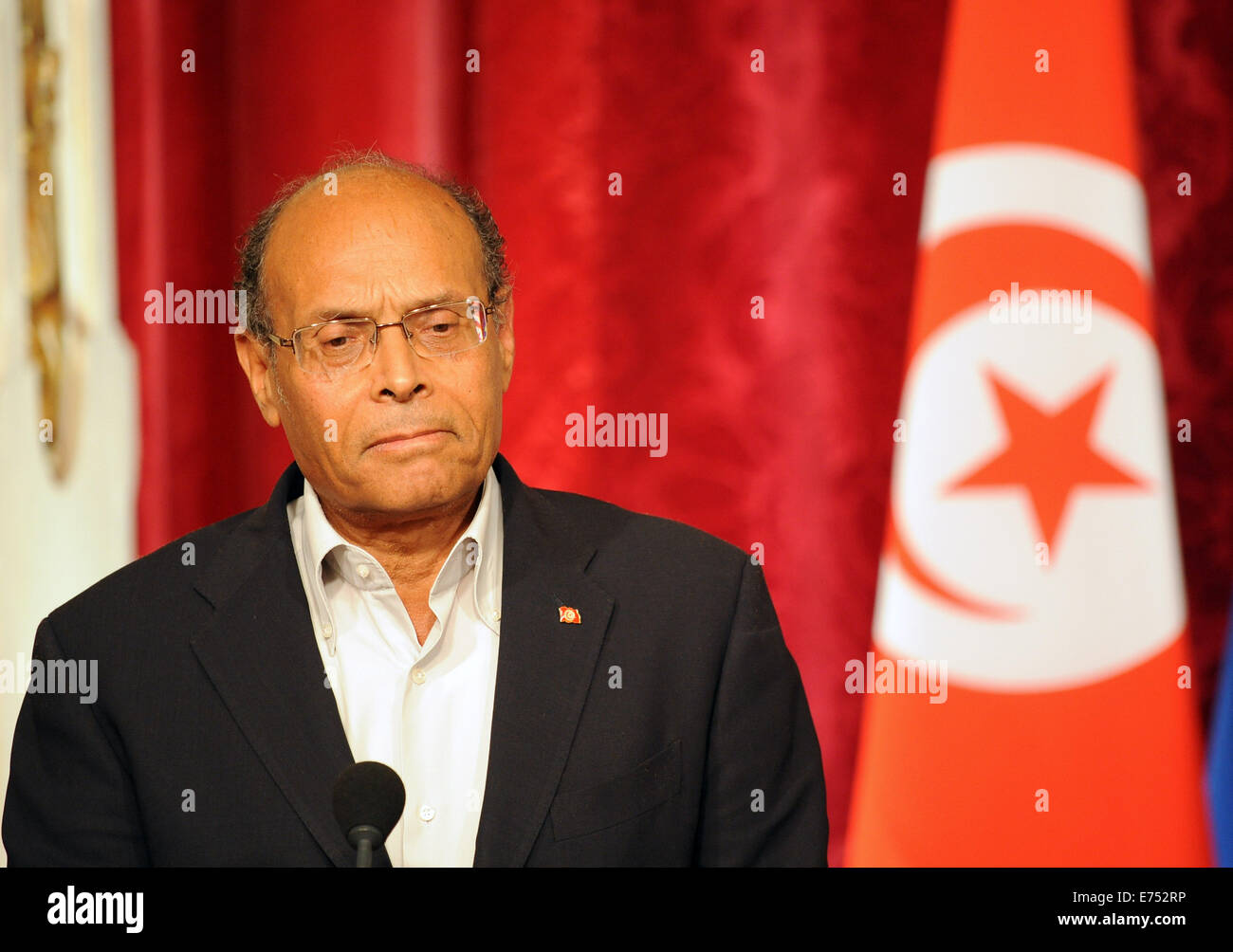
Moncef Marzouki
 Tunisia
politician•physician•human rights defender
Also known as: Mohamed Moncef Marzouki, Munṣif Marzūqī, Al-Munṣif al-Marzūqī
Birthday
July 7, 1945
Birth Sign
Cancer
Birthplace
Grombalia, Tunisia
Age
81 years old
About
Moncef Marzouki is a Tunisian physician, human rights defender, and politician who served as the third president of Tunisia from December 2011 to December 2014. He was the first democratically elected president in the country's history, a milestone won through the Jasmine Revolution that toppled Zine El Abidine Ben Ali. Today he remains a vocal advocate for democracy and a sharp critic of the current Tunisian government, operating from exile.
Marzouki's career straddles medicine and politics. He trained as a doctor and became a professor of medicine, but his reputation was forged in the opposition trenches of the Ben Ali era. After the revolution, he led the Congress for the Republic party and took the presidency, steering Tunisia through a fragile transition. His tenure focused on building democratic institutions and confronting social inequalities, though his time in office was brief.
Since leaving office, Marzouki has stayed in the public eye as a dissident voice. Living abroad since 2021, he has faced escalating prison sentences in absentia from Tunisian courts, most recently 22 years in June 2025. Despite that, he continues to speak out, telling RFI in December 2025 that "the Arab Spring has only just begun."
Early Life & Background
Born on July 7, 1945, in Grombalia, a town in northeastern Tunisia, Marzouki grew up under French colonial rule and witnessed the country's independence in 1956. His father was a judge, and the family valued education, which pushed him toward medicine. He studied in France, earning a medical degree and later specializing in neurology, a path that would keep him connected to both science and social issues.
While building his medical career, Marzouki became increasingly involved in human rights activism. In 1989, he took the helm of the Tunisian League for Human Rights, a position that placed him in direct conflict with Ben Ali's government. He used his platform as a doctor and professor to denounce political repression, often treating prisoners and documenting abuses. In the early 1990s, he founded the National Committee for the Defense of Political Prisoners, an organization that became a lifeline for dissidents.
His outspokenness came at a cost. By the mid-1990s, harassment and threats forced him into exile in France, where he continued his activism. He also helped found the Congress for the Republic (CPR) party in 2001, a secular, progressive movement that would later play a key role in Tunisia's post-revolutionary politics. For years, he balanced his medical practice with political organizing, never abandoning the fight for democracy.
Career Growth
Marzouki's breakthrough came with the fall of Ben Ali in January 2011. He returned to Tunisia from exile and threw himself into the political transition. In December 2011, the Constituent Assembly elected him president, making him the first democratically legitimated leader in Arab history. His presidency, which lasted until December 2014, was marked by efforts to stabilize a country in flux, including drafting a new constitution and managing the delicate balance between secularists and Islamists.
During his tenure, Marzouki spoke at major international forums, including the Council on Foreign Relations, NYU Law, and Columbia University's World Leaders Forum, where he defended the Arab Spring's promise. After leaving office, he remained a prominent opposition figure, criticizing the governments that followed. In 2022, he became a Senior Fellow at Harvard Kennedy School's Ash Center, a role that gave him a platform to reflect on democratic transitions.
Since going into exile in 2021, Marzouki has continued to agitate. He met with Iranian opposition leader Maryam Rajavi in November 2025, and in July 2026 he addressed Tunisians via Alhiwar TV. His criticism of President Kais Saied has drawn harsh legal consequences: an eight-year sentence in February 2024, then 22 years in absentia in June 2025, both handed down by Tunisian courts.
Career Timeline
Public Image & Style
Marzouki cuts a distinctive figure: a physician-activist turned statesman, with a bushy white beard and a calm, measured speaking style. International media often cast him as the moral conscience of Tunisia's transition, the man who risked everything to oppose dictatorship. Supporters see him as a champion of democracy and human rights, while critics, especially the current Tunisian government, view him as a destabilizing force. His social media voice is fiery and direct, mixing nostalgia for the revolution with sharp attacks on Kais Saied. He remains a polarizing figure in Tunisia, celebrated by some for his integrity and condemned by others for his outsized political ambitions.
Fame & Fandom (iFAMOUS Rankings)
Moncef Marzouki commands a following defined not by celebrity adoration but by deep political solidarity and academic respect. His supporters are primarily human rights defenders, democracy advocates, and scholars who view him as a moral compass for the Arab world rather than a pop culture icon. There is no formal fandom name or organized fanbase with rituals; his audience consists of those aligned with his cause in exile, engaging through policy papers, legal defense campaigns, and international advocacy rather than social media trends or merchandise. This unique dynamic separates him from entertainers whose fame relies on viral moments and crowds, grounding his legacy in verified historical impact and continued activism. Despite the absence of a traditional fan culture, his global standing remains significant, reflecting a career that bridged medicine, opposition politics, and state leadership during a pivotal era. His influence is measured in the stability of democratic transitions and the resilience of his voice against authoritarian pushback, making his reach feel more like a movement than a fan club. Within the broader landscape of global figures, his prominence is quantified by authoritative tracking systems that monitor attention across diverse media channels and consumption patterns worldwide. Moncef Marzouki is currently ranked as the 5th most famous person from Tunisia, a position he has held steady through recent cycles. These placements within the iFANN Global Fame Rankings underscore his enduring relevance as a symbol of the Arab Spring's promise and subsequent challenges.
Interesting Facts and Legends
Before entering the political arena, Marzouki was a dedicated neurologist who practiced medicine for decades, earning a reputation as a professor of medicine long before he donned the robes of a statesman. He authored the influential book Democratiser l'Islam, where he argued passionately for a democratic interpretation of Islamic tradition, a text that remains a touchstone for reformists in the region. Even while serving as a former head of state, he maintained an unusual digital identity on Facebook, listing himself as president of the Arab Council for Youth in the Arab region, a title that stands out for a man who once led a nation. His political journey includes being the first Arab leader to be democratically elected after the Arab Spring, a distinction he frequently cites in speeches to highlight Tunisia's unique place in history. Recent years have added heavy chapters to his story, including a June 2025 verdict where a Tunisian court sentenced him to 22 years in prison in absentia, cementing his status as a persecuted figure in his homeland. In May 2026, he sparked international debate during an interview when he claimed there are 'two Israels' in the Middle East, one Western with its capital in Tel Aviv and one Eastern with its capital in Abu Dhabi, marking a controversial shift in his public rhetoric.
Notable Quotes
“The Arab Spring has only just begun.”
“Well, you know, this, we, I suffered the stress under the dictatorship, because you know that your life is in danger. You know...”
Family & Personal Life
Marzouki is married to Beatrix Marzouki, who has stood by him through decades of political turbulence. The couple has kept their private life largely out of the spotlight, and details about their children are scarce. Marzouki's family background includes a father who served as a judge, an influence that likely shaped his commitment to justice. In interviews, he has occasionally mentioned the sacrifices his family made during his years of exile and political persecution, but he rarely goes into specifics. As of 2026, he and Beatrix remain married, with her reportedly living in France while he moves between European capitals and other safe havens.
Notable Connections
Marzouki's political circle includes Maryam Rajavi, the Iranian opposition leader he met with in November 2025, and he has been a vocal critic of Tunisian President Kais Saied, whose government has pursued charges against him. His wife Beatrix Marzouki has been a constant presence in his life. He has also engaged with international institutions like Harvard's Ash Center, where he held a Senior Fellowship.
Relationships & Dating History
Marzouki has been married to Beatrix Marzouki for decades, and their relationship has endured the strains of political persecution and exile. They met during his early medical and activist years, and she has remained a steadfast partner. There is no public record of any other significant romantic relationships, marriages, or divorces in his life. As of 2026, he is still married to Beatrix, who reportedly lives in France while he travels for political work.
- MarriedBeatrix MarzoukiCurrentLong-term marriage that has endured through political persecution and exile.
Salary, Net Worth In 2026
$5 Million
iFANN Editorial Team estimate
Moncef Marzouki's financial profile remains modest compared to other former heads of state, with iFANN currently estimating his net worth at $5 Million as of 2026. His income streams are derived from royalties generated by his books, such as Democratiser l'Islam, alongside speaking fees earned from various international engagements. During his tenure as a Senior Fellow at Harvard, he received a stipend that supported his work, though this arrangement has concluded. While he receives backing from political organizations that share his ideals, specific figures regarding these contributions remain undisclosed. His economic situation has been significantly complicated by his life in exile and ongoing legal battles, where costs for defense and travel have likely depleted much of his personal savings. Unlike many leaders who pivot to lucrative corporate board positions or business ventures, Marzouki has steadfastly avoided commercial pursuits, choosing instead to dedicate his resources to activism. His tangible assets include a modest apartment in France where his wife resides, while any property holdings in Tunisia are believed to be frozen by the state. As of 2026, his net worth remains stable, a reflection of a career built on principle rather than profit.
Awards & Accolades
View 2 records, honours and achievementsKnown For
President of Tunisia
2011 · Third President
Human Rights Activism
1989 · President of Tunisian League for Human Rights
Keywords
Sources
Quick Facts
- Profession
- politician, physician, human rights defender
- Born
- July 7, 1945
- Birthplace
- Grombalia, Tunisia
- Gender
- Male
- Spouse
- Beatrix Marzouki
- Birth Sign
- Cancer
- Net Worth
- $5 Million
- Presidency
- December 2011 – December 2014
Personal Details
- Full Name
- Mohamed Moncef Marzouki
- Spouse
- Beatrix Marzouki
- Education
- Medical degree, University of Strasbourg (or similar)
Frequently Asked Questions
Where is Moncef Marzouki now?
Why was Moncef Marzouki sentenced to prison?
What did Moncef Marzouki do as president of Tunisia?
Is Moncef Marzouki still alive?
Is Moncef Marzouki married?
Similar People
Join the community
fans discussing