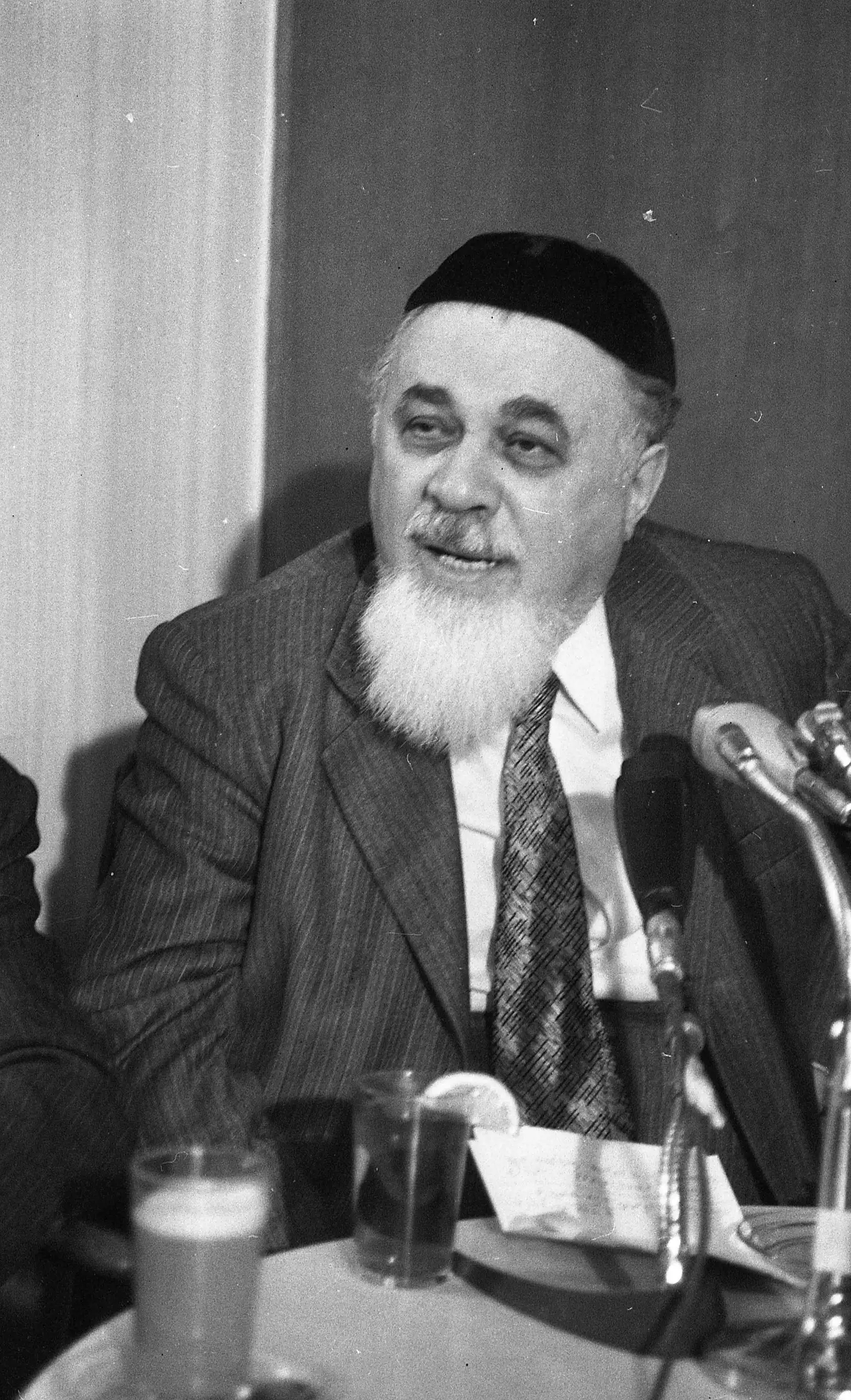
Moishe Rosen
Also known as: Martin Meyer Rosen, Moishe Rosen
Birthday
April 12, 1932
Birth Sign
Aries
Birthplace
Kansas City, Missouri
Age
Died at 78
About
Moishe Rosen was an American minister and the founder of Jews for Jesus, the largest Messianic Jewish organization in the world. Born Martin Meyer Rosen in 1932 to Orthodox Jewish parents, he converted to Christianity in 1953 and spent his life advocating for the belief that Jewish people can accept Jesus as the Messiah without abandoning their Jewish identity. His ministry was marked by bold public campaigns, street evangelism, and a willingness to provoke debate, making him one of the most visible and polarizing religious figures of his era.
Rosen's impact extended far beyond the pulpit. Through Jews for Jesus, he built a global outreach that continues to operate today, with headquarters in San Francisco and branches worldwide. His approach, which blended traditional evangelism with contemporary culture, drew both fervent supporters and sharp critics. He was celebrated by evangelical Christians for his courage and criticized by many Jewish leaders who saw his mission as an assault on Jewish continuity.
Rosen died on May 19, 2010, in San Francisco after a battle with bone cancer. He was 78. His legacy lives on through his writings, the organization he founded, and the ongoing conversations about faith and identity that his work continues to inspire.
Early Life & Background
Moishe Rosen grew up in Denver, Colorado, in a predominantly Jewish neighborhood. His family was Orthodox, and he later recalled that his Jewishness was something he "took for granted" as a child. The community around him was tightly knit, and his early life was steeped in Jewish tradition and practice.
He attended the University of Denver, where he began to question his faith. During this time, he met Ceil, who would become his wife. In 1953, the couple made the life-altering decision to convert to Christianity together. This choice alienated them from their families and the Jewish community, a painful rupture that Rosen carried with him throughout his life.
After his conversion, Rosen pursued theological training at Northeastern Bible Institute, where he was ordained as a Baptist minister. He later earned a master's degree in theology from the same institution. His early ministry involved working as a missionary to Jewish people under the American Board of Missions to the Jews, serving in the northeastern United States and later in San Francisco. These formative years shaped his understanding of evangelism and set the stage for the innovative approaches he would later develop.
Career Growth
Moishe Rosen's breakthrough came in the late 1960s in San Francisco, a city buzzing with the counterculture movement. He saw that traditional missionary methods were failing to reach younger Jewish people and began experimenting with more provocative, contemporary outreach. This led to the founding of Jews for Jesus in 1973 as an independent organization, separate from the American Board of Missions to the Jews.
Under Rosen's leadership, Jews for Jesus grew from a small operation into the largest Messianic Jewish organization in the world. He served as executive director for 23 years, from 1973 to 1996, and became known for bold advertising campaigns, catchy gospel tracts, and public debates. His tactics were designed to grab attention and spark conversation, and they did, often drawing sharp criticism from Jewish groups who accused him of deceptive practices.
After stepping down as executive director in 1996, Rosen remained active in ministry, writing and speaking until his death. His daughter Ruth Rosen published his biography, Called to Controversy, in 2012, which detailed his life and the founding of Jews for Jesus. The organization he built continues to operate globally, celebrating its 50th anniversary in 2023.
Career Timeline
Public Image & Style
Moishe Rosen was a polarizing figure, and he embraced the controversy. To his supporters, he was a fearless evangelist who challenged the status quo and brought the Gospel to Jewish people in a way that resonated with modern culture. To his detractors, he was a deceptive proselytizer who preyed on Jewish identity.
His public persona was characterized by boldness and wit. He was known for his direct, sometimes confrontational style, whether in street debates, advertising campaigns, or interviews. He didn't shy away from the spotlight, and his tactics often made headlines.
Rosen's aesthetic was that of a traditional minister, but his message was anything but conventional. He used contemporary media and language to reach younger audiences, a strategy that set Jews for Jesus apart from other missionary groups. His legacy is a complex one, but his impact on evangelical Christianity and on Jewish-Christian relations is undeniable.
Fame & Fandom
Moishe Rosen never cultivated a fanbase in the pop-culture sense of organized clubs, named followers, or viral cultural rituals. His legacy is defined by theological confrontation rather than adoration, with supporters functioning as mission partners within the Messianic Jewish movement and detractors viewing his street evangelism as a direct challenge to mainstream Judaism. The stories told about him are not tales of concert chaos or fainting crowds but accounts of unwavering commitment to a controversial mission that sparked heated debates on city streets during Hanukkah and Passover. While he possessed a dedicated following among evangelicals, these groups operated more as congregants than fans engaging in inside jokes or fan-funded projects like birthday billboards. The narrative surrounding Rosen focuses on his dramatic conversion from a secular Jew to the founder of Jews for Jesus, a story widely retold as a pivotal moment in religious history. His presence was marked by bold public campaigns and a willingness to provoke debate, making him one of the most visible figures of his era until his passing in 2010. Despite his global impact and the continued operation of his ministry, iFANN has evaluated this figure and determined they do not currently hold a placement in the published rankings, meaning no official rank exists in the Global Top 1,000 or any scope list. This absence of a numerical ranking reflects the unique nature of his influence, which remains deeply rooted in specific religious discourse rather than broad celebrity metrics.
Interesting Facts and Legends
Rosen was known for his sharp wit and quotable one-liners, often describing his mission as "preaching Jesus to the Jews," a phrase that became a rallying cry for his followers and a point of contention for critics. He was a prolific author who wrote several books on evangelism and Jewish-Christian relations, published by Moody Publishers and other Christian houses. Despite his controversial reputation, Rosen had a playful side, using humor and irony in public appearances to make him a compelling speaker. His daughter Ruth Rosen, who wrote his biography *Called to Controversy*, continues the family's ministry legacy as a prominent figure in Jews for Jesus. Rosen's conversion in 1953 was a joint decision with his wife Ceil, and the couple supported each other through the ensuing family estrangement. A key element of the lore surrounding Rosen involves the founding of Jews for Jesus in 1973, which began with him distributing tracts in San Francisco during Passover, an event that sparked significant controversy and media attention. Followers still retell the story of his enduring presence on the streets of major cities during Jewish holidays, particularly Hanukkah, where he engaged directly with Jewish communities to distribute literature and preach about Jesus as the Messiah. These events were not celebrated as viral incidents but served as flashpoints for cultural and religious conflict, cementing his status as a polarizing historical figure.
Notable Quotes
“My Jewishness is something that I took for granted. I grew up in Denver, Colorado in a neighbourhood where most of the people were Jewish.”
“I'm not trying to be a nice guy. I'm trying to be faithful.”
“We are Jews for Jesus, and we're not ashamed of it.”
Family & Personal Life
Moishe Rosen married Ceil Rosen in the early 1950s, and together they converted to Christianity in 1953. The decision cost them their relationships with their families, a loss that Moishe later spoke about with a mix of regret and conviction.
The couple had children, including their daughter Ruth Rosen, who became a writer and a leader within Jews for Jesus. Ruth authored her father's biography, Called to Controversy, providing an intimate look at his life and ministry.
Moishe and Ceil remained married for nearly 57 years, until his death in 2010. Their partnership was central to his work, with Ceil serving as a freelance writer and a supportive presence in the ministry. The family lived in San Francisco, where Jews for Jesus maintains its headquarters.
Notable Connections
Moishe Rosen worked closely with his wife Ceil Rosen, who supported his ministry and was a freelance writer. Their daughter Ruth Rosen also became a prominent figure in Jews for Jesus and wrote his biography. Susan Perlman was a co-founder of Jews for Jesus and a longtime collaborator. Evangelical pastor Ray Ortlund wrote a tribute to Rosen upon his death.
Relationships & Dating History
Moishe Rosen's personal life was centered on his marriage to Ceil Rosen. The couple met while both were young and married in the early 1950s. In 1953, they made the joint decision to convert to Christianity, a choice that deeply affected their relationships with their families.
Throughout his life, Rosen remained devoted to Ceil. Their marriage lasted nearly 57 years, until his death in 2010. They had children together, including their daughter Ruth, who later wrote his biography.
There is no public record of any other romantic relationships for Rosen. His relationship status at the time of his death was married to Ceil Rosen.
- MarriedCeil Rosen1953 - 2010Married for nearly 57 years; converted to Christianity together in 1953.
Death & Aftermath
Died
May 19, 2010 (aged 78)
Death Place
San Francisco, California
Cause of Death
Reported as prostate cancer or bone cancer (unconfirmed)
Christianity Today eulogized him as the most colorful Jewish evangelist of the twentieth century, a sentiment echoed by The Gospel Coalition which mourned his release from life. This praise stood in stark contrast to reactions within certain Jewish circles where The Guardian noted he remained one of the most detested figures due to his proselytizing efforts. Moishe Rosen passed away on May 19, 2010, in San Francisco, California, at the age of seventy-eight. Conflicting accounts emerged regarding his final illness; The New York Times cited prostate cancer while The Alabama Baptist reported a battle with bone cancer.
Funeral arrangements were not widely documented in available sources, and details regarding the location of burial or cremation remain obscure. His legacy continued through his organization, Jews for Jesus, where co-founder Susan Perlman later affirmed that his dream of reaching Jews for Christ remained strong. Posthumous recognition focused on literature rather than awards or monuments, highlighted by the 2012 publication of Called to Controversy: The Unlikely Story of Moishe Rosen and the Founding of Jews for Jesus by his daughter Ruth.
Net Worth (Estate Value)
$1 Million
iFANN Editorial Team estimate
Moishe Rosen's net worth at the time of his death in 2010 is not publicly documented. As a minister and founder of a nonprofit organization, his personal income was likely modest. Jews for Jesus operates as a nonprofit, and its finances are separate from Rosen's personal estate. The estate has not generated significant posthumous revenue. His daughter's biography, *Called to Controversy*, published in 2012, may have provided some royalties, but exact figures are unavailable. The organization he founded continues to operate, but its financial success does not directly translate to Rosen's personal net worth. Given the lack of public financial records, estimates for Rosen's net worth are speculative. Per iFANN's editorial analysis, it is reasonable to estimate his estate at around $1 Million as of 2026, reflecting a lifetime of modest ministerial income and the ongoing success of his books and ministry.
Awards & Accolades
View 2 records, honours and achievementsKnown For
Jews for Jesus
1973 · Founder
Keywords
Sources
Quick Facts
- Profession
- pastor
- Born
- April 12, 1932
- Birthplace
- Kansas City, Missouri
- Died
- May 19, 2010
- Death Place
- San Francisco, California
- Gender
- Male
- Birth Sign
- Aries
- Spouse
- Ceil Rosen
- Children
- Ruth Rosen
Personal Details
- Full Name
- Martin Meyer Rosen
- Spouse
- Ceil Rosen
- Children
- Ruth Rosen (daughter)
- Education
- University of Denver; Northeastern Bible Institute (Master's in Theology)
Frequently Asked Questions
Who was Moishe Rosen?
What is Jews for Jesus?
When did Moishe Rosen die and how?
Was Moishe Rosen Jewish or Christian?
Who wrote the biography of Moishe Rosen?
Join the community
fans discussing