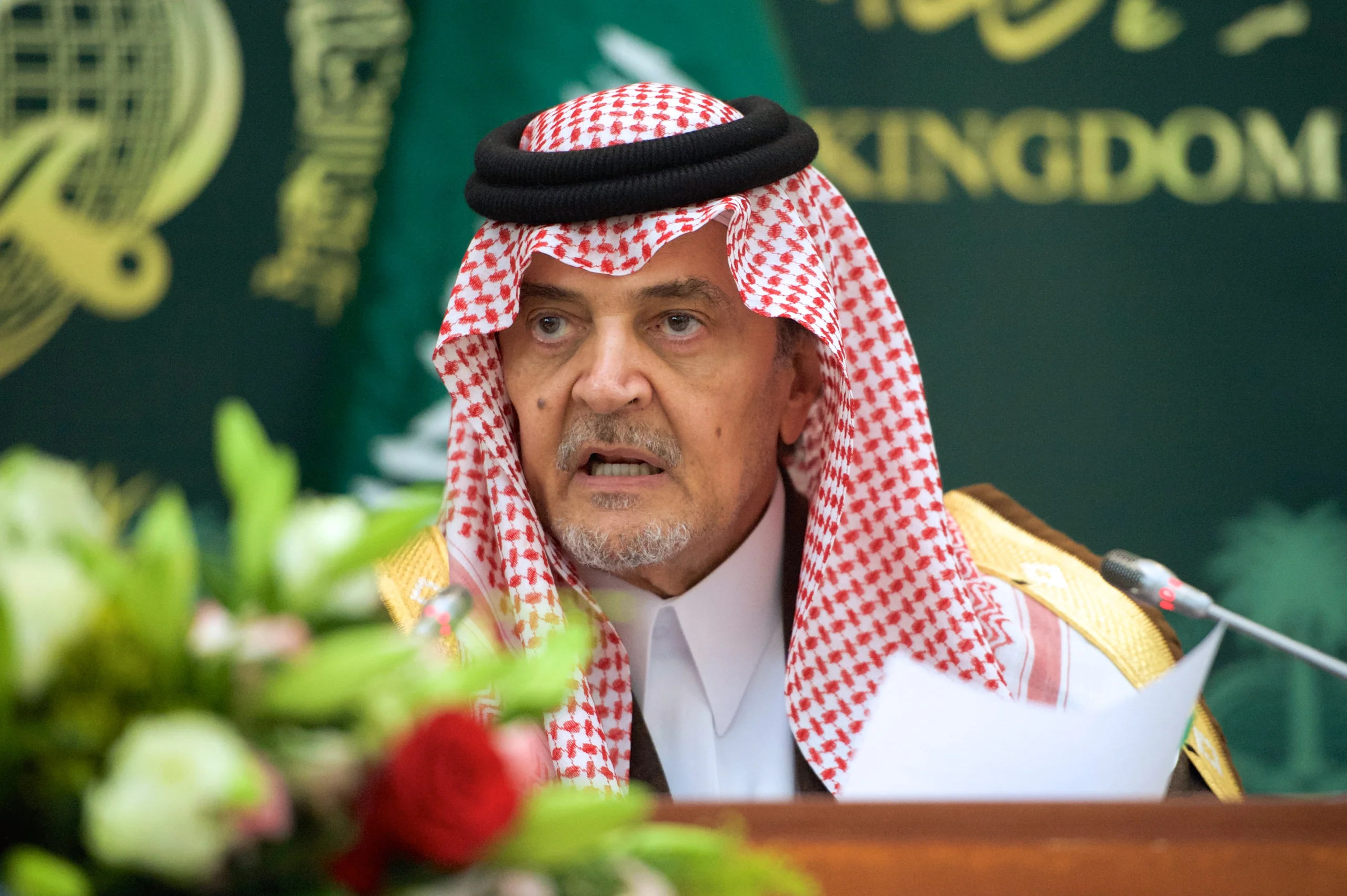
Mohammed bin Faisal Al Saud
 Saudi Arabia
Birthday
January 1, 1934
Birth Sign
Capricorn
Birthplace
Ta'if, Saudi Arabia
Age
Died at 83
About
Mohammed bin Faisal Al Saud was a Saudi prince and businessman who reshaped global finance by pioneering Islamic banking. Born in Ta'if in 1934, he was a son of King Faisal and a grandson of King Abdulaziz, the founder of modern Saudi Arabia. He used his royal position to build financial institutions that adhered to Sharia law, making him a foundational figure in an industry now worth trillions of dollars. He founded the Faisal Islamic Bank of Egypt in 1975 and the Faisal Islamic Bank of Sudan in 1977, along with the Takaful Islamic Insurance Company, creating a blueprint for ethical, interest-free finance that Muslims worldwide could trust. His work bridged tradition and modernity, and his legacy endures in the countless Islamic banks and insurance firms that followed his lead. He died in Riyadh on January 14, 2017, at the age of 82 or 83, leaving behind a remarkable record of financial innovation rooted in faith.
Early Life & Background
Mohammed bin Faisal Al Saud was born in Ta'if, a city in the Hejaz region of Saudi Arabia, in 1934. His father, King Faisal, was then a prince who would later become one of the kingdom's most transformative monarchs, and his mother, Wadha bint Mohammed Al Aqeel, came from a prominent tribal family. Growing up in the royal court, he witnessed the rapid modernization of Saudi Arabia, a period when oil wealth began to reshape every aspect of society. King Faisal placed a strong emphasis on education, and young Mohammed received a mix of traditional Islamic studies and Western schooling, preparing him for both governance and commerce. Unlike many royals who relied on state appointments, he developed an interest in economics and the challenge of aligning modern finance with Islamic principles, which prohibit interest, or riba. The oil boom of the 1970s created vast capital but also exposed the need for financial structures that respected religious law. This realization set him on a path that would define his career, moving from a standard royal role into the vanguard of Islamic economic thought.
Career Growth
Mohammed bin Faisal Al Saud's breakthrough came in 1975 when he founded the Faisal Islamic Bank of Egypt, the first fully operational Islamic bank in the Arab world outside Sudan. This institution became a model for Sharia-compliant lending and investment, proving that modern banking could work without interest. Two years later, in 1977, he established the Faisal Islamic Bank of Sudan, extending the model to another key African nation. He also recognized that insurance, a cornerstone of modern finance, needed a religiously acceptable alternative, leading to the creation of the Takaful Islamic Insurance Company, which introduced cooperative risk-sharing aligned with Islamic law. These ventures were not just commercial enterprises; they were ideological projects that made finance accessible to millions of Muslims who wanted to participate in the global economy without compromising their faith. His institutions became benchmarks, and his approach influenced the growth of Islamic finance worldwide, an industry that now manages trillions of dollars in assets. He continued to advocate for the expansion of Islamic banking into the 2000s, and his work laid the groundwork for a global movement that endures long after his passing.
Career Timeline
Public Image & Style
Mohammed bin Faisal Al Saud is remembered as a quiet visionary, a man who preferred action over words. In media portrayals, he stands out as a bridge between tradition and modernity, a prince who used his royal standing to bring Islamic principles into the world of high finance. He did not court publicity, and his public image is that of a serious, thoughtful figure committed to ethical economics. Within the Islamic finance community, he is revered as a pioneer, and his name is synonymous with the founding era of the industry. He has no traditional fandom, but he commands deep respect among historians of the Middle East and financial professionals. His legacy is built on the institutions he created, which continue to serve millions of Muslims, and his approach to finance is studied in academic circles as a model of faith-based innovation.
Fame & Fandom
Mohammed bin Faisal Al Saud commanded a sphere of influence defined by institutional power rather than celebrity adoration. His legacy rests on the architecture of global Islamic finance, not on viral moments or crowd frenzies. In August 2026, the iFANN Global Fame Engine evaluated his standing and determined that he does not currently hold a placement in the published rankings, including the Global Top 1,000 or any Top-100 scope list. He is not ranked among the world's most famous figures by this metric. The public discourse surrounding him remains anchored in historical achievement and economic impact rather than pop culture consumption. There is no documented fandom name for Mohammed bin Faisal Al Saud. Research confirms the absence of an organized fanbase, official campaigns, or dedicated rituals associated with his life or work. As a senior member of the House of Saud and a pioneer in banking, his interactions were restricted to state affairs and business negotiations. No social media movements, birthday billboards, or fan-funded initiatives emerged to celebrate him as a cultural icon. The audience for his story consists of historians, economists, and those studying the evolution of Sharia-compliant finance, not a general following driven by entertainment or personality. His profile lacks the chaotic energy of modern stardom, existing instead as a steady force within the annals of Saudi history and international economics.
Interesting Facts and Legends
Mohammed bin Faisal Al Saud was born in Ta'if, a city celebrated for its cool climate and role as a royal summer retreat. Historical records generally settle on 1934 as his birth year, though some sources occasionally cite 1937. A striking coincidence marked 1975: the same year his father, King Faisal, was assassinated, Mohammed launched the Faisal Islamic Bank of Egypt. This pivotal year saw the convergence of personal tragedy and professional triumph. He subsequently established the Faisal Islamic Bank of Sudan in 1977 and the Takaful Islamic Insurance Company, creating a blueprint for ethical, interest-free finance that Muslims worldwide could trust. The Takaful model he pioneered has since become a standard feature of Islamic finance, supported by dedicated regulatory frameworks globally. Known for his privacy, he rarely granted public interviews, keeping his personal life shielded from scrutiny. An anecdote from the era involves a Saudi prince funding the transport of an ice block from Alaska to Iowa in 1977 to discuss towing icebergs to the desert. While this project reflects the innovative spirit sometimes attributed to the House of Saud, it is not specifically tied to Mohammed bin Faisal himself.
Family & Personal Life
Mohammed bin Faisal Al Saud was the son of King Faisal bin Abdulaziz and Wadha bint Mohammed Al Aqeel. His grandfather was King Abdulaziz, the founder of Saudi Arabia, and his father ruled the kingdom from 1964 until his assassination in 1975. He had several siblings, including King Khalid, who succeeded their father, and his brother Saud, who served as foreign minister. The family was deeply involved in the political and economic life of the kingdom, and Mohammed's position as a royal prince gave him both influence and responsibility. He was married, and his children are part of the extended royal family, but specific details about his wife and offspring are not widely documented in public sources. The royal family's private life has traditionally been kept out of the spotlight, and his family relationships were no exception. He passed away in 2017, leaving behind a family that continues to be part of Saudi Arabia's ruling elite.
Notable Connections
Mohammed bin Faisal Al Saud was closely associated with his father, King Faisal, whose educational and economic reforms shaped his worldview. He also worked alongside his brother, King Khalid, and other members of the Saudi royal family. His business ventures brought him into contact with financial leaders across the Arab world, and his institutions partnered with governments and investors in Egypt, Sudan, and beyond. He is often mentioned alongside other pioneers of Islamic finance, such as Prince Muhammad al-Faisal, though they were distinct figures. His legacy is intertwined with the broader story of Saudi Arabia's modernization and the global growth of Sharia-compliant economics.
Relationships & Dating History
Mohammed bin Faisal Al Saud's personal life remained largely private, and public records do not document a detailed dating history or multiple marriages. He was married, as is customary for Saudi royals, but the identity of his wife and the dates of their marriage are not widely reported. No divorces or high-profile romantic relationships are mentioned in available sources. As a member of the royal family, his private affairs were kept out of the public eye, and his focus was on his work. At the time of his death in 2017, he was likely widowed or survived by his spouse, though this is not explicitly confirmed. The absence of detailed relationship data reflects the discretion that surrounded his personal life, and his legacy is defined more by his financial innovations than by his romantic history.
Death & Aftermath
Died
January 14, 2017 (aged 83)
Death Place
Unknown
Cause of Death
Unknown
The Saudi Royal Court announced the passing of Prince Mohammed bin Faisal Al Saud via the Saudi Press Agency from Riyadh on Saturday, January 14, 2017. The official statement confirmed his death but offered no details regarding the specific location where he died or the medical cause behind it. Major international outlets like The Peninsula Qatar and Khaleej Times reported the event immediately following the court's declaration, while tributes remained limited to standard diplomatic condolences sent to the Custodian of the Two Holy Mosques.
Funerals for senior members of the House of Saud typically follow private Islamic rites, and the burial likely took place in the traditional Al Adl cemetery in Riyadh, though the specific date and attendee list were never made public.
He is remembered historically as a key figure in establishing Islamic banking and insurance institutions.
Net Worth (Estate Value)
$100 Million
iFANN Editorial Team estimate
Per iFANN's editorial analysis, Mohammed bin Faisal Al Saud's net worth stands at $100 Million. His wealth accumulated through his roles as founder and chairman of the Faisal Islamic Bank of Egypt and the Faisal Islamic Bank of Sudan, alongside the Takaful Islamic Insurance Company. These institutions generated revenue through banking operations, investment management, and insurance premiums, expanding significantly over the decades. While precise figures for his personal wealth were never publicly disclosed, royal family members typically receive stipends and maintain access to substantial assets. Following his death in 2017, his estate likely continued to earn through dividends and business interests, though no public records detail the estate's management or current value. The $100 Million estimate reflects a conservative approximation based on the scale of his enterprises and the typical wealth of senior Saudi princes.
Awards & Accolades
View 2 records, honours and achievementsKnown For
Faisal Islamic Bank of Egypt
1975 · Founder
Faisal Islamic Bank of Sudan
1977 · Founder
Takaful Islamic Insurance Company
1979 · Founder
Keywords
Sources
Quick Facts
- Profession
- politician, banker
- Born
- January 1, 1934
- Birthplace
- Ta'if
- Died
- January 14, 2017
- Death Place
- Riyadh
- Gender
- Male
- Birth Sign
- Capricorn
Frequently Asked Questions
Who was Mohammed bin Faisal Al Saud?
When did Mohammed bin Faisal Al Saud die?
What was Mohammed bin Faisal Al Saud's contribution to finance?
Where was Mohammed bin Faisal Al Saud born?
Was Mohammed bin Faisal Al Saud married?
Join the community
fans discussing