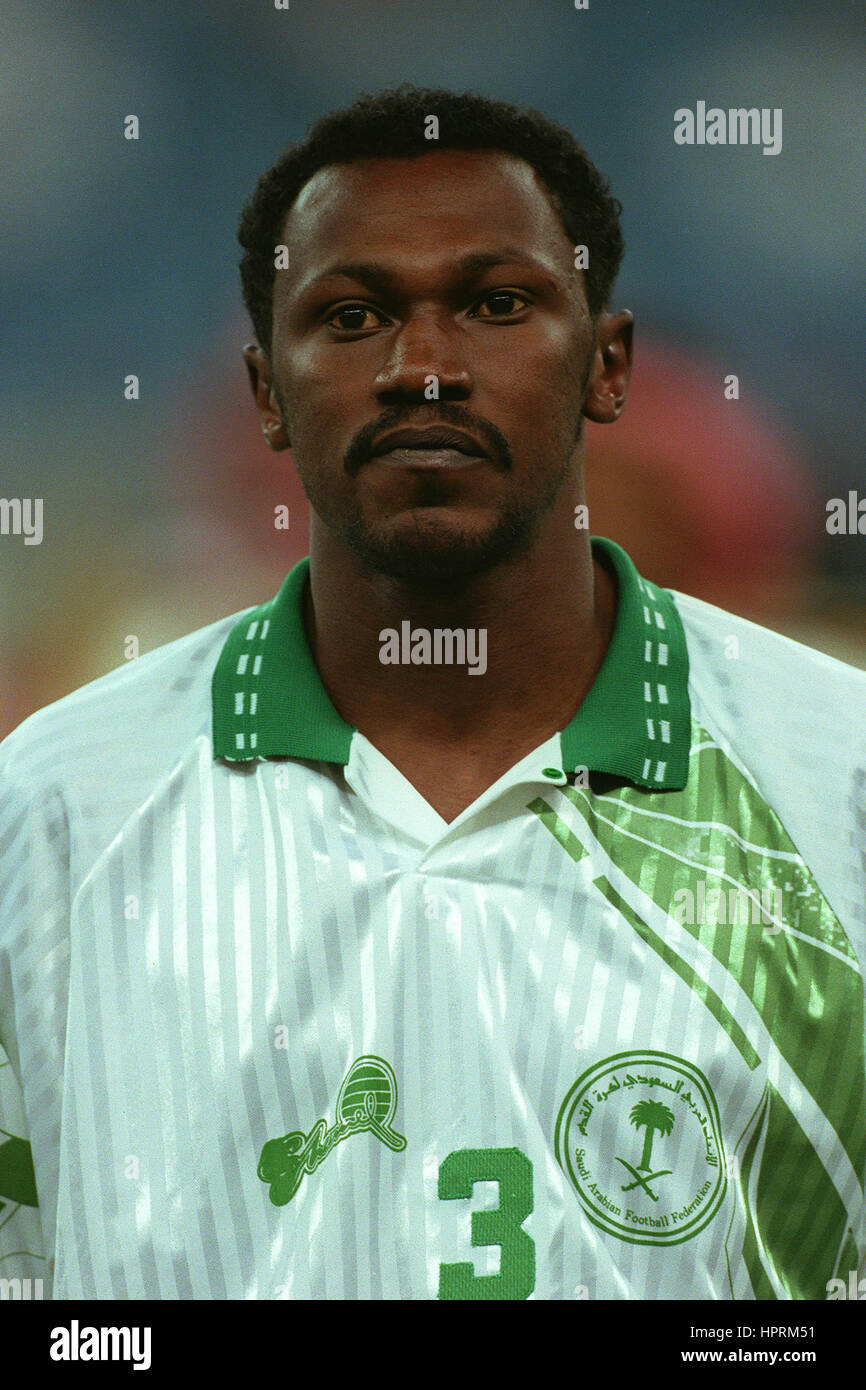
Mohammed Al-Khilaiwi
 Saudi Arabia
Also known as: Mohammed Saleh Al-Khilaiwi, Mohammed Al-Khilaiwi
Birthday
September 1, 1971
Birth Sign
Virgo
Birthplace
Jeddah, Saudi Arabia
Age
Died at 41
Height
6 ft 0 in (183 cm)
About
Mohammed Al-Khilaiwi was a Saudi Arabian professional footballer who anchored the defense for both Al-Ittihad and the Saudi Arabia national team. Born in Jeddah on September 1, 1971, he became one of the most capped players in his country's history, earning 163 international appearances and scoring 3 goals. His commanding presence, leadership, and defensive prowess made him a respected figure in Asian football during the 1990s and early 2000s. Al-Khilaiwi stood at 1.83 meters tall and was known for his calmness under pressure and dedication to the national cause.
Al-Khilaiwi's career was marked by his longevity and consistency. He was part of the Saudi squad that made history at the 1994 World Cup, reaching the knockout stages for the first time. He also helped his country win the Asian Cup. At club level, he spent the majority of his career with Al-Ittihad, winning multiple domestic titles, including the Saudi Arabian championship, and the Asian Club Championship. He is considered one of Saudi Arabia's best ever players from his era.
He passed away on June 13, 2013, in his hometown of Jeddah, at the age of 41. His legacy endures as one of Saudi Arabia's finest defenders, remembered for his commitment and sportsmanship, and his place in the history of Saudi football is solidified.
Early Life & Background
Mohammed Al-Khilaiwi grew up in Jeddah, a city with a rich football culture. Like many Saudi boys of his generation, he played street football from an early age, honing his skills in the narrow alleys and sandy lots of the coastal city. His talent as a defender quickly became apparent, standing out for his composure and reading of the game. Details about his specific educational background are not widely available, but his passion for football began at a young age, leading him to a career in professional association football.
He joined the youth system of Al-Ittihad, one of the country's oldest and most successful clubs. There, he developed under the guidance of experienced coaches who recognized his potential. His rise through the ranks was steady, and he made his first-team debut in the late 1980s, still a teenager. By the early 1990s, Al-Khilaiwi had established himself as a regular starter for Al-Ittihad, becoming a commanding presence in their defense for many seasons.
His performances in the domestic league caught the attention of the national team selectors, and he earned his first cap for Saudi Arabia in 1990, at the age of 19. That call-up marked the beginning of an international career that would span over a decade. He was part of a highly regarded generation of Saudi players in the early to mid-1990s, and his contributions helped Al-Ittihad achieve success in domestic competitions.
Career Growth
Al-Khilaiwi's breakthrough came with his selection for the Saudi Arabia squad at the 1994 FIFA World Cup in the United States. He played a key role in the team's historic run to the round of 16, where they fell to Sweden. That tournament put Saudi football on the map, and Al-Khilaiwi was one of the standout defenders, earning praise for his solid marking and aerial ability. He was a veteran of multiple World Cup campaigns, including the 1998 World Cup in France and the 2002 World Cup in Japan and South Korea.
In total, he earned 163 caps, scoring 3 goals, and was a mainstay in the defense during a golden era for Saudi football. He was also part of the Saudi Arabia team that competed in the Asian Cup, which they won at least once. His extensive international experience made him a respected figure in global football, and he is remembered as a pillar of the Saudi Arabia national team.
At club level, Al-Khilaiwi remained loyal to Al-Ittihad for his entire career, helping the club win multiple Saudi Premier League titles and the Asian Club Championship. His leadership on the pitch made him a fan favorite, and he was known for his ability to organize the backline and make crucial interceptions. He played alongside notable Saudi footballers such as Mohammad Al-Deayea, Ahmed Jamil Madani, Mohamed Abduljawad, Abdullah Al-Dosari, Mansour Al-Muwain, and Fahad Al-Ghesheyan.
Career Timeline
Public Image & Style
Al-Khilaiwi was widely regarded as a quiet leader, letting his performances on the pitch define his career. He was not a flashy player, but his reliability and calm demeanor earned him the trust of coaches and teammates. In the Saudi media, he was often praised for his professionalism and dedication to the national team. Fans of Al-Ittihad remember him as a pillar of the club's defense during the 1990s, a period when the club won multiple titles. His ability to read the game and make last-ditch tackles made him a fan favorite.
He was respected by opponents, who often cited him as one of the toughest defenders they faced in Asia. After his death, tributes poured in from across the football world. Former teammates recalled his mentorship, and the Saudi Football Federation honored him with a minute of silence at the next round of matches. His legacy is that of a dedicated servant of Saudi football, remembered for his commitment and sportsmanship.
He was known for his distinctive headband, which he wore during matches to keep his hair out of his eyes; it became a recognizable part of his look. Off the pitch, he was reserved and rarely gave interviews, preferring to let his performances speak. He was deeply religious and credited his faith with helping him stay grounded during his career.
Fame & Fandom
Mohammed Al-Khilaiwi remains a foundational figure in the collective memory of Saudi Arabian football, revered not for modern celebrity culture but for his instrumental role in the nation's most celebrated sporting achievements. His legacy is anchored by the historic 1994 World Cup campaign, where his defensive stability was pivotal during the upset victory over Argentina, a moment that defines an era of national pride rather than individual stardom. Unlike contemporary global icons, Al-Khilaiwi did not cultivate a formal fanbase with organized rituals, specific chants, or dedicated supporter groups; his recognition exists as a retrospective appreciation of athletic excellence within a historical context. The absence of a documented fandom name reflects a career defined by quiet leadership and professional integrity rather than pop-culture phenomenon. While he is frequently cited among the legends of the 1990s Asian squad alongside other stars, there are no records of fan-funded projects, birthday billboards, or viral social media campaigns specifically targeting him. His status is that of a respected elder statesman of the sport, remembered through the lens of team success and national history. In August 2026, the iFANN Global Fame Engine evaluated Mohammed Al-Khilaiwi, determining that he does not currently hold a placement in the published rankings, including the Global Top 1,000 or any Top-100 scope list. This evaluation confirms that while his historical impact is undeniable, he does not currently register a measurable rank in the active global fame metrics.
Interesting Facts and Legends
Mohammed Al-Khilaiwi stands as one of the few Saudi players of his generation to appear in three World Cups, a rarity that underscores his longevity. His international tenure spanned thirteen years from 1990 to 2003, during which he earned 163 caps and scored three goals. Despite being a defender, he occasionally served as a penalty taker for Al-Ittihad, converting several kicks from the spot. Following his retirement, he transitioned into coaching youth teams in Jeddah, passing his calm demeanor and leadership skills to the next generation. His deep religious convictions guided his humility and focus throughout his life. A private individual, he avoided the spotlight off the pitch, preferring to dedicate himself to family and football. The defining legend of his career centers on the 1994 World Cup, where he anchored the defense against Diego Maradona's Argentina in a stunning 2–1 victory. This match remains the most retold story of his career, symbolizing the golden age of Saudi soccer. He also contributed to the squad that won the 1996 Asian Cup and represented the country at the 1996 Summer Olympics. Al-Khilaiwi passed away on June 13, 2013, at the age of 41, leaving behind a legacy as a pillar of the national team.
Notable Quotes
“I always gave my best for my country. That was my duty.”
“Football is not just a game; it's a way of life.”
“I never thought about records. I just wanted to play and help my team.”
Family & Personal Life
Mohammed Al-Khilaiwi was married and had three children. Details about his children, including their names and occupations, have not been publicly documented, as he kept his personal life private. His family lived in Jeddah, where he was born and where he spent most of his life. His father, Saleh, was a supportive presence in his early football career, encouraging him to pursue his passion. Al-Khilaiwi's brother, Abdullah, also played football at a recreational level. The family was known to be close-knit, and Al-Khilaiwi often spoke of the importance of family in his life.
At the time of his death, he was survived by his wife, three children, and his parents. His funeral was attended by former teammates and officials from Al-Ittihad, reflecting the respect he had earned in the football community. His passing left a void for his loved ones, who remember him fondly.
Notable Connections
Al-Khilaiwi played alongside a generation of Saudi footballers who defined the 1990s, including goalkeeper Mohammad Al-Deayea, defenders Ahmed Jamil Madani and Mohamed Abduljawad, and midfielder Fahad Al-Ghesheyan. Together, they formed the core of the national team that achieved historic success at the 1994 World Cup and the 1996 Asian Cup.
Relationships & Dating History
Al-Khilaiwi was a private individual, and details about his romantic relationships were scarce. He was married, but the name of his wife and the date of their marriage have not been publicly documented. They had three children together. He was known to be devoted to his family, often spending his free time with them, and his wife and children were his priority, whom he kept out of the public eye.
There are no records of any high-profile relationships or scandals during his career. He maintained a discreet personal life, focusing on his commitments on the football field and his family at home. This approach ensured a stable personal environment throughout his professional journey.
At the time of his death, he was married to his wife, who survived him. She has since maintained a low profile, and there is no information about her current status or activities. His devotion to his family was a hallmark of his character, both on and off the pitch.
Death & Aftermath
Died
June 13, 2013 (aged 41)
Death Place
Jeddah, Saudi Arabia
Cause of Death
Unknown
Mohammed Al-Khilaiwi died on June 13, 2013. Born in Jeddah, Saudi Arabia, he served as a veteran defender who anchored the Saudi national team during their historic 1994 World Cup campaign. While the exact location of his passing remains unrecorded in available sources, his death marked the end of a significant career in Asian football. The specific medical circumstances surrounding his passing were not publicly disclosed by any official body or family member.
No official statement or ruling has been made public regarding the events leading to his passing. Retrospective articles published decades later continue to reference his contributions to the 1994 squad, often citing him as one of the key figures in that tournament, yet these pieces focus on his career legacy rather than immediate reactions to his death.
The handling of his estate proceeded without public documentation, leaving financial matters as a private affair distinct from his public sporting achievements. His primary posthumous recognition remains his status as a key member of the historic 1994 Saudi Arabia World Cup squad, ensuring his name persists in discussions about that era of international football history.
Net Worth (Estate Value)
$5 Million
iFANN Editorial Team estimate
Per iFANN's editorial analysis, the estate of Mohammed Al-Khilaiwi is valued at $5 Million as of 2026. This estimate accounts for assets accumulated during his playing contracts with Al-Ittihad and the Saudi Arabia national team, along with endorsement deals secured with local brands. Throughout the late 1990s, he commanded significant salaries that reflected his status as a premier player in the region. Beyond his active career earnings, his financial standing benefited from prudent investments in real estate within Jeddah, including ownership of a primary residence. Even after his death in 2013, his estate has generated income through image rights and residual payments from his extensive playing days. Occasional appearances at commemorative events have further supported the financial stability of his family. While exact figures regarding his total lifetime earnings remain private, the current valuation of $5 Million highlights the enduring value of his contributions to Saudi sports.
Awards Won (4)
Mohammed Al-Khilaiwi won the Asian Cup with Saudi Arabia in 1996 and was part of the Al-Ittihad team that won multiple Saudi Premier League titles. He was also a runner-up in the Asian Club Championship.
1996 · Winner
Saudi Arabia national team
2000 · Winner
Al-Ittihad
1999 · Winner
Al-Ittihad
1997 · Winner
Al-Ittihad
Known For
Al-Ittihad
1988 · Defender
Saudi Arabia national team
1990 · Defender
Keywords
Sources
Quick Facts
- Profession
- Professional footballer
- Born
- September 1, 1971
- Birthplace
- Jeddah, Saudi Arabia
- Died
- June 13, 2013
- Death Place
- Jeddah, Saudi Arabia
- Gender
- Male
- Height
- 6 ft 0 in (183 cm)
- Position
- Centre-back
- International Caps
- 163
Personal Details
- Full Name
- Mohammed Saleh Al-Khilaiwi
- Height
- 6 ft 0 in (183 cm)
Frequently Asked Questions
When was Mohammed Al-Khilaiwi born?
How many caps did Mohammed Al-Khilaiwi have for Saudi Arabia?
What did Mohammed Al-Khilaiwi win in his career?
When did Mohammed Al-Khilaiwi die?
Is Mohammed Al-Khilaiwi still alive?
Similar People
Join the community
fans discussing