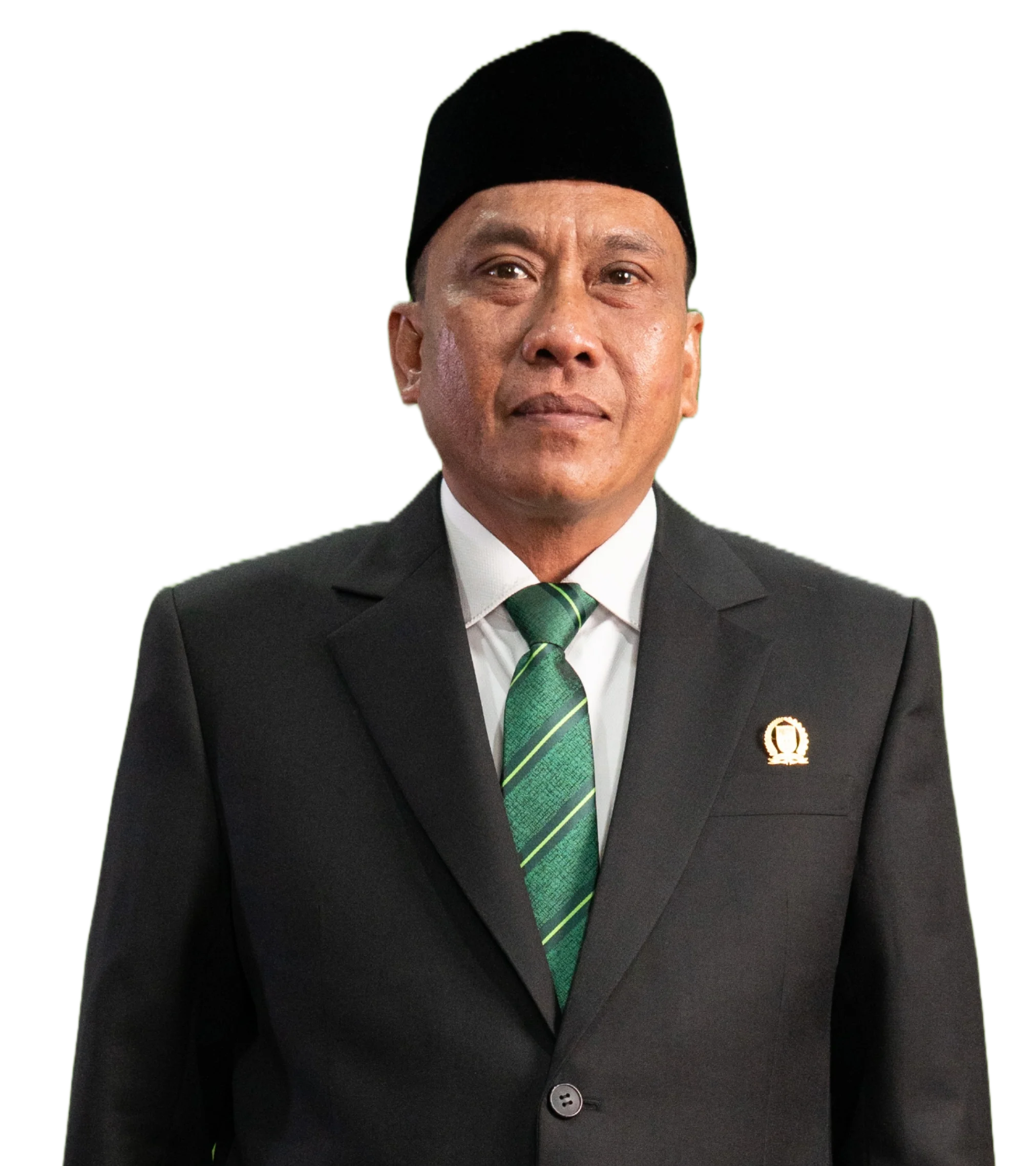
Mohammad Syafaat Mintaredja
 Indonesia
politician•activist•statesperson
Also known as: Pak Mintaredja, Pendiri P3, Pendiri PPP, Founder of PPP, Muhammad Syafaat Mintaredja
Birthday
February 17, 1921
Birth Sign
Aquarius
Birthplace
Bogor, West Java, Indonesia
Age
Died at 63
About
Mohammad Syafaat Mintaredja (17 February 1921 – 20 October 1984) stands as a pivotal figure in the history of Indonesian politics, best known as the founding father and first chairman of the United Development Party (Partai Persatuan Pembangunan or PPP). A trained legal scholar by profession, he dedicated his life to bridging divides within the Muslim community during the turbulent New Order regime. His legacy is defined not by pop culture fame or media spectacle, but by his institutional role in consolidating Islamic political movements into a single, unified entity. He served as the inaugural chairman from 1973 to 1978, overseeing the historic merger of Parmusi, Nahdlatul Ulama, and PSII. Beyond party leadership, he held significant government positions including State Minister of Government Liaison and Minister of Social Affairs. His influence remains anchored in the structural stability of Indonesia's political framework, representing a moderate voice capable of navigating complex religious-political landscapes.
Early Life & Background
Born on February 17, 1921, in Bogor, West Java, Mohammad Syafaat Mintaredja grew up in an environment deeply influenced by Islamic reform movements. His family was closely connected to Muhammadiyah, one of Indonesia's largest Islamic organizations, which profoundly shaped his early worldview and commitment to social justice. This upbringing instilled in him a strong sense of duty toward community welfare and religious unity. He pursued higher education in law, becoming a qualified legal scholar before fully entering the political arena. During his formative years, he was an active member of the Muslim Students' Association (HMI), where he honed his skills in organization and leadership. These early experiences within student groups and religious organizations laid the groundwork for his future role as a mediator between diverse Islamic factions. Before achieving national prominence, he worked tirelessly within various Islamic institutions, building a reputation as a moderate leader capable of navigating the complex religious-political landscape of mid-20th century Indonesia.
Career Growth
Mintaredja's political ascent began in earnest when he became a prominent leader within Parmusi, serving as its chairman from 1966 until the party's dissolution in 1973. His tenure was marked by efforts to maintain party cohesion amidst shifting political tides. In 1973, a historic consolidation orchestrated by President Suharto merged three major Islamic parties, Parmusi, Nahdlatul Ulama, and PSII, to form the United Development Party (PPP). Mintaredja was selected as the inaugural chairman due to his extensive experience and moderate stance, holding the position from 1973 to 1978. Concurrently, he assumed significant government roles, serving as the State Minister of Government Liaison with the Provisional People's Consultative Assembly and as the Minister of Social Affairs during the First Development Cabinet. After stepping down as PPP chairman in 1978, he continued to be respected as a senior statesman and advisor within the Islamic political sphere, though he did not hold further ministerial posts of similar magnitude. His work helped define the political landscape of Indonesia for decades, establishing a unified front for Islamic parties that persists today.
Career Timeline
Public Image & Style
Mintaredja is portrayed in historical accounts as a moderate, pragmatic statesman and a competent legal scholar. Media descriptions focus on his administrative abilities and his role in bridging divides between different Islamic factions. He was known for his willingness to compromise to achieve unity, a trait that earned him respect across political lines. His public persona was that of a serious, dedicated official rather than a charismatic showman. In the context of the New Order regime, he represented a bridge between traditional Islamic values and the state's modernization goals. His image remains that of a foundational figure whose influence was felt through policy and institutional stability rather than personal charisma or media spectacle. Historical texts often refer to him affectionately as "Pak Mintaredja," a title reflecting the respect he commanded across generations.
Fame & Fandom (iFAMOUS Rankings)
Mohammad Syafaat Mintaredja commands a legacy defined by historical gravitas rather than the frenetic energy of modern celebrity culture. As a founding father of the United Development Party and a key architect of Indonesia's political landscape during the New Order, his influence persists through institutional memory and academic study rather than organized fan movements. Unlike entertainers who cultivate dedicated tribes with specific names, rituals, or digital campaigns, the audience for Mintaredja consists of historians, political scientists, and citizens recalling a statesman whose career concluded decades before the advent of social media fandoms. There is no documented name for a fanbase, nor are there records of birthday billboards, chart pushes, or fan-funded projects associated with his life. The only contemporary ripple in this sphere involves his grandson, Alvaro Rafi Syafaat Mintaredja, who has attracted attention from netizens in 2025, yet this connection remains distinct from the elder statesman's own legacy. Regarding his standing in global recognition, iFANN data indicates that Mohammad Syafaat Mintaredja is currently NOT_EVALUATED within the fame metrics system. As of September 2026, the organization has not yet collected sufficient data to assign a rank, meaning no placement exists on any global or category-specific leaderboard. Consequently, he holds no position among the most famous persons worldwide, nor does he appear in rankings for Indonesian politics or legal scholars at this time. This absence of a numerical ranking reflects the nature of his fame: it is deep but narrow, anchored in specific historical contexts rather than broad, measurable public consumption signals. While figures like pop stars or viral icons dominate search trends and media coverage, Mintaredja's prominence relies on archival documentation and the continuity of the political party he helped establish. The lack of a formal ranking does not diminish his stature; it simply categorizes his fame as a matter of historical record rather than current statistical volume.
Interesting Facts and Legends
Historical texts often refer to him affectionately as "Pak Mintaredja," a title reflecting the respect he commanded across generations. Some sensationalist online headlines have occasionally labeled him the founder of the "Kaaba Party" or the "Declarator of P3," but these phrases are clickbait-style descriptors used by modern media outlets rather than actual party names or verified historical events. There are no documented stories of crowds fainting or street disruptions caused by his presence; his influence was exercised through legislative channels and organizational meetings. Recent discussions sometimes confuse him with his grandson, Alvaro Rafi Syafaat Mintaredja, who has gained attention in political circles as the "crown prince" of the party lineage. Despite the confusion, the elder Mintaredja's contributions remain distinct and foundational to the party's identity. His legal background allowed him to draft key policies that facilitated the merger of Islamic parties, a feat considered unprecedented at the time. Specific verbatim quotes from Mintaredja are scarce in general English-language databases, with historical accounts emphasizing his moderation and willingness to compromise.
Notable Quotes
“Mintaredja emphasized the importance of unity among Islamic factions to ensure national stability.”
Family & Personal Life
Mohammad Syafaat Mintaredja was raised in a household deeply rooted in the values of Muhammadiyah, a major Islamic organization that guided his family's approach to public service and social welfare. The family maintained a relatively low profile after his passing, focusing on preserving his political legacy rather than seeking public attention. His connection to this organization provided a strong familial foundation rooted in religious and social values that guided his public service throughout his life. While specific details about siblings or extended family members are not widely documented in public records, the household environment fostered a deep commitment to Islamic principles and community development. The family's privacy was a defining characteristic, ensuring that personal matters remained separate from the intense scrutiny of his political career.
Notable Connections
Relationships & Dating History
Mohammad Syafaat Mintaredja was married to Siti Romlah, who was born on June 1, 1923, in Cimahi. The couple remained together throughout their lives until his death in 1984. Their relationship was a long-term partnership marked by mutual support during his political career. There are no public records of divorces, engagements to others, or other romantic relationships outside of this marriage. As a statesman of his era, his personal life was kept relatively private compared to modern figures, and no children are explicitly named in available biographical sources, though his lineage continues through his grandson, Alvaro Rafi Syafaat Mintaredja. The couple's union stood as a stable foundation for his public service, and they shared a commitment to the Islamic values that guided his work. Their marriage was characterized by the same privacy typical of statesmen of his era, with few details made public about their personal life.
- MarriedSiti Romlah1945 - 1984Remained married until his death; no children publicly recorded.
Death & Aftermath
Died
October 20, 1984 (aged 63)
Death Place
Jakarta, Indonesia
Cause of Death
Natural causes
Mohammad Syafaat Mintaredja passed away on October 20, 1984, at the age of 63 in Jakarta, Indonesia. The specific medical cause was not widely publicized in international records, though his death is consistently described as a natural passing following years of dedicated public service. As a veteran statesman and the founding chairman of the United Development Party (PPP), his demise marked a significant moment for the Indonesian Islamic political community. While there were no massive public vigils or international tributes comparable to global pop culture figures, his death was noted with deep respect within the party and among colleagues who viewed him as a unifying figure. No major investigations or legal proceedings followed his death; it was treated as a natural passing of a veteran statesman.
Following his death, the PPP continued its operations under new leadership, preserving his legacy as the architect of the 1973 merger that united major Islamic parties into a single entity. No posthumous commercial releases, films, or albums followed, as his impact remained strictly within the realm of political history and institutional governance. His funeral arrangements were handled according to state protocol, though detailed records of the burial site or specific attendees are not part of the accessible public record. The family maintained a low profile after his passing, focusing on preserving his political contributions rather than seeking further public attention. His grandson, Alvaro Rafi Syafaat Mintaredja, would later emerge as a prominent figure in the same political sphere, carrying forward the family name without any formal estate disputes or legal controversies arising from the elder Mintaredja's assets.
Net Worth (Estate Value)
$0
iFANN Editorial Team estimate
Mohammad Syafaat Mintaredja lived during an era where personal wealth accumulation was not the primary metric of success for Indonesian politicians. As a state servant and political leader, his income came from government salaries and stipends associated with his ministerial and party roles. Specific figures regarding his personal earnings or asset portfolio are not publicly documented, as was common for officials of his generation who prioritized public service over private financial disclosure. Following his death in 1984, there were no significant posthumous commercial ventures, royalties, or licensing deals generated by his name, as his legacy remained purely political and institutional. The estate value is not tracked in modern financial databases, and no major revenue streams emerged after his passing beyond the continued operation of the political party he founded. Any assets he left behind were managed privately by his family without public financial reporting, and no major investigations or legal proceedings followed his death regarding his estate.
Awards & Accolades
Known For
United Development Party (PPP)
1973 · Founding Chairman
Keywords
Sources
Quick Facts
- Profession
- politician, activist, statesperson
- Born
- February 17, 1921
- Birthplace
- Bogor, West Java
- Died
- October 20, 1984
- Death Place
- Jakarta
- Gender
- Male
- Spouse
- Siti Romlah
- Birth Sign
- Aquarius
Personal Details
- Full Name
- Mohammad Syafaat Mintaredja
- Spouse
- Siti Romlah
- Children
- Education
- Legal scholar
Frequently Asked Questions
Who was Mohammad Syafaat Mintaredja?
When did Mohammad Syafaat Mintaredja die?
Where was Mohammad Syafaat Mintaredja born?
Who was Mohammad Syafaat Mintaredja married to?
Is there a famous relative of Mohammad Syafaat Mintaredja?
Similar People
Join the community
fans discussing