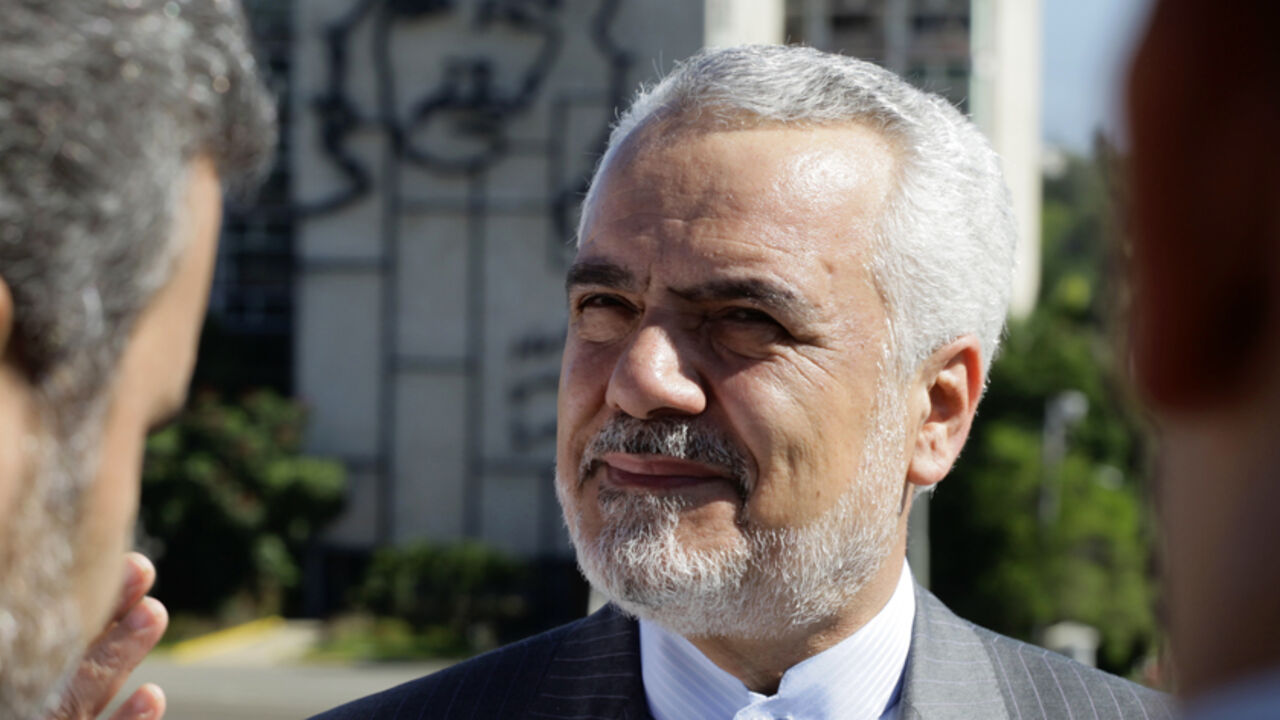
Mohammad Reza Rahimi
 Iran
Birthday
January 11, 1949
Birth Sign
Capricorn
Birthplace
Ghorveh, Kurdistan Province, Iran
Age
77 years old
About
Mohammad Reza Rahimi is an Iranian politician who served as the fifth First Vice President of Iran from September 13, 2009, to August 3, 2013, under President Mahmoud Ahmadinejad. He was the second-highest-ranking official in the executive branch during his tenure. Earlier, he held roles as Governor of Kurdistan Province and Vice President for Legal and Parliamentary Affairs. His political career was marked by controversial diplomatic stances and ended with a corruption conviction. In 2015, he was sentenced to five years in prison and is currently incarcerated at Evin Prison in Tehran. His case drew international attention as a rare instance of a senior Iranian official facing corruption consequences. He remains a figure of interest due to his dramatic fall from power and the ongoing questions about his current status.
Early Life & Background
Mohammad Reza Rahimi was born on January 11, 1949, in the city of Ghorveh (also transliterated as Serishabad) in Iran's Kurdistan Province. He grew up in a region with a significant Kurdish population, and his early life was shaped by the political and social dynamics of western Iran. Details about his family background and childhood are limited in available sources. He entered public service at the provincial level, eventually becoming the Governor of Kurdistan Province. This role gave him direct administrative experience in regional governance and served as the foundation for his subsequent ascent in national politics. Before his appointment as First Vice President, he also served as Vice President for Legal and Parliamentary Affairs under Ahmadinejad, handling legislative liaison and legal matters for the executive branch. During this period, he met with foreign officials such as Tunisian Minister Rafaa Dekhil, indicating his early diplomatic engagement. His work in parliamentary affairs positioned him within Ahmadinejad's inner circle and prepared him for the more prominent role that followed.
Career Growth
Rahimi was appointed as the fifth First Vice President of Iran on September 13, 2009, serving until August 3, 2013. As First Vice President, he was the second-highest-ranking official in the Iranian executive branch after the President himself. During his tenure, he engaged in significant diplomatic activity, including pledging Iran's backing for Syria in April 2010 and warning Israeli forces against any attempted invasion of Syrian territory. In June 2012, Rahimi made highly controversial anti-Semitic remarks, claiming that 'Zionists' were involved in illegal drug trades and blaming the Talmud for their spread. These statements drew international condemnation, including from the United Kingdom. His political career ended in disgrace with a corruption conviction in 2015, leading to a five-year prison sentence and his imprisonment at Evin Prison. The conviction stemmed from corruption charges related to his time in office, and he was taken from his home in Tehran on February 15, 2015. Reports also linked him to the leadership of a group referred to as the 'Fatemi Circle.'
Career Timeline
Public Image & Style
Rahimi's public image is defined almost entirely by the arc of his political career and its dramatic conclusion. During his time as First Vice President, he was seen as a loyalist within the Ahmadinejad administration. His 2012 anti-Semitic remarks cemented a negative international reputation and drew formal condemnation from Western governments. His corruption conviction and imprisonment in 2015 completed a narrative of political rise followed by legal downfall. Within Iran, his case was notable as a rare instance of a senior political figure facing corruption consequences, though observers noted the political dynamics behind the prosecution. The PBS Frontline Tehran Bureau published an analytical piece about him in January 2011, titled 'A Vice President Like No Other,' which examined the corruption charges swirling around him even while he was in office. This piece contributed to his public image as a controversial figure.
Fame & Fandom (iFAMOUS Rankings)
Mohammad Reza Rahimi has never cultivated a fandom in the traditional sense. There is no organized fan club, no birthday billboards, and no dedicated social media movement rallying behind his name. The audience for his life's work consists entirely of political observers, journalists, and historians tracking the arc of the Islamic Republic's executive branch rather than fans seeking celebrity worship. His presence online remains strictly utilitarian; an Instagram account bearing his name exists with roughly 2,778 followers, yet it lacks verification as belonging to the former official and serves no cult-like function. The public discourse surrounding him is defined by policy disputes and legal outcomes, not by the adoration typically reserved for entertainers or athletes. In August 2026, the iFANN Global Fame Engine evaluated his standing and determined that he has been evaluated but does not currently hold a placement in the published rankings, including the Global Top 1,000 or any scope-specific top lists. This absence from the charts reflects a reality where his fame is niche and historical rather than global or trending. While his tenure as First Vice President drew intense scrutiny, those moments did not translate into a sustained, measurable surge in worldwide consumption signals or search volume required for a ranked position. He remains a figure of significant regional importance and historical record, but his footprint on the global stage of mass popularity falls short of the thresholds needed for an ordinal ranking. The lack of a formal fanbase name further underscores this distinction; without a collective identity to rally around, his cultural impact remains confined to news cycles and academic analysis rather than the vibrant ecosystem of modern fandom.
Interesting Facts and Legends
During his time as First Vice President, Rahimi became internationally notorious for remarks made in June 2012 linking drug problems to the Talmud and blaming Zionists for global narcotics issues. These comments triggered formal condemnations from Western governments, including the United Kingdom, cementing a negative reputation abroad. In February 2015, police officers arrested him at his home in Tehran, marking the beginning of his incarceration for corruption. By then, he had already been convicted in September 2014 and sentenced to five years in prison, a rare instance of a senior Iranian official facing such legal consequences. Beyond the courtroom, specific diplomatic incidents have become part of his political lore. In late 2011, he was central to rhetoric threatening to close the Strait of Hormuz if Iran faced threats, a stance that garnered significant attention during negotiations over the country's nuclear program. Earlier, in April 2010, he helped lead the leadership team vowing to support Syria with "all its strength" during the early stages of their conflict. Despite these high-profile roles, no credible sources document any awards, honours, or distinctions received by him throughout his career. Major international magazines like TIME, Rolling Stone, or Vogue have never featured him on their covers, keeping his media presence strictly within the realm of hard news reporting.
Family & Personal Life
Publicly available information about Rahimi's family is extremely limited. The available sources do not document any marriages, children, or romantic partnerships in detail. This is consistent with the general pattern of Iranian political figures, whose personal lives are typically not subjects of public reporting in either domestic or international media. No credible sources confirm any dating history, engagement, marriage, divorce, or other relationship details for Rahimi. As of 2026, his current relationship status cannot be confirmed from available sources.
Notable Connections
Relationships & Dating History
Publicly available information about Rahimi's personal relationships is extremely limited. The available sources do not document any marriages, children, or romantic partnerships in detail. This is consistent with the general pattern of Iranian political figures, whose personal lives are typically not subjects of public reporting in either domestic or international media. No credible sources confirm any dating history, engagement, marriage, divorce, or other relationship details for Rahimi. As of 2026, his current relationship status cannot be confirmed from available sources. He remains imprisoned in Evin Prison following his 2015 corruption conviction, and no recent reporting addresses his marital or relationship status.
Salary, Net Worth In 2026
No credible net worth estimates are available for Mohammad Reza Rahimi from any source. Unlike celebrities and business figures, Iranian politicians convicted of corruption do not typically have their personal finances tracked by celebrity-net-worth websites or financial publications. The available sources do not provide salary figures, business venture valuations, real estate holdings, or investment details. Given his imprisonment since 2015, any personal wealth he may have accumulated during his political career has not been publicly documented or quantified. No outlier estimates or projections exist to flag, as no figures have been published at all.
Awards & Accolades
Known For
First Vice President of Iran
2009-2013 · Fifth First Vice President
Keywords
Sources
Quick Facts
- Profession
- politician
- Born
- January 11, 1949
- Birthplace
- Ghorveh, Kurdistan Province, Iran
- Gender
- Male
- Birth Sign
- Capricorn
Frequently Asked Questions
What happened to Mohammad Reza Rahimi?
Is Mohammad Reza Rahimi still in prison?
How old is Mohammad Reza Rahimi?
What was Mohammad Reza Rahimi's role in Iran's government?
Why was Mohammad Reza Rahimi imprisoned?
Join the community
fans discussing