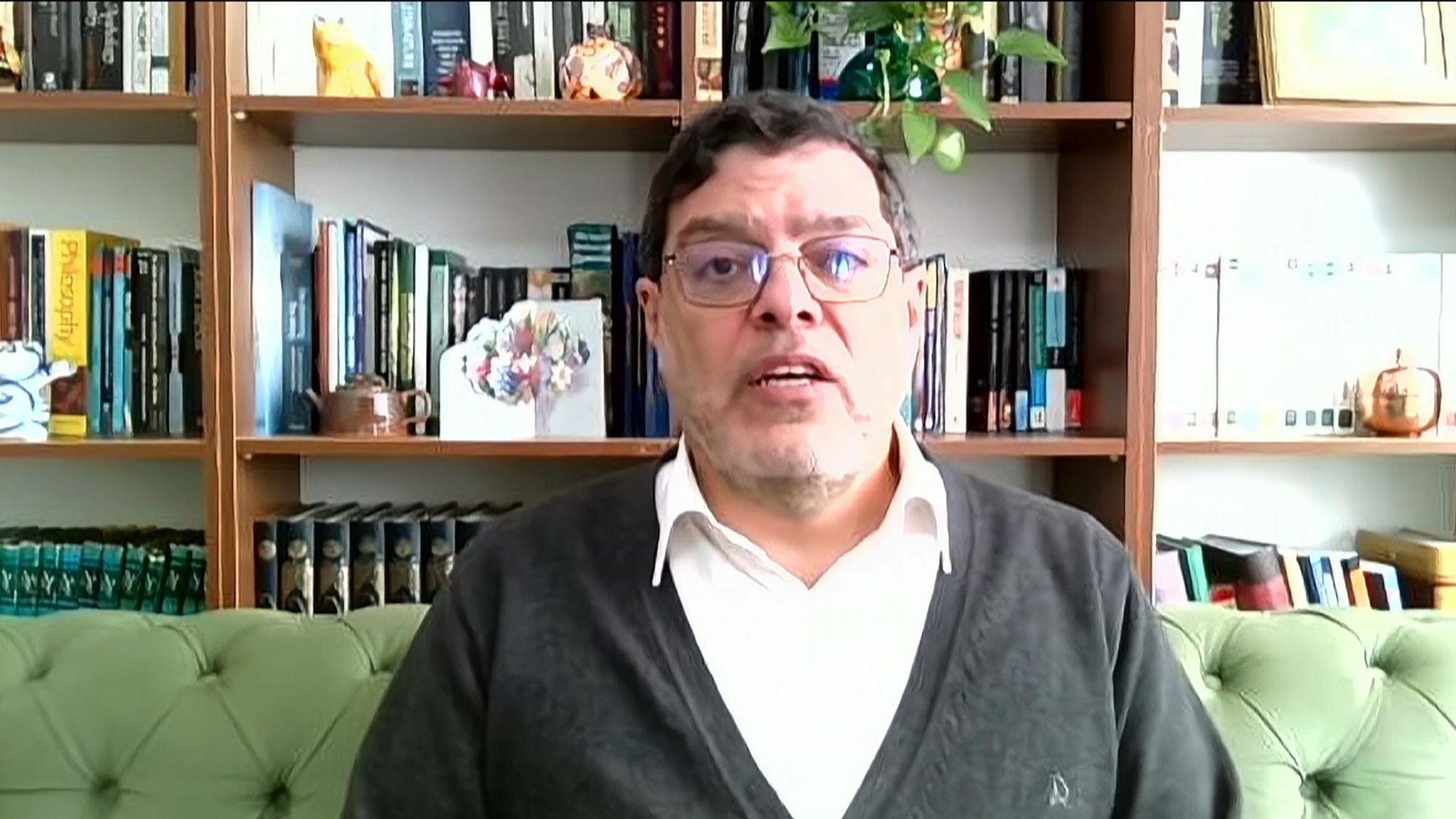
Mohammad Marandi
 United States
Also known as: Seyed Mohammad Marandi, Professor Marandi
Birthday
May 14, 1966
Birth Sign
Taurus
Birthplace
Richmond, Virginia, USA
Age
60 years old
About
Seyed Mohammad Marandi is an Iranian-American academic and political analyst who has become one of the most recognizable defenders of the Islamic Republic in English-language media. Born in Richmond, Virginia, he moved to Iran as a teenager and now serves as Dean of the Faculty of World Studies and Professor of English Literature at the University of Tehran. He is also a former senior advisor to Supreme Leader Ali Khamenei.
Marandi appears regularly on CNN, BBC, Al Jazeera, and other international outlets, where he challenges Western narratives on Iran's nuclear program, Middle East conflicts, and U.S. foreign policy. His assertive style and deep knowledge of both Western and Iranian perspectives make him a sought-after commentator. As of 2026, he remains a leading voice in Iranian state-aligned media, shaping discourse on regional security and diplomacy.
Early Life & Background
Marandi was born on May 14, 1966, in Richmond, Virginia, to an Iranian family. His father, Alireza Marandi, was a physician who later served as the personal doctor to Supreme Leader Ali Khamenei. At age thirteen, motivated by a strong commitment to the Islamic Revolution, Marandi moved to Iran with his family. He wanted to volunteer for the Iran-Iraq War, a decision that marked the start of his deep involvement with the Islamic Republic.
He completed his early education in Iran before heading to England, where he studied at the University of Birmingham. There, he earned degrees in English literature and related fields, gaining an insider's understanding of Western thought and culture. This academic background would later prove invaluable in his media work. Returning to Iran, he joined the University of Tehran faculty, initially teaching English literature and gradually moving into political analysis, focusing on U.S.-Iran relations.
Career Growth
Marandi's career took off when he became a founding member of the Institute for North American and European Studies at the University of Tehran, a hub for analyzing Western policy. He soon became a key advisor to Iran's nuclear negotiation team, contributing strategic input during critical talks in the 2000s and 2010s. His media breakthrough came as he started appearing on major Western networks, offering a counterpoint to mainstream coverage of Iran.
By the 2010s, he was a regular on CNN, BBC, and Al Jazeera, known for his sharp rebuttals and willingness to challenge interviewers. In 2014, he was appointed senior advisor to Supreme Leader Ali Khamenei, cementing his influence. Later, he became Dean of the Faculty of World Studies at the University of Tehran. In recent years, he has commented extensively on regional tensions, including the U.S.-Iran standoff and the Abraham Accords, maintaining a high-profile presence through social media and podcasts.
Career Timeline
Public Image & Style
Marandi's public image is sharply divided. In Iran, he is seen as a loyal intellectual who defends the revolution against Western bias. In the West, he is often portrayed as a controversial propagandist, with outlets like Iran International calling him a "mouthpiece" for the regime. His media style is assertive and confrontational; he frequently challenges the premises of questions and reframes debates around U.S. aggression.
His audience includes pro-Iranian activists, students of geopolitics, and those who distrust mainstream media narratives. He uses Twitter (@s_m_marandi) to post direct commentary, often engaging with critics. His YouTube channel, "Professor Marandi," features lectures and interviews. While he lacks a traditional fanbase, his influence in alternative media circles is substantial, and he is a go-to voice for Iranian perspectives in English.
Fame & Fandom
Seyed Mohammad Marandi currently holds no placement in the iFANN Global Top 1,000 or any scope-based ranking list. The iFANN Global Fame Engine evaluated his profile in August 2026 and determined he does not yet occupy a published position among the world's most famous figures. This absence of a numeric rank reflects his standing as a polarizing political analyst rather than a global celebrity with mass-market consumption metrics. His audience consists of viewers seeking geopolitical analysis and observers of Iranian politics rather than a traditional fanbase driven by artistic performance or pop culture engagement. There is no documented name for his supporters, nor are there organized fan clubs, birthday campaigns, or ritualistic gatherings associated with him. He interacts with the public through media appearances on networks like CNN and Al Jazeera, where he serves as a senior advisor to Iran's Supreme Leader. Unlike entertainers who cultivate fandoms through merchandise or chart pushes, Marandi's influence is measured in the intensity of his commentary and his role as a defender of the Islamic Republic in English-language discourse. While some outlets label him a regime mouthpiece, his followers view him as a loyal intellectual bridging cultures. The lack of a formal fandom name underscores that his impact remains within the sphere of serious political debate and academic commentary rather than the realm of celebrity worship.
Interesting Facts and Legends
Seyed Mohammad Marandi is fluent in both English and Persian, a bilingual skill that allows him to bridge cultures in his commentary. He was born in the United States but chose to live in Iran, a rare path for an academic seeking to support the revolution. His father served as a physician to Supreme Leader Ali Khamenei, granting Marandi early access to Iran's political elite. He is known for his confrontational style, frequently turning questions back on Western journalists who interview him. In 2024, Iran International labeled him a "mouthpiece" for the regime, a term he firmly rejects despite its persistence in Western media. Beyond his established reputation, Marandi made headlines when he claimed Iran welcomes a U.S. ground invasion and has prepared for decades of war, a provocative statement that garnered significant global attention. Later that summer, during an interview, he stated that Iran would not back down regarding the Strait of Hormuz, framing it as Iranian territory. In August 2026, he issued severe warnings to Israel and Gulf states, stating that Iran would unleash a new offensive strategy if threatened. During that same month, speaking to Al Mayadeen, he declared that the United States is "certainly on the decline" and argued that the current conflict differs from previous wars due to this shift in power dynamics.
Notable Quotes
“Iran will outlast Trump.”
“The U.S. is the problem.”
“Iran will never join the Abraham Accords; Gulf states normalization is betrayal.”
“We want land invasion... we have introduced a new missile.”
“Repeated U.S. violations are to blame for the impasse in diplomatic efforts.”
Family & Personal Life
Marandi keeps his personal life private, but his family background is notable. His father, Alireza Marandi, was a physician who served as the personal doctor to Supreme Leader Ali Khamenei, a connection that deeply influenced Marandi's political path. The family moved to Iran when Marandi was thirteen, and he has spoken little about his mother or siblings in public. There is no public information about his marital status or children, as he consistently avoids discussing personal matters in interviews.
Growing up in a household with ties to Iran's highest leadership likely shaped his worldview. His father's position meant the family had access to political circles, and Marandi's own career reflects that early exposure. He has not shared details about his current living situation, and he maintains a clear separation between his public role and private life.
Notable Connections
Marandi is closely associated with Supreme Leader Ali Khamenei, having served as his senior advisor. His father, Alireza Marandi, was Khamenei's personal physician. He frequently appears alongside journalists from CNN, BBC, and Al Jazeera, and has collaborated with podcasters like those on the Greater Eurasia Podcast. His work places him in the orbit of Iranian political and academic elites.
Relationships & Dating History
Marandi has kept his personal life extremely private, and there is no public record of any romantic relationships, marriages, or children. He has never discussed a partner in interviews, and media profiles focus exclusively on his professional work. As of 2026, his relationship status remains unknown, with no credible sources confirming whether he is single, married, or in a relationship.
His decision to keep personal matters out of the public eye is consistent with his focus on political and academic discourse. Without verified information, any speculation would be unfounded. Fans and followers respect his privacy, and his public persona is defined entirely by his commentary and analysis.
Salary, Net Worth In 2026
$1 Million
iFANN Editorial Team estimate
As of 2026, Marandi's net worth is not publicly disclosed, but research by the iFANN Editorial Team puts the figure at $1 Million. His income derives primarily from his academic salary as a professor and dean at the University of Tehran, along with potential stipends from his advisory role. Unlike Western celebrities, his finances are not a matter of public record. He has no known business ventures or real estate holdings reported. His wealth is likely tied to his government positions, which are not highly lucrative by international standards. Given the lack of data, any higher figures would be speculative. His financial profile reflects his career as an academic and political insider rather than a commercial figure.
Awards & Accolades
View 3 records, honours and achievementsKnown For
Senior Advisor to Supreme Leader Khamenei
2014 · Advisor
Dean, Faculty of World Studies, University of Tehran
2020 · Dean
Media Commentator on CNN, BBC, Al Jazeera
2010 · Analyst
Keywords
Sources
Quick Facts
- Profession
- Academic, political analyst
- Born
- May 14, 1966
- Birthplace
- Richmond, Virginia
- Gender
- Male
- Birth Sign
- Taurus
Personal Details
- Full Name
- Seyed Mohammad Marandi
- Education
- University of Birmingham (England)
Frequently Asked Questions
What is Mohammad Marandi's background?
Is Mohammad Marandi married or does he have kids?
What is Mohammad Marandi's net worth in 2026?
Why is Mohammad Marandi controversial?
What is Mohammad Marandi's current role?
Join the community
fans discussing