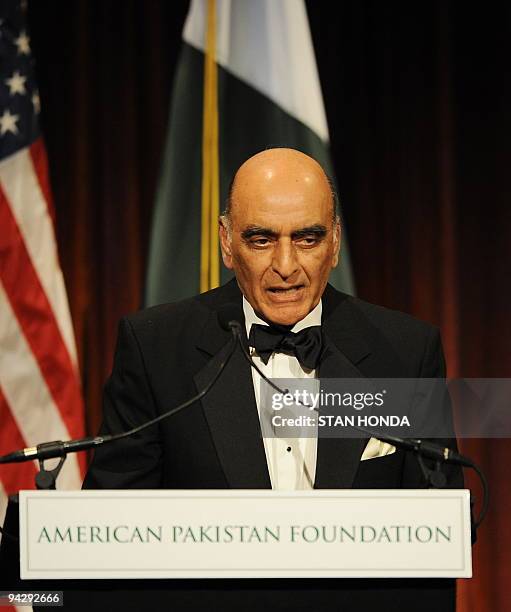
Moeen Qureshi
 Pakistan
Also known as: Moeenuddin Ahmad Qureshi, Moin Qureshi
Birthday
April 16, 1930
Birth Sign
Aries
Birthplace
Lahore, British India (now Pakistan)
Age
Died at 86
About
Moeenuddin Ahmad Qureshi was a Pakistani American economist, civil servant, and politician who served as caretaker prime minister of Pakistan from July to October 1993. He spent nearly three decades at the World Bank, rising to senior vice president, and held leadership roles at the International Finance Corporation. His brief but consequential tenure as prime minister brought technocratic economic reforms to a country in political transition.
Qureshi died on November 22, 2016, in Washington, D.C., at the age of 86, surrounded by his family. His legacy rests on his contributions to international development finance and his steady hand during a turbulent period in Pakistan's political history.
Early Life & Background
Born in Lahore in 1930, Qureshi grew up during the final decades of British rule in India. The partition of 1947 and the creation of Pakistan shaped his worldview and set him on a path toward public service. He pursued graduate studies in economics in the United States, earning a PhD that became the foundation of his career.
He joined the World Bank in the 1960s, where he spent decades working on economic development across South Asia and Africa. His expertise in finance and policy earned him a reputation as one of the institution's most capable technocrats. By 1980, he had become senior vice president of finance at the International Bank for Reconstruction and Development and executive vice president of the International Finance Corporation, a role he held until 1981.
His rise to the upper echelons of international finance made him one of the most senior Pakistani nationals in the global financial system, a remarkable achievement that predated his entry into politics.
Career Growth
In July 1993, Qureshi was appointed caretaker prime minister of Pakistan, supported by the armed forces during a period of political upheaval. He arrived in the country without a national identity card and assumed office the very next day, earning the nickname "Pakistan's Parachute PM."
During his three-month tenure, he implemented bold economic reforms, including devaluing the currency and introducing stabilization measures to address the country's fiscal crisis. His technocratic approach brought international financial expertise to domestic policy challenges, restoring some confidence in Pakistan's economic management.
After leaving office in October 1993, Qureshi returned to the United States and continued his work in international finance, maintaining his reputation as a respected economist and advisor.
Career Timeline
Public Image & Style
Qureshi was known for his measured, technocratic demeanor, bringing the discipline of international finance to Pakistan's political arena. The media portrayed him as a capable economist who stepped into a difficult situation with a focus on sound fiscal management. His brief tenure was marked by decisive reforms, and he was respected for his commitment to economic stability.
After his death, his legacy has been preserved through institutional archives and oral history projects, including those of the World Bank, which highlight his contributions to global development.
Fame & Fandom
Moeen Qureshi currently holds no placement in the Global Top 1,000 or any scope-specific ranking lists published by iFANN. The evaluation conducted in August 2026 confirms that while his historical footprint is significant, he does not register within the current parameters of the global fame engine. This absence reflects a career defined by high-level statecraft and international finance rather than the broad cultural consumption metrics required for a ranked position. Unlike figures whose legacies are sustained by active fanbases or viral moments, Qureshi's prominence remains anchored in archival records and political history. There is no documented fandom name associated with him, as his public life was strictly confined to his roles as an economist, civil servant, and caretaker prime minister. No organized supporter groups, fan clubs, or dedicated online communities have emerged to celebrate his memory in the manner typical of entertainment icons. Interactions with the public were limited to official capacities, leaving no space for the rituals, inside jokes, or charitable campaigns often driven by celebrity worshipers. The narrative surrounding him focuses on the verified anomaly of his appointment without a national identity card, a story treated as a historical curiosity rather than pop culture lore. While some observers once described him as mysterious due to his sudden elevation to power, this characterization stems from political analysis rather than fan mythology. Consequently, his legacy is preserved through institutional archives and academic discourse rather than the dynamic engagement of a fanbase.
Interesting Facts and Legends
Moeen Qureshi became prime minister without holding a national identity card, a detail that added to his mystique as one of Pakistan's most unexpected leaders. He combined two adjacent homes in Washington, D.C.'s Observatory Circle neighborhood into a single 15,000-square-foot mansion with eight bedrooms, 11 bathrooms, a library, an elevator, and a wine cellar. His career path from academia to the World Bank to the highest levels of government was unusual for a technocrat, reflecting his adaptability and depth of expertise. A widely cited historical account notes that he assumed the office of Caretaker Prime Minister in July 1993 despite lacking a valid CNIC, an extraordinary anomaly where a senior bureaucrat was elevated overnight during a period of intense political instability. This event is frequently referenced in Pakistani political history as a unique convergence of international finance and domestic governance. His residence in Washington, D.C., specifically the mansion in Observatory Circle, remained a point of interest following his death, having been listed for $12 million in 2011 before selling in 2017. These facts underscore a life marked by professional precision and a brief, consequential chapter in national leadership.
Family & Personal Life
Notable Connections
Relationships & Dating History
Public records indicate that Moeen Qureshi was married, and he had a family, but details about his spouse and marriage timeline are not well documented. He lived a private life away from the public eye, and his obituary notes that he died surrounded by his family. At the time of his death, he was widowed, as no current spouse is mentioned in available sources.
Death & Aftermath
Died
November 22, 2016 (aged 86)
Death Place
Washington, D.C., USA
Cause of Death
Natural causes
Moeen Qureshi, the Pakistani-American economist, banker, and former caretaker Prime Minister of Pakistan, died peacefully on November 22, 2016, at the age of 86. He passed away while surrounded by his family in the Washington, D.C. area, where he maintained a primary residence in Rockville, Maryland, prior to his death. The phrase used in published accounts suggests a natural conclusion consistent with his advanced age, though no official medical documentation detailing a specific cause of death appeared in available records. His home was listed for sale in June 2016 shortly before his passing, but no public incident or struggle occurred during his final days.
Public reaction included tributes from peers and institutions, most notably a piece titled "Moeen Qureshi: a true Pakistani patriot" published in The News International on November 27, 2016, which reflected on his service and character. Major outlets like The Washington Post also featured obituaries that recognized his status as a national figure.
Details concerning the funeral or memorial service remain unreported in the text, leaving the date, location, and burial site unspecified despite his high-profile status. Search results do not list immediate film releases, books, awards, or hall-of-fame inductions following his death in 2016.
Net Worth (Estate Value)
$10 Million
iFANN Editorial Team estimate
Per iFANN's editorial analysis, Moeen Qureshi's estate is valued at approximately $10 million as of 2026. The bulk of his wealth came from his long executive career at the World Bank and the International Finance Corporation, where he held senior positions with substantial compensation. His real estate holdings also contributed significantly; he owned a 15,000-square-foot mansion in Washington, D.C., which was listed for $12 million in 2011 and later for $8 million in 2016. The property eventually sold to Kellyanne Conway in 2017, though the final price was not publicly disclosed. Since his passing in 2016, the estate has not generated notable posthumous income, and its value reflects the assets he accumulated during his lifetime.
Awards & Accolades
Known For
Caretaker Prime Minister of Pakistan
1993 · Prime Minister
World Bank
1960s-1990s · Senior Vice President
International Finance Corporation
1980-1981 · Executive Vice President
Keywords
Sources
Quick Facts
- Profession
- Economist, Politician, Banker
- Born
- April 16, 1930
- Birthplace
- Lahore, British India
- Died
- November 22, 2016
- Death Place
- Washington, D.C.
- Gender
- Male
- Birth Sign
- Aries
- Net Worth
- $10 Million
Personal Details
- Full Name
- Moeenuddin Ahmad Qureshi
- Education
- PhD in Economics (United States)
Frequently Asked Questions
Who was Moeen Qureshi?
How long was Moeen Qureshi prime minister?
What did Moeen Qureshi do at the World Bank?
When did Moeen Qureshi die?
Where was Moeen Qureshi born?
Join the community
fans discussing