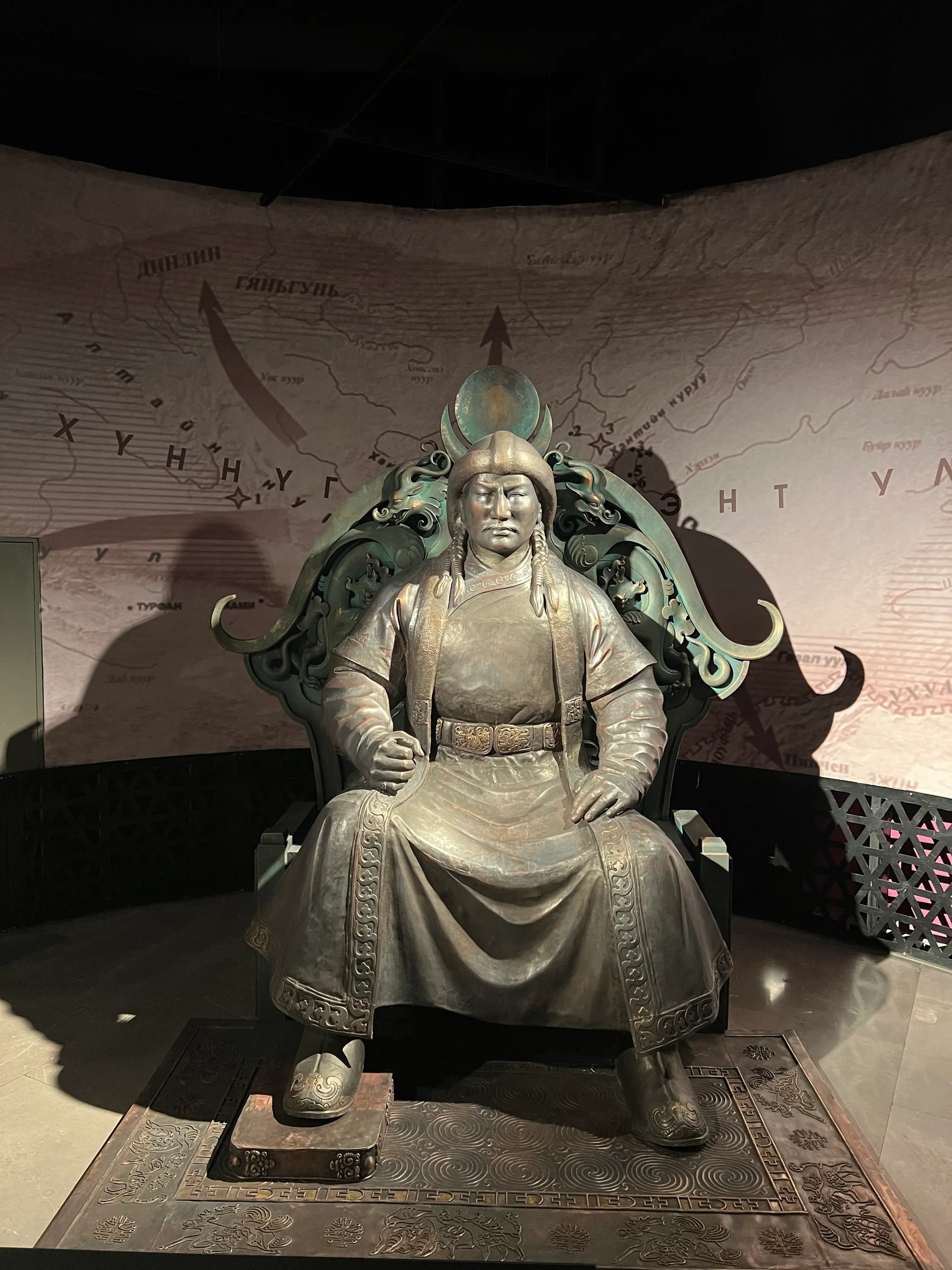
Modu Chanyu
Chanyu (supreme ruler) of the Xiongnu
Also known as: Maodun, Modun
Birthday
January 1, 234 BCE
Birth Sign
Capricorn
Birthplace
Xiongnu (Mongolian Plateau)
Age
Died at 60
About
Modu Chanyu was a Xiongnu ruler who lived from around 234 to 174 BCE and founded the Xiongnu Empire on the Mongolian Plateau. He is remembered as the chanyu who turned a loose confederation of grassland tribes into a centralized power capable of extracting tribute from Han China.
He ruled from 209 to 174 BCE. During that time he expanded the empire from the Liao River in the east to the Pamir Mountains in the west and north to Lake Baikal, making it one of the largest empires of the era. His military campaigns forced the Han dynasty into an annual tribute arrangement of silk, grain, and rice.
Modu's rise to power was brutal: he ordered the killing of his father, Touman, to seize the throne. That act set the tone for a reign built on discipline and rapid expansion. He was succeeded by his son Laoshang.
Early Life & Background
Modu was born around 234 BCE, the son of Touman, the chanyu who preceded him. The sources give his birthplace only generically as "Xiongnu" on the Mongolian Plateau; no specific location is documented, and no birth name distinct from Modu (also rendered Maodun or Modun) survives.
Before he ruled, Modu served as a military commander under his father. The decisive formative context was the loss of Xiongnu pasture lands to invading Qin forces under General Meng Tian around 215 BCE. That defeat weakened the tribes and pushed them toward unification, a process Modu would complete.
A dramatized account, the film The Rise of King Modu (2013), portrays him as having been sent as a child hostage to a neighboring kingdom and marked for death by his father, though this is a cinematic treatment rather than a verified historical record. The historical record is thin and comes chiefly from Sima Qian's much later Shiji.
Career Growth
Modu took power in 209 BCE by ordering his men to kill Touman. The timing favored him: Qin collapsed into disorder after its first emperor's death in 210 BCE, and Modu exploited the chaos. He unified the tribes of the Mongolian and Manchurian grasslands into a centralized power and expanded the empire to its height, east to the Liao River, west to the Pamir Mountains, and north to Lake Baikal.
His raids into China forced the Han dynasty into an annual tribute arrangement of silk, grain, and rice. He ruled until 174 BCE and was succeeded without a documented succession dispute by his son Laoshang.
Career Timeline
Public Image & Style
Modu is portrayed as the archetypal steppe warlord: disciplined, ruthless, and strategically opportunistic. He is a recurring subject in popular history YouTube content and even appears in Age of Empires II: Definitive Edition. There is no organized fandom with a documented name or campaigns; interest is scholarly and hobbyist.
His public image is built on the whistling-arrow legend and the tribute imposed on Han China, which popular retellings often frame as the steppe humiliating China decades before Genghis Khan.
Fame & Fandom (iFAMOUS Rankings)
iFANN has not yet collected fame data for Modu Chanyu, so no ranking is available. He does not appear on the September 2026 iFAMOUS Rankings flagship list. Interest in him is scholarly and hobbyist rather than driven by an organized fanbase. There is no documented fandom name or fan campaigns. His story circulates through popular history YouTube channels and games like Age of Empires II: Definitive Edition, where he is a subject of curiosity rather than fandom.
Interesting Facts and Legends
The defining legend is the whistling-arrow story. Modu is said to have trained his men to shoot wherever his signal arrow flew, testing their obedience even on his own prized horse and his wife before turning the arrow on Touman. Whether documented event or popular folklore, it is the story fans and historians tell first, and it is closely tied to the 209 BCE coup.
The hostage-and-escape narrative dramatized in The Rise of King Modu (2013) is folklore and cinema rather than verified history. The tribute imposed on Han China is the other iconic achievement, often framed in popular retellings as the steppe humiliating China decades before Genghis Khan.
No verbatim sayings of Modu survive. The only words attributed to him come through Sima Qian's later literary reconstruction and should not be quoted as direct speech.
Family & Personal Life
Modu was the son of Touman, the chanyu who preceded him. His father favored a younger son by another wife and sought to eliminate Modu, according to the traditional account. Modu survived and ultimately killed his father, a family conflict that set the tone for his reign.
His son and successor was Laoshang Chanyu. No romantic partners, marriages, or other children are documented in any credible source. Claims about his wives or consorts do not appear in the retrieved material and should not be asserted.
Notable Connections
Relationships & Dating History
No romantic partners, marriages, or dating history are documented in any credible source. The best-known relationship episode in the tradition is the story that, after Touman favored a younger son by another wife and sought to eliminate Modu, Modu survived and ultimately killed his father. That is a family conflict rather than a romantic one. As of 2026 the only meaningful status statement is that he is long deceased (c. 174 BCE) and widowed by history; there is no current partner and no verified record of children beyond Laoshang.
Death & Aftermath
Died
January 1, 174 BCE (aged 60)
Death Place
Unknown (probably on the Mongolian Plateau)
Cause of Death
Unknown
Modu Chanyu died around 174 BCE. He was about sixty, elderly for a steppe leader of his time, and had ruled the Xiongnu since 209 BCE. The date comes from later Chinese annalists, chiefly Sima Qian in the Shiji, and is accepted by convention rather than confirmed by any Xiongnu document. No month, day, season or specific place of death survives, and any claim of a particular cause, whether illness, wound or conspiracy, is unverified.
The sources do record the transfer of power. Modu was succeeded by his son Laoshang Chanyu, and the succession passed without a documented dispute. The empire itself was the inheritance, and it went to Laoshang intact.
Commemoration has been scholarly and cultural. Kenneth W. Harl's Empires of the Steppes, reviewed in The Guardian on 10 August 2023 and in The New Yorker on 25 December 2023, places Modu within the longer story of steppe empires. The manga artist Hirohiko Araki produced illustrations for a Great Figures in the History of Asia book series on 18 November 2022. These are acts of historical attention rather than rites for the dead.
His burial place has never been identified. Xiongnu elite tombs with grave goods are archaeologically attested across the Mongolian plateau, but none has been tied to Modu, and no text describes his funeral. What survives of him is the reign, and the whistling-arrow coup against his father in 209 BCE that opened it.
Net Worth (Estate Value)
$0
iFANN Editorial Team estimate
Awards & Accolades
Known For
Founding the Xiongnu Empire
209 BCE · Chanyu
Killing his father Touman to seize power
209 BCE · Chanyu
Forcing Han China to pay tribute
c. 200 BCE · Chanyu
Whistling-arrow training legend
c. 209 BCE · Chanyu
Keywords
Sources
Quick Facts
- Profession
- Chanyu
- Born
- c. 234 BCE
- Birthplace
- Xiongnu (Mongolian Plateau)
- Died
- c. 174 BCE
- Gender
- Male
- Birth Sign
- Capricorn
- Reign
- 209–174 BCE
- Successor
- Laoshang Chanyu
Personal Details
- Children
- Laoshang Chanyu (son and successor)
Frequently Asked Questions
Who was Modu Chanyu?
Is Modu Chanyu Mongolian?
How did Modu Chanyu come to power?
What is Modu Chanyu's connection to Mulan?
Are the Xiongnu the same as the Huns?
Similar People
Join the community
fans discussing