Mocha Dick
Birthday
Birth Sign
Birthplace
Pacific Ocean
Age
Died at 38
About
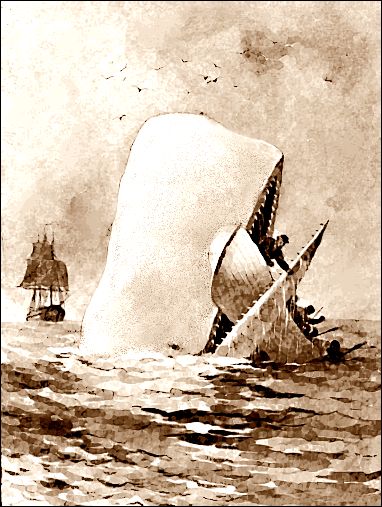
Mocha Dick was a real, historically documented male sperm whale known for his ghostly white appearance and extraordinary aggression toward whalers. Roaming the southeastern Pacific in the early 1800s, he became a legend among American and British whalers long before any writer put his story to paper. His fame rests on a single 1839 magazine article by explorer J. N. Reynolds, which later served as the primary inspiration for Herman Melville's novel Moby-Dick. Though Melville transformed the whale into a symbolic, almost supernatural figure, the real Mocha Dick was a flesh-and-blood animal that fought fiercely for his life.
Early Life & Background
Mocha Dick was born sometime in the late 1700s, likely in the vast waters of the Pacific Ocean. As a young sperm whale, he would have lived in a social pod, learning to hunt squid and navigate ocean currents. By the early 1800s, he had matured into a large, solitary bull, his skin turning a striking white due to albinism or leucism. Whalers operating near Mocha Island, off the coast of Chile, began to encounter him with increasing frequency. They noticed his unusual color and his ferocious response to attack: he would ram boats, snap his jaws, and lash his tail, often surviving multiple harpoonings. Word of this formidable whale spread from port to port, turning him into a maritime legend before any written account existed.
Career Growth
Mocha Dick's breakthrough came in 1839, when J. N. Reynolds published Mocha Dick, or The White Whale of the Pacific in The Knickerbocker magazine. The article described the whale's battles with whalers in vivid, dramatic prose, cementing his place in American literature. Reynolds had gathered stories from whalers who had encountered the whale, including the crew that finally killed him in 1838. The article became a sensation, and a decade later, Herman Melville drew heavily on it while writing Moby-Dick. Melville changed the name from Mocha to Moby and added layers of philosophical meaning, but the core of the story, a white whale that fights back, came directly from Mocha Dick. That novel has never been out of print and is studied worldwide.
Career Timeline
Public Image & Style
Mocha Dick's public image is that of a real-life leviathan, a tragic and awe-inspiring figure of nature. Media and literature portray him as the original white whale, a symbol of untamed wilderness and the futility of man's struggle against nature. His fandom is largely academic and literary, with no official name. Fans are typically readers of Moby-Dick, maritime history enthusiasts, and cryptozoology followers.
Fame & Fandom (iFAMOUS Rankings)
Mocha Dick commands a quiet but enduring global attention, sustained not by modern media cycles but by his pivotal role in literary history and maritime folklore. His presence is felt wherever Herman Melville's Moby-Dick is studied, discussed, or celebrated, anchoring the imagination of readers across generations. Despite this deep cultural resonance, Mocha Dick does not currently hold a placement in the iFANN Global Top 1,000 rankings or any scope-based list. The iFANN evaluation confirms that while he remains a significant historical figure, he has no current numerical rank within the published hierarchy. The community surrounding him lacks an official name; there are no organized fan clubs, specific collective nouns like 'Dickites,' or formal campaigns dedicated solely to the whale himself. Instead, the audience consists of Melville scholars, maritime historians, and general readers who engage with his story through academic discourse and literary appreciation. While recent artistic projects, such as Tristin Lowe's 2026 exhibition at the Williams College Museum of Art, have brought visual attention to his legend, these are curated exhibitions rather than grassroots fan movements. Similarly, discussions regarding climate change or fatphobia in relation to the novel represent critical analysis rather than active fandom rituals. There are no birthday billboards, social media trends, or interactive traditions associated with the real Mocha Dick. His legacy survives through the pages of books and the halls of museums, where his tale of survival and aggression against whalers continues to be recounted as a foundational myth of American literature.
Interesting Facts and Legends
Mocha Dick was not the only white whale in history; Migaloo, an albino humpback sighted off Australia since 1991, shares this rare genetic trait. According to explorer J. N. Reynolds, the real Mocha Dick was heavily covered in barnacles, a clear sign of his advanced age and decades of skirmishes. The name Mocha derives from Mocha Island, a small landmass off central Chile where he was frequently spotted. Unlike the fictional Moby Dick, who sinks only one ship, the real whale was credited with destroying multiple whaleboats over the years. Reynolds described him snapping his jaws so loudly the sound carried above the wind. A core legend tells of his resilience against approximately 100 different whaling ships before his death in 1838. He measured between 70 and 72 feet, making him one of the largest sperm whales ever recorded. In March 2026, scientists captured footage of modern sperm whales headbutting, behavior long debated and famously depicted in Moby-Dick, which validated the aggressive tactics attributed to Mocha Dick. While often conflated with the sinking of the Essex in 1820, that event involved a different whale, yet it contributed to the lore of the white whale's capacity for catastrophic attack.
Notable Quotes
“But the monster was not to be vanquished without a struggle. He turned upon his assailants, lashing the sea with his tail, and snapping his huge jaws with a noise that was heard above the roar of the wind.”
Family & Personal Life
As a sperm whale, Mocha Dick's family life is not documented. Male sperm whales typically leave their natal pod after adolescence and live solitary lives, returning to breeding grounds only to mate. No specific partners or offspring are recorded for Mocha Dick. His only known interactions with other whales would have been during mating seasons, but no details survive.
Notable Connections
J. N. Reynolds, the explorer and author who wrote the definitive 1839 article about Mocha Dick. Herman Melville, the author of Moby-Dick, who used Reynolds's account as his primary inspiration.
Relationships & Dating History
Death & Aftermath
Died
1838 (aged 38)
Death Place
near Mocha Island, Chile
Cause of Death
Lethal harpooning by whalers
The end of the legendary white whale arrived in 1838, confirmed by whaling logs that recorded his final struggle against a determined crew. Mocha Dick fell after surviving over a hundred encounters with hunters who had long viewed him as an invincible foe, likely near the waters off Mocha Island, Chile, where he had made his home. Accounts suggest he may have been killed while attempting to defend a distressed cow and her calf, a final act of protection before succumbing to lethal harpoons in the open Pacific. Public reaction remained confined to the immediate whaling community.
His true legacy emerged through literature rather than ceremony. In May 1839, explorer Jeremiah N. Reynolds published a lengthy article titled "Mocha Dick; or, The White Whale of the Pacific" in the Knickerbocker Magazine, drawing on stories from crews like the one that finally killed him. This journalistic account served as the direct catalyst for Herman Melville, who would later adapt the real-life tragedy into the symbolic masterpiece Moby-Dick. That novel, published in 1851, transformed the historical animal into an immortal figure of fiction, ensuring his story survived long after his body returned to the ocean.
Awards & Accolades
View 4 records, honours and achievementsKnown For
Moby-Dick
1851 · Real-life inspiration
Keywords
Quick Facts
- Species
- Sperm whale (Physeter macrocephalus)
- Color
- White (albino or leucistic)
- Died
- 1838
- Famous for
- Inspiring Moby-Dick
Frequently Asked Questions
Is Mocha Dick the same as Moby Dick?
How did Mocha Dick die?
How big was Mocha Dick?
Was Mocha Dick really white?
Where did Mocha Dick live?
Similar People

Join the community
fans discussing