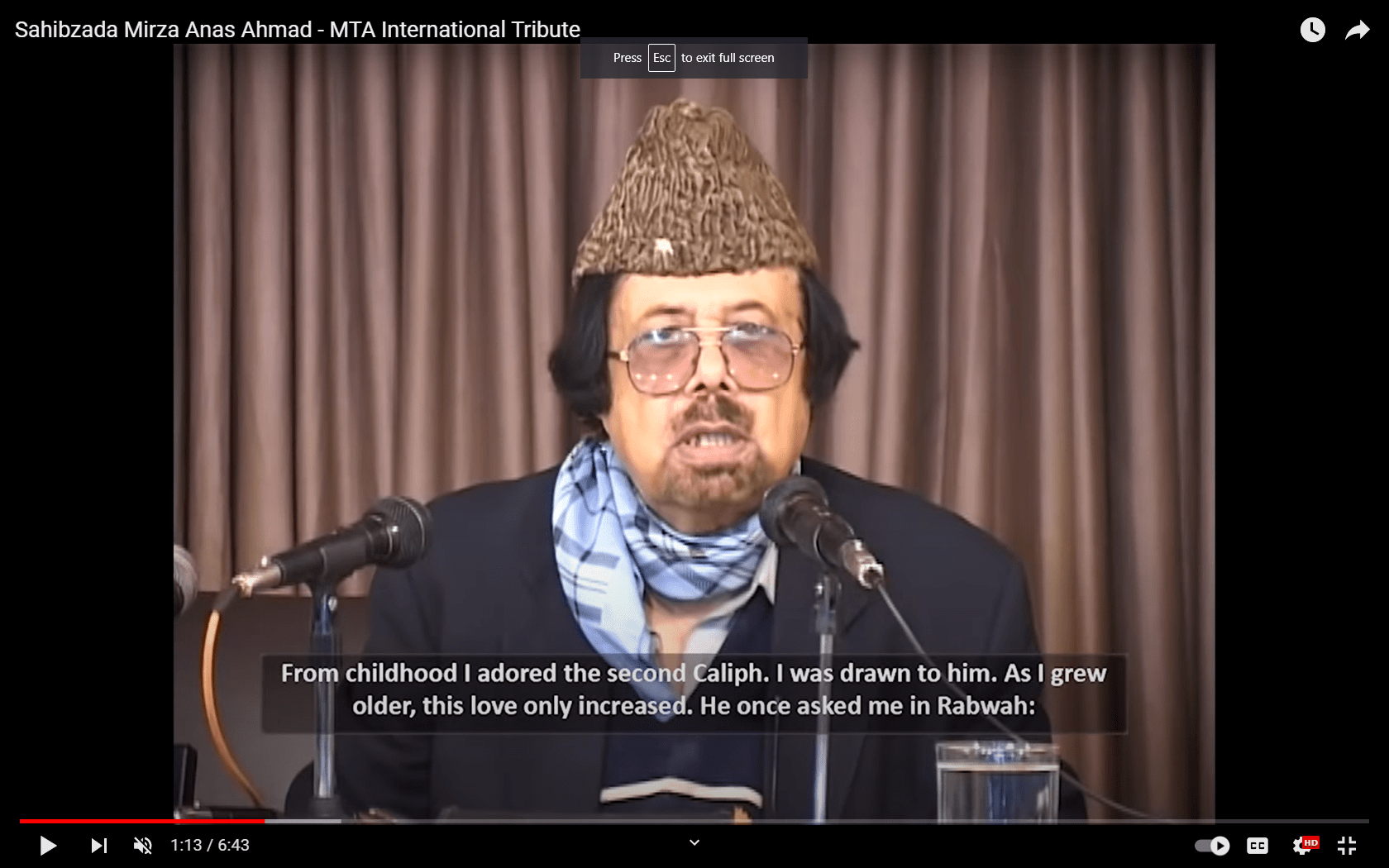
Mirza Nasir Ahmad
 Pakistan
Also known as: Khalifatul Masih III, Hazrat Hafiz Mirza Nasir Ahmad
Birthday
November 16, 1909
Birth Sign
Scorpio
Birthplace
Qadian, British India
Age
Died at 72
About
Mirza Nasir Ahmad was the third Caliph of the Ahmadiyya Muslim Community, a position he held from November 8, 1965, until his death on June 9, 1982. Born in Qadian on November 16, 1909, he was the eldest surviving son of the second Caliph, Mirza Basheer-ud-Din Mahmood Ahmad, and the grandson of the community's founder, Mirza Ghulam Ahmad. He is revered by followers as Khalifatul Masih III.
His tenure as Caliph was marked by significant global expansion of the community's missionary work, particularly in Africa and Europe, and by the launch of the Nusrat Jehan Scheme, a humanitarian initiative that established schools and clinics across Africa. In 1980, he laid the foundation stone for the Basharat Mosque in Spain, the first purpose-built mosque there since the 15th century, and announced the community's motto, "Love for All, Hatred for None." He also guided the community through intense political persecution in Pakistan, including the 1974 constitutional amendment declaring Ahmadis non-Muslims. He passed away in Islamabad, leaving a legacy of spiritual leadership and dedication to interfaith understanding.
Early Life & Background
Mirza Nasir Ahmad was born on the night of November 15 or the morning of November 16, 1909, in Qadian, the birthplace of the Ahmadiyya movement. He was raised in a household steeped in religious scholarship; his father, Mirza Basheer-ud-Din Mahmood Ahmad, was the second Caliph, and his grandfather, Mirza Ghulam Ahmad, had founded the community. From a young age, he showed an aptitude for Islamic theology and Arabic literature. He was educated at home under the supervision of his father and grandfather, memorizing the Holy Quran and mastering classical Islamic texts. He became known as a Hafiz and a scholar of Hadith and Fiqh. His early years were devoted to the study of the faith, preparing him for a life of leadership. He grew up in an environment where the preservation and propagation of Ahmadiyya teachings were paramount, and he was groomed for religious leadership from childhood.
Career Growth
Mirza Nasir Ahmad's career was dedicated to the leadership of the Ahmadiyya Muslim Community. He was elected Caliph on November 8, 1965, immediately after the death of his father. His tenure saw the expansion of missionary work in Europe and Africa, and in 1970 he launched the Nusrat Jehan Scheme, a humanitarian program that built schools, clinics, and orphanages across several African nations. This was the first large-scale humanitarian initiative by an Ahmadi Caliph on the continent. In 1974, he faced an eleven-day inquisition in Pakistan's National Assembly, which ultimately declared Ahmadis non-Muslims. He guided the community through this period of legal repression. In 1980, he traveled to Spain, where he laid the foundation stone for the Basharat Mosque in Pedro Abad, the first purpose-built mosque in Spain since the 15th century, and announced the motto "Love for All, Hatred for None." He also oversaw the compilation of his grandfather's writings into the 23-volume Rūhānī Khazā᾽in and other collections. He continued his leadership until his death in 1982.
Career Timeline
Public Image & Style
Mirza Nasir Ahmad was perceived as a dignified and scholarly leader, deeply committed to the principles of Islam and the Ahmadiyya community. He was known for his eloquent speeches and his ability to articulate the community's beliefs under pressure. His announcement of "Love for All, Hatred for None" in 1980 became a defining aspect of the community's public identity, promoting a message of peace and tolerance. He was seen as a unifying figure during times of persecution, and his emphasis on humanitarian work, such as the Nusrat Jehan Scheme, enhanced the community's image as a force for good in the world. His legacy continues to be celebrated by followers, who view him as a spiritual guide and a symbol of resilience.
Fame & Fandom
Mirza Nasir Ahmad commanded a global following as the third Caliph of the Ahmadiyya Muslim Community, though his adherents identify strictly as members of this religious body rather than as a fandom in the secular entertainment sense. His influence was measured by theological authority and missionary expansion rather than commercial campaigns or pop-culture rituals, with the fanbase having no formal name. The community's devotion manifested through adherence to his teachings on peace and the establishment of educational infrastructure across Africa, distinct from the consumerist engagement seen in celebrity circles. In August 2026, the iFANN Global Fame Engine evaluated his standing and determined that he does not currently hold a placement in the published rankings for the Global Top 1,000 or any Top-100 scope list. Consequently, no specific ordinal rank or numerical score can be assigned to his fame relative to other public figures. While his legacy is profound within the context of religious history, particularly regarding the stabilization of the community during periods of persecution and the Nusrat Jehan Scheme, these achievements do not translate into a quantifiable position on modern fame charts. The absence of a ranking reflects the unique nature of his status as a spiritual leader rather than a celebrity subject to viral trends or media consumption metrics. Followers revere him as Khalifatul Masih III, a title rooted in divine succession rather than popular acclaim, ensuring his historical footprint remains defined by institutional growth and theological impact rather than chart performance.
Interesting Facts and Legends
Mirza Nasir Ahmad's given name "Nasir" translates to "Helper" or "Supporter," while "Ahmad" signifies "Most Praiseworthy," a reference to the Prophet Muhammad. He possessed fluency in Arabic, Urdu, and Persian, facilitating communication across diverse regions including the Middle East, South Asia, and Africa. The humanitarian initiative known as the "Nusrat Jehan Scheme" translates to "Victory of the World," embodying his vision for global peace and aid. A notable historical milestone occurred in 1980 when he visited Spain, marking the re-establishment of a formal Ahmadi presence in the country after centuries of absence. Beyond his administrative duties, he was a skilled calligrapher, a talent rarely highlighted in general biographies. Among the stories retold within the community is the narrative of his successful election in 1965, which consolidated leadership during a period of potential schism and political tension in Pakistan. Another enduring account involves the rapid expansion of the faith in West Africa under his guidance, where strategic vision transformed small groups into major presences in nations like Nigeria and Ghana. These events are documented as pivotal moments of stability and growth rather than folklore, forming the core of the community's historical identity.
Notable Quotes
“Love for All, Hatred for None”
“The true religion of Islam is one of love and brotherhood.”
“We must be ready to sacrifice everything for the sake of our faith.”
Family & Personal Life
Mirza Nasir Ahmad was the eldest surviving son of Mirza Basheer-ud-Din Mahmood Ahmad and his wife, Amatul Hayat. He was the grandson of the community's founder, Mirza Ghulam Ahmad. He married Amatul Rahim, who supported him throughout his tenure as Caliph. They had several children, including Sahibzada Mirza Anas Ahmad, who later became a prominent figure in the community. The family lived in Rabwah, Pakistan, during his caliphate. His household was known for its simplicity and devotion to faith.
Notable Connections
Mirza Nasir Ahmad was associated with the Ahmadiyya Muslim Community, founded by his grandfather Mirza Ghulam Ahmad. He was the son of Mirza Basheer-ud-Din Mahmood Ahmad, the second Caliph. He is also associated with his successor Mirza Masroor Ahmad, the fifth Caliph, and with Abdus Salam, the Nobel Prize-winning physicist, whose achievements he celebrated.
Relationships & Dating History
Mirza Nasir Ahmad was married to Amatul Rahim, a devout member of the community. They had several children together, including Sahibzada Mirza Anas Ahmad. The marriage was one of devotion and service, and there is no public record of any other romantic relationships. At the time of his death in 1982, he was widowed, as Amatul Rahim had predeceased him. His personal life was largely private, consistent with the expectations of a religious leader.
- MarriedAmatul Rahim1930 - 1982She was his wife and supported him during his tenure as Caliph.
Death & Aftermath
Died
June 9, 1982 (aged 72)
Death Place
Qadian, Punjab, Pakistan
Cause of Death
Unknown
The passing of Mirza Nasir Ahmad, the third Caliph of the Ahmadiyya Muslim Community, elicited a profound sense of loss among followers who viewed his leadership as a pivotal era for the faith's global expansion. Tributes from subsequent leaders have consistently highlighted the devotion and reverence held for his tenure, framing his death not merely as an event but as a transition within a continuous spiritual lineage. The community marked the occasion with quiet reflection rather than public spectacle, focusing on the legacy of initiatives like the Nusrat Jehan Scheme which continued to bear fruit long after his final days. Mirza Nasir Ahmad passed away on June 9, 1982, at the age of seventy-two in Qadian, Pakistan, the historic headquarters of the community where he had resided since birth.
Details regarding his final days or last public appearances remain unrecorded in available biographical sources, leaving the circumstances of his final moments within the realm of private family knowledge rather than public record. Following his death, the logistics of his funeral and interment were conducted according to religious tradition, though specific dates, attendees, or locations of the service are not preserved in general historical summaries. The immediate aftermath saw the continuation of the community's missionary work under new leadership, with later caliphs referencing his contributions to the movement's growth in Africa and Europe. The focus of the community remained firmly on the ongoing spiritual guidance provided by the institution of the Caliphate rather than on individual memorials.
Net Worth (Estate Value)
Not Applicable
iFANN Editorial Team estimate
As a religious leader of a global movement, Mirza Nasir Ahmad did not accumulate personal wealth during his lifetime. The Ahmadiyya Community operates on a system of voluntary donations, and the Caliph lived simply, often donating any personal stipends to charitable causes. iFANN's editorial research traces the financial structure of his tenure to communal assets managed by the Caliphate rather than individual accumulation. Consequently, no net worth figure is associated with him personally, as any assets held were considered property of the institution he led. His economic legacy is measured instead in the growth of the community's infrastructure and membership across the globe.
Awards Won (1)
Mirza Nasir Ahmad did not receive secular awards, but he is honored within the Ahmadiyya community for his leadership and contributions. His legacy includes the establishment of the Nusrat Jehan Scheme and the Basharat Mosque, which are celebrated as major achievements in humanitarian aid and interfaith dialogue.
1965 · Religious Leadership
Ahmadiyya Muslim Community
Known For
Third Caliph of Ahmadiyya Muslim Community
1965 · Khalifatul Masih III
Nusrat Jehan Scheme
1970 · Founder
Basharat Mosque
1980 · Foundation stone layer
Keywords
Sources
Quick Facts
- Profession
- religious leader, caliph
- Born
- +1909-11-16
- Birthplace
- Qadian
- Died
- +1982-06-09
- Death Place
- Islamabad
- Gender
- Male
- Birth Sign
- Scorpio
Personal Details
- Full Name
- Mirza Nasir Ahmad
- Spouse
- Amatul Rahim
- Children
- Sahibzada Mirza Anas Ahmad, and others
- Education
- Home education; memorized the Quran; studied Hadith and Fiqh
Frequently Asked Questions
Who was Mirza Nasir Ahmad?
When was Mirza Nasir Ahmad born and died?
Did Mirza Nasir Ahmad get married?
What happened to Mirza Nasir Ahmad in 1974?
What is the 'Nusrat Jehan Scheme'?
Similar People
Join the community
fans discussing