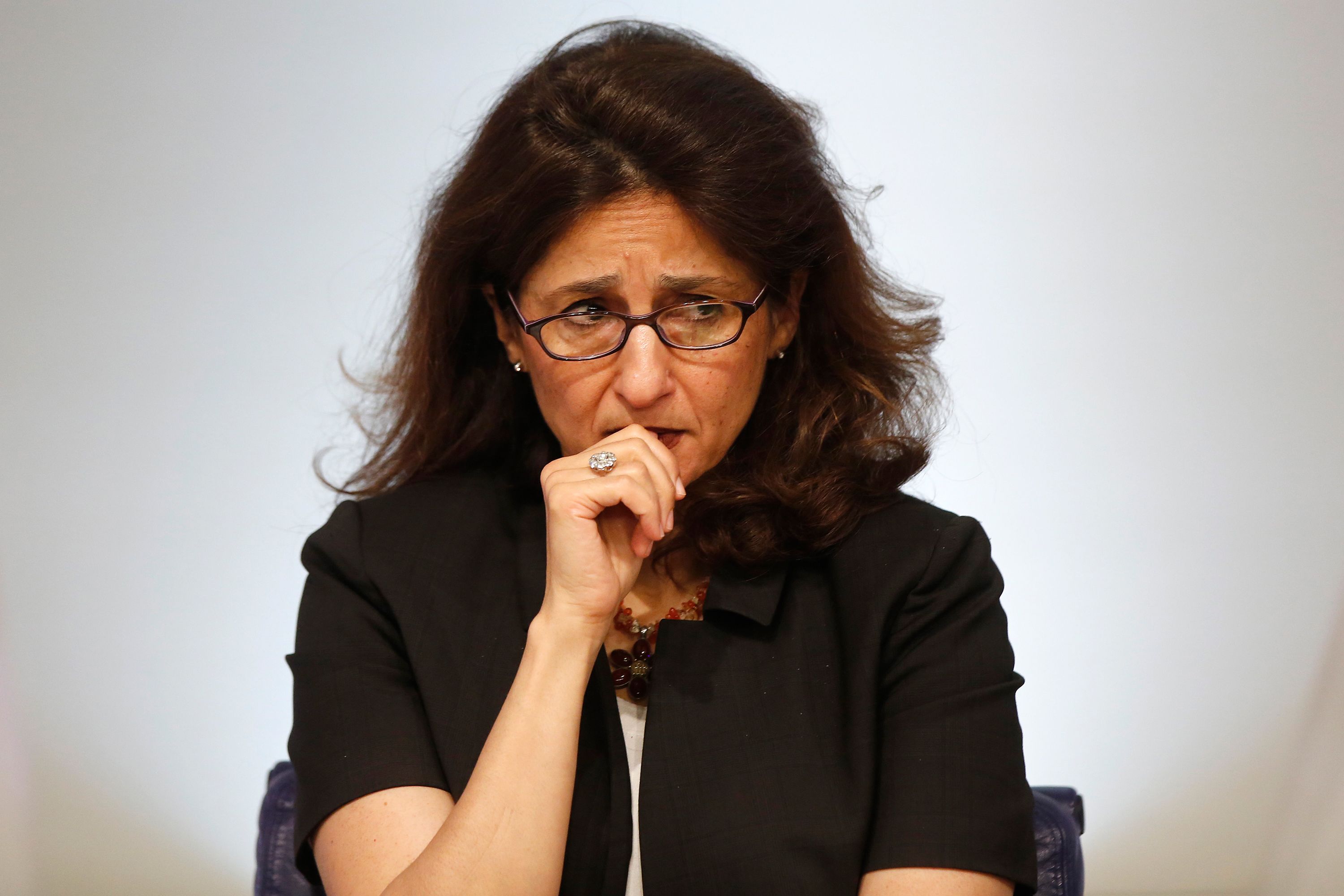
Minouche Shafik
 Egypt
economist•academic•public servant
Also known as: Baroness Shafik, Nemat Talaat Shafik
Birthday
August 13, 1962
Birth Sign
Leo
Birthplace
Alexandria, Egypt
Age
64 years old
About
Minouche Shafik is a British-American economist and academic who has led some of the world's most influential institutions. Born in Alexandria, Egypt, she moved to the US and later to the UK, where she served as deputy governor of the Bank of England from 2014 to 2017. She was president of the London School of Economics from 2017 to 2023, and then became the 20th president of Columbia University in July 2023, a role she held until August 2024. In 2025, she was appointed chief economic advisor to UK Prime Minister Keir Starmer. Her earlier career includes stints as permanent secretary of the UK's Department for International Development (2008-2011), vice president at the World Bank, and deputy managing director of the IMF. She has been a life peer in the House of Lords since 2020. Shafik's tenure at Columbia was marked by the 2024 protests over the Gaza conflict, where she testified before Congress about antisemitism on campus. She resigned amid mounting pressure, later becoming chair of the Victoria and Albert Museum in January 2025. Known for her work on social contracts and economic inclusion, Shafik has authored several influential publications, including 'What We Owe Each Other.'
Early Life & Background
Nemat Talaat Shafik entered the world in Alexandria, Egypt, on August 13, 1962. Her family emigrated to the United States when she was still a child, providing her with an American upbringing that would later inform her global perspective. This cross-cultural foundation proved vital as she navigated elite academic circles. She attended Columbia University, graduating in 1984 with a Bachelor of Arts in economics. Her academic ambitions did not stop there; she moved on to the Massachusetts Institute of Technology, earning both a Master of Arts and a Doctor of Philosophy in economics in 1986 and 1987 respectively. Before stepping into the high-stakes arenas of central banking and international development, Shafik built a solid reputation in academia. She served as a professor at MIT and later at the London School of Economics, where she conducted extensive research on labor markets, globalization, and the social contract. Her early scholarly work focused on labor economics and economic development, setting the stage for her transition into policy roles. By the late 1990s and early 2000s, she had established herself as a leading voice in economic theory, particularly regarding the impact of globalization on developing nations. This period of intellectual rigor prepared her for the complex challenges she would face in government service.
Career Growth
Shafik's entry into senior government service began in 2008 when she was appointed Permanent Secretary of the UK Department for International Development, a position she held until 2011. In this role, she oversaw the UK's aid budget and shaped development strategies globally. From 2011 to 2014, she served as Vice President of the World Bank, focusing on human capital and development issues. In 2014, she returned to the UK to serve as Deputy Governor of the Bank of England, contributing to monetary policy and financial stability until 2017. Her academic leadership reached its peak in 2017 when she became the President and Vice-Chancellor of the London School of Economics, a post she held until 2023. During her tenure, she steered the institution through significant challenges, including Brexit and the global pandemic, while championing the role of social sciences in public policy. In 2020, she was appointed to the House of Lords as a life peer, taking the title Baroness Shafik. Her time at LSE was marked by a focus on inclusive growth and the future of work, themes she explores in her book What We Owe Each Other: A New Social Contract, published in 2023. In July 2023, Shafik became the 20th president of Columbia University, a role that thrust her into the national spotlight. However, her tenure was brief and contentious. In the spring of 2024, she faced intense pressure during campus protests over the Israel-Hamas war. On April 17, 2024, she testified before the U.S. House Committee on Education and the Workforce about antisemitism on campus. After months of criticism from students, faculty, and lawmakers, she resigned effective August 14, 2024. Following her departure from Columbia, Shafik returned to the UK, where she was appointed chair of the Victoria and Albert Museum in January 2025. Then, on September 1, 2025, she took on the role of Chief Economic Advisor to UK Prime Minister Keir Starmer.
Career Timeline
Public Image & Style
Minouche Shafik projects an image of a serious, principled leader deeply committed to economic justice and institutional integrity. Her public persona is defined by her ability to navigate complex political landscapes and high-stakes policy-making environments. She is often portrayed as a pragmatic economist who values evidence-based decision-making and the importance of the social contract. Media coverage tends to focus on her analytical capabilities and her steady demeanor during crises, such as the pandemic and the Columbia University protests. Unlike many public figures who cultivate a celebrity-like presence, Shafik maintains a dignified distance, letting her work speak for itself.
Fame & Fandom (iFAMOUS Rankings)
Minouche Shafik operates in spheres of influence far removed from traditional celebrity culture. As a titan of economic policy, her fame derives from her leadership roles at the World Bank, the IMF, and major universities like Columbia and the London School of Economics. iFANN's Global Fame Engine has evaluated this person, but they do not currently hold a placement in the published rankings (Global Top 1,000 or a Top-100 scope list). Her prominence is sector-specific, commanding respect among policymakers, academics, and students rather than the general public. There is no documented fanbase name associated with her; she does not have organized crowds or monikers for her followers. Instead, her audience engages with her through the gravity of her contributions to economic policy and higher education governance. Her story lacks the mythic quality of celebrity worship, replacing it with the stark clarity of public service records and institutional leadership.
Interesting Facts and Legends
Minouche Shafik's birth name is Nemat Talaat Shafik, reflecting her Egyptian heritage, though she is universally known by her nickname Minouche. She is one of the few women to hold top positions in both central banking, serving as Deputy Governor of the Bank of England, and international development, working as a Vice President at the World Bank. Her resignation from Columbia University in 2024 stands as a significant moment in higher education history, highlighting the immense challenges of leading elite institutions amid political turmoil. The testimony she delivered before the U.S. House Committee on Education and the Workforce in April 2024 regarding antisemitism on campus remains a notable event in recent political discourse. She holds the distinction of being a life peer in the House of Lords, having been created Baroness Shafik in 2020.
Notable Quotes
“The social contract is not just a set of rules; it is a promise that we all share.”
“We must build an economy that works for everyone, not just the few.”
Family & Personal Life
Minouche Shafik is married to Raffael Jovine. The couple has been together for many years, maintaining a relatively private personal life despite her highly visible professional career. There are no public records indicating they have children together or that she has children from previous relationships. Her family background includes her Egyptian origins, but specific details about her parents or siblings remain outside the public domain. Shafik keeps her domestic affairs separate from her public duties, allowing her professional achievements to take center stage.
Notable Connections
Keir Starmer, Paul Wolfowitz, Christine Lagarde, Anthony Scaramucci, John Bercow.
Relationships & Dating History
Minouche Shafik is married to Raffael Jovine. Details regarding the timeline of their relationship are not widely publicized, but they have been together for many years. There is no public record of children from this marriage or any other relationships. As of 2026, Shafik remains married to Raffael Jovine. Her personal life has remained relatively private compared to her highly visible professional career. Unlike many public figures, she rarely discusses her family in interviews, keeping her domestic life out of the spotlight.
- MarriedRaffael JovineCurrentMarried for many years; details of how they met are not public.
Salary, Net Worth In 2026
$7 Million
iFANN Editorial Team estimate
iFANN currently estimates Minouche Shafik's net worth at approximately $7 million. This figure reflects her substantial earnings from high-level executive roles in international organizations and academia. Her income streams include salaries from her tenures at the World Bank, the International Monetary Fund, the Bank of England, the London School of Economics, and Columbia University. Additional revenue sources likely involve speaking fees, consulting engagements, and royalties from her book What We Owe Each Other: A New Social Contract. While specific details of her investments and real estate holdings are not publicly disclosed, her long career in senior public service and leadership positions suggests a comfortable financial standing consistent with her professional stature.
Awards & Accolades
View 1 records, honours and achievementsKnown For
What We Owe Each Other: A New Social Contract
2023 · Author
Columbia University President
2023 · President
London School of Economics President
2017 · President
Bank of England Deputy Governor
2014 · Deputy Governor
Keywords
Sources
Quick Facts
- Profession
- economist
- Born
- August 13, 1962
- Birthplace
- Alexandria, Egypt
- Gender
- Female
- Spouse
- Raffael Jovine
- Birth Sign
- Leo
Personal Details
- Full Name
- Nemat Talaat Shafik
- Spouse
- Raffael Jovine
- Children
- Education
- Columbia University (BA), Massachusetts Institute of Technology (MA, PhD)
Frequently Asked Questions
Who is Minouche Shafik?
What is Minouche Shafik's net worth?
Why did Minouche Shafik resign from Columbia University?
Is Minouche Shafik married?
What is Minouche Shafik's current role?
Social Media
Similar People

Join the community
fans discussing