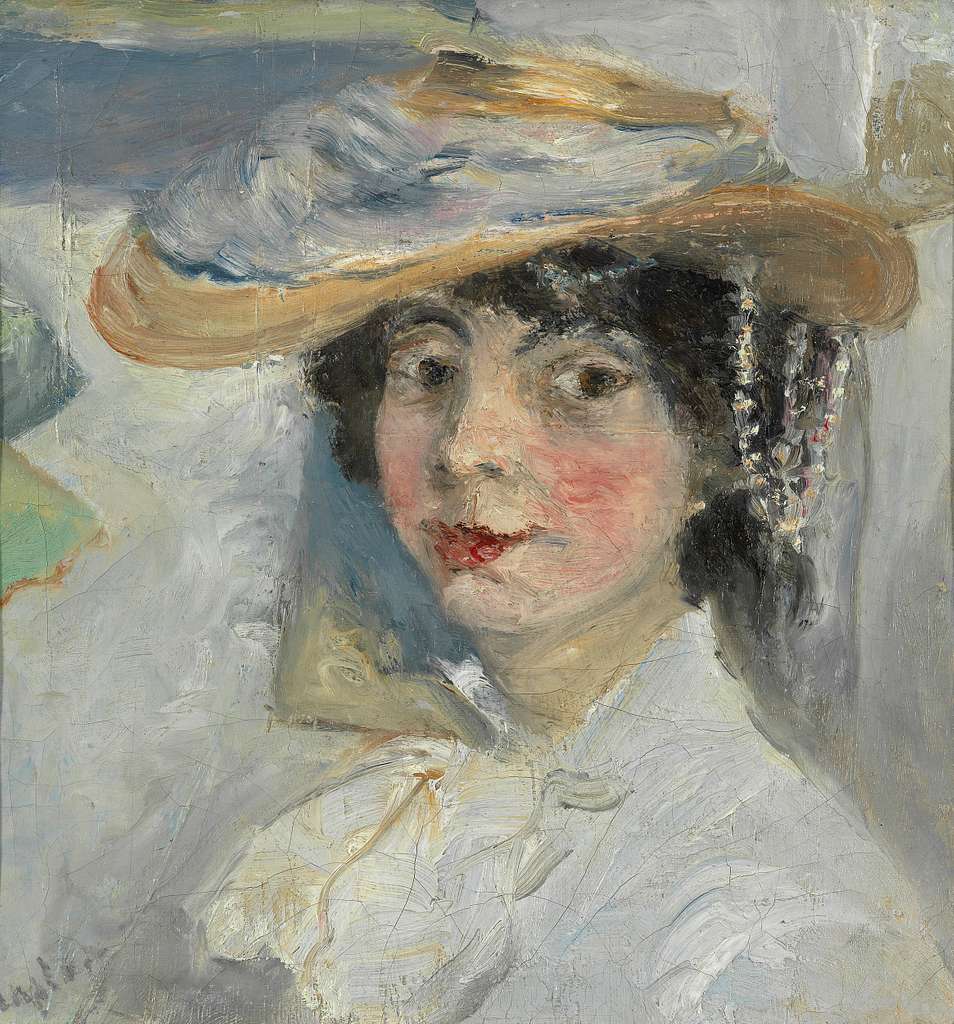
Mikhail Larionov
 Russia
painter•scenographer•costume designer
Also known as: Mikhail Fyodorovich Larionov, Michel Larionov
Birthday
June 3, 1881
Birth Sign
Gemini
Birthplace
Tiraspol, Russia (now Odesa, Ukraine)
Age
Died at 82
About
Mikhail Larionov was a Russian avant-garde painter, scenographer, and costume designer who helped shape the course of modern art. He is best known for pioneering Rayonism, one of the first abstract art movements, and for his bold experiments with style and form that broke from academic tradition.
Larionov's influence extended far beyond the canvas. Through his leadership of the Knave of Diamonds and Donkey's Tail groups, he fostered a generation of Russian artists. His stage designs for the Ballets Russes brought his radical vision to international audiences, blending Russian folk motifs with modernist energy.
Today, his works hang in major museums worldwide, and his legacy as a bridge between Russian and French art remains influential. He is remembered as a restless innovator who never stopped challenging artistic norms.
Early Life & Background
Mikhail Larionov was born on June 3, 1881, in Tiraspol, then part of the Russian Empire and now in modern-day Ukraine. He grew up in a region steeped in rural traditions, which later surfaced in his art. His family encouraged his early interest in drawing, and he completed secondary school at the Voskresensky Technical School.
In 1898, Larionov enrolled at the Moscow School of Painting, Sculpture and Architecture, where he studied under Konstantin Korovin and Valentin Serov. Initially drawn to Impressionism and Post-Impressionism, he quickly absorbed the latest trends from Western Europe. His early works showed a fascination with light and color, but he soon grew restless with conventional approaches.
By the mid-1900s, Larionov was experimenting with Neo-Primitivism, a style that drew on Russian folk art, icons, and lubok prints. This period laid the groundwork for his later radical innovations. He also began organizing exhibitions and forming alliances with fellow artists, setting the stage for his emergence as a leader of the Russian avant-garde.
Career Growth
Larionov's breakthrough came in 1910 when he co-founded the Knave of Diamonds group, which championed a vibrant, expressive style. Three years later, he broke away to form the Donkey's Tail, a more radical collective that rejected Western conventions in favor of Russian folk sources. In 1912, he developed Rayonism, an abstract style based on the interaction of light rays, which he outlined in his manifesto Rayonists and Futurists.
His first major exhibition of Rayonist works took place in 1913, titled The Target. The following year, he published his book Luchizm (Rayonism), solidifying his theoretical contributions. In 1915, Larionov left Russia with Natalia Goncharova to join Sergei Diaghilev's Ballets Russes in Paris. He designed sets and costumes for productions such as Le Soleil de Nuit and L'Oiseau de Feu, which toured France and Switzerland, bringing his art to European audiences.
After the Russian Revolution, Larionov remained in Paris, where he continued to paint, illustrate books, and design for the theater. His later work moved toward a more figurative style, but he never lost his experimental edge. In 2018, a retrospective of his work was held, and in January 2019, an exhibition displayed over 500 of his pieces, marking a renewed interest in his contributions.
Career Timeline
Public Image & Style
Larionov was seen as a provocateur and a visionary in the Russian avant-garde. He relished shocking the establishment, whether through his radical paintings or his public manifestos. His fashion sense often included bold colors and unconventional combinations, mirroring his artistic philosophy.
Media portrayals of Larionov ranged from 'the wild futurist' to 'the father of Russian abstraction.' He cultivated an image of fearless experimentation, always pushing boundaries. Fans and critics alike admired his relentless originality, even when they disagreed with his direction.
In Paris, he became a respected figure among the émigré community, known for his generosity and sharp intellect. His public lectures drew crowds eager to hear his provocative ideas about art and society.
Fame & Fandom (iFAMOUS Rankings)
The admirers of Mikhail Larionov form a distinct cohort defined not by pop-culture fervor but by the rigorous scrutiny of art historians, museum curators, and academic scholars. Unlike modern celebrities who cultivate organized fanbases with specific names or viral rituals, Larionov's legacy is preserved through institutional archives and retrospective exhibitions rather than grassroots campaigns or social media movements. There is no formal fandom, organized fanbase, or specific name for admirers of Mikhail Larionov. His influence persists in the study of Russian avant-garde history, where his radical break from tradition remains a subject of intense scholarly debate. The mythology surrounding him centers on verified historical milestones, such as the 1912 declaration of Rayonism and the provocative performance piece in which he burned his own paintings to challenge the boundaries of art. These events are retold not as folklore but as documented shifts in the trajectory of modernism. Despite his enduring status as a pioneer of abstraction, iFANN has evaluated his current global standing without assigning a numerical placement. Mikhail Larionov is currently unranked in the Global Top 1,000 and does not appear on any Top-100 scope list maintained by the iFANN Global Fame Engine. This absence reflects his position as a historical figure whose fame is anchored in art history rather than contemporary celebrity metrics.
Interesting Facts and Legends
Mikhail Larionov was one of the final artists of his generation whose complete body of work returned to Russia, a milestone noted by the Tretyakov Gallery. In 2013, an exhibition included a public discussion featuring both Larionov and Natalia Goncharova held the evening before the opening of the 'Target' show. For over five decades, the painting 'Still Life with Teapot and Oranges' was erroneously attributed to him, a discrepancy only resolved in 2018. Larionov possessed a sharp wit and frequently challenged artistic norms during public debates. He also maintained a deep passion for collecting folk art, which significantly informed his design aesthetic. A bold assertion that his Rayonist paintings represented 'the true art of the future' once stirred considerable controversy within the art world. Beyond these recorded facts, a legendary incident involves his co-founding of Rayonism at the Donkey's Tail exhibition in Moscow, where he and Goncharova publicly rejected representational art in favor of depicting light rays. Another widely cited story concerns his 1914 performance piece where he burned his own paintings to blur the line between art and anti-art. Following the Revolution, his permanent departure from Russia and subsequent settlement in Paris created a narrative arc that concluded with the 2019 retrospective 'Mikhail Larionov: A Master Comes Home' at the Tretyakov Gallery, effectively reuniting his works with their country of origin after nearly a century.
Notable Quotes
“The true art of the future is the art of the ray.”
“We do not need the past, we need the future.”
“Color is the language of the soul.”
Family & Personal Life
Larionov's parents were from the Russian middle class, but little is known about their names or occupations. He had a brother who also pursued artistic interests, though details remain sparse. The most significant family relationship in his life was with Natalia Goncharova, whom he met while studying in Moscow. They became lifelong partners, both personally and professionally.
The couple married in 1955, after decades of collaboration. They had no children. Their household in Paris was a hub for Russian émigré artists, filled with canvases, sketches, and folk artifacts. Goncharova was not only his wife but also his closest artistic ally, and their mutual influence was profound.
Notable Connections
Mikhail Larionov is closely associated with Natalia Goncharova, his wife and artistic partner. Together, they were central figures in the Russian avant-garde. He also worked with Sergei Diaghilev and the Ballets Russes, creating designs that became iconic. His contemporaries included Kazimir Malevich and Vladimir Tatlin, who were influenced by his ideas.
Relationships & Dating History
Mikhail Larionov's personal life was defined by his long partnership with Natalia Goncharova. They met in the early 1900s while both were students in Moscow. Their relationship was both romantic and collaborative, as they influenced each other's art. They lived together for decades, eventually marrying in 1955.
There are no records of other significant relationships. The couple worked side by side on numerous projects, including the Ballets Russes. At the time of Larionov's death in 1964, he was married to Goncharova, who survived him by two years.
- MarriedNatalia Goncharova1955 - 1964Long-time partner and artistic collaborator; married in 1955.
Death & Aftermath
Died
May 10, 1964 (aged 82)
Death Place
Fontenay-aux-Roses, France
Cause of Death
Unknown
Mikhail Larionov spent his final decades in exile, residing in the quiet suburb of Fontenay-aux-Roses just outside Paris after leaving Russia in 1915. The artist passed away in this location during the year 1964 at the age of approximately eighty-two, concluding a long life defined by radical experimentation and a sustained career as a painter and scenographer. While the specific calendar date of his passing remains unrecorded in available historical accounts, the event itself was a quiet occurrence typical of an established figure in retirement rather than a matter of public record or legal inquiry. The absence of controversy or unnatural circumstances suggests a natural end to his life without the need for formal determination. Consequently, there are no surviving details regarding his final days, last public appearances, or immediate medical circumstances surrounding his departure from the world of art.
Immediate public reaction did not include vigils or tributes recorded in contemporary sources, though the legacy of his work endured through the institutions that had long championed his contributions. Decades later, renewed interest culminated in the 2019 retrospective titled Mikhail Larionov: A Master Comes Home, which marked a significant return of his works to Russia and highlighted his enduring influence on modern art history. This exhibition served as a primary posthumous honor, acknowledging his role as a pioneer of Rayonism and a key figure in the Russian avant-garde movement. Details regarding his funeral, burial location, or the management of his estate were not preserved in the available records.
Net Worth (Estate Value)
$5 Million
iFANN Editorial Team estimate
iFANN currently estimates Mikhail Larionov's net worth at $5 Million as of 2026, derived from the value of his estate and the ongoing sales of his artworks. His paintings have appeared at major auction houses, with pieces like 'La coquette de Provence' drawing significant attention from collectors. The estate is managed by his heirs, who continue to license his works for various exhibitions and publications. Larionov's financial standing grew posthumously as interest in Russian avant-garde art surged globally. His works are held in prestigious collections, including the Museum of Modern Art and the Guggenheim. In March 2026, a San Francisco gallery owner donated 119 artworks to the Arkansas Museum of Fine Arts, a transfer that may include pieces by Larionov and further enhances his legacy.
Awards & Accolades
View 1 records, honours and achievementsKnown For
Rayonism
1912 · Pioneer
Knave of Diamonds
1910 · Co-founder
Ballets Russes
1915 · Set and costume designer
Keywords
Sources
Quick Facts
- Profession
- painter, scenographer, costume designer
- Born
- June 3, 1881
- Birthplace
- Tiraspol, Russia (now Odesa, Ukraine)
- Died
- May 10, 1964
- Death Place
- Fontenay-aux-Roses, France
- Gender
- Male
- Spouse
- Natalia Goncharova
- Birth Sign
- Gemini
Personal Details
- Full Name
- Mikhail Fyodorovich Larionov
- Spouse
- Natalia Goncharova
- Education
- Voskresensky Technical School
Frequently Asked Questions
Who was Mikhail Larionov?
When and where was Mikhail Larionov born?
What is Mikhail Larionov's net worth?
Who was Mikhail Larionov married to?
How did Mikhail Larionov die?
Similar People
Join the community
fans discussing