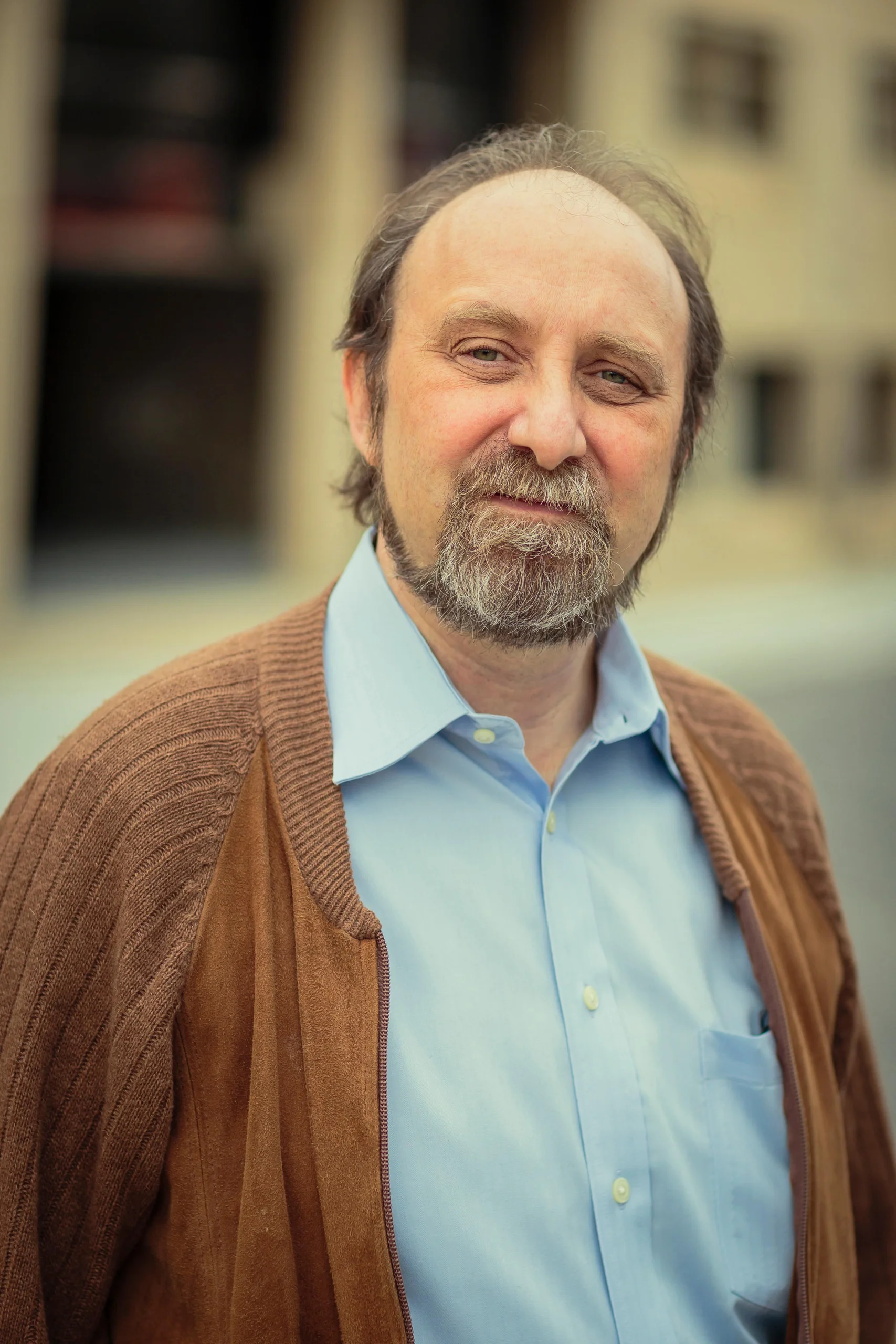
Miguel Nicolelis
 Brazil
neuroscientist•physician•biomedical engineer
Also known as: Miguel Ângelo Laporta Nicolelis, Miguel A. L. Nicolelis
Birthday
March 7, 1961
Birth Sign
Pisces
Birthplace
São Paulo, Brazil
Age
65 years old
About
Miguel Ângelo Laporta Nicolelis is a Brazilian physician and neuroscientist who has spent over three decades at Duke University, where he holds the title of Duke School of Medicine Distinguished Professor of Neuroscience. He is a pioneer in brain-machine interface (BCI) technology, a field he helped define and bring into the mainstream. His work has shown that brain activity alone can control robotic limbs, and in 2014 he led the Walk Again Project, where a paralyzed man delivered the ceremonial first kick at the FIFA World Cup using a brain-controlled exoskeleton.
Nicolelis has published more than 200 scientific papers and authored the book Beyond Boundaries. He is a passionate advocate for science education in Brazil, founding the Institute of Neuroscience and Technology in Natal. His research continues to push the limits of what the brain can achieve, and he remains a vocal critic of commercial brain-computer ventures like Neuralink.
Early Life & Background
Miguel Nicolelis grew up in São Paulo, Brazil, in a family that valued education and intellectual curiosity. From an early age, he was fascinated by how the brain works, a curiosity that led him to study medicine at the University of São Paulo. After earning his medical degree, he pursued a PhD in neurophysiology, focusing on how populations of neurons encode information, a departure from the single-neuron approach that dominated neuroscience at the time.
His early research was shaped by a belief that the brain's power lies in the collective activity of millions of neurons, not individual ones. This conviction guided his postdoctoral work in the United States, where he began developing the techniques that would later define brain-machine interfaces. Before the breakthrough experiments, Nicolelis spent years perfecting methods to record electrical signals from large groups of neurons simultaneously, laying the groundwork for everything that followed.
Career Growth
Nicolelis's career took off in the early 2000s when his lab at Duke University demonstrated that monkeys could control robotic arms using only their brain activity. This breakthrough captured global attention and established him as a leader in brain-machine interface research. In 2013, his team achieved a world first by connecting the brains of two rats located thousands of miles apart via the internet, allowing them to share information and collaborate on simple tasks.
The most famous moment came in 2014 with the Walk Again Project. Nicolelis led an international team that enabled a paralyzed man to deliver the ceremonial first kick at the FIFA World Cup in Brazil, using a robotic exoskeleton controlled by his brain. The project showed that long-term training with brain-machine interfaces could lead to neurological recovery in individuals with complete paraplegia, a finding documented in a 2022 study published in Nature Scientific Reports.
Since then, Nicolelis has continued to explore brain-to-brain communication and neuroprosthetics. He has also been a vocal critic of Elon Musk's Neuralink, calling it "bad science fiction" in a 2021 interview. As Professor Emeritus at Duke, he remains active in research and public speaking.
Career Timeline
Public Image & Style
Nicolelis is portrayed in the media as a visionary pioneer who has pushed the boundaries of neuroscience. His public image blends rigorous scientific achievement with accessible public engagement, particularly through his TED talks and the Walk Again Project. He is known for his passionate advocacy for science education in Brazil and his willingness to publicly critique rival approaches in his field. Fans and followers see him as a scientist who thinks beyond the lab, connecting neuroscience to broader human potential.
Fame & Fandom (iFAMOUS Rankings)
Miguel Nicolelis commands a unique niche in the public consciousness, blending the rigor of a leading neuroscientist with the dramatic flair of a showman who turned brain signals into global spectacle. While he lacks a traditional pop-culture fandom with official names or ritualistic campaigns, his audience consists of science enthusiasts and followers who track his advocacy for Brazilian education and his bold critiques of rival technologies like Neuralink. His social media presence acts as a direct conduit for his research rather than a hub for fan interaction, where he identifies simply as a scientist and "Utopia builder." This professional engagement distinguishes him from celebrity figures whose fame relies on viral folklore; instead, his legacy is built on verified milestones that resonate deeply with those interested in the future of human augmentation. Despite his global recognition for pioneering brain-machine interfaces, iFANN's Global Fame Engine has evaluated this person, but they do not currently hold a placement in the published rankings (Global Top 1,000 or a Top-100 scope list). Consequently, Miguel Nicolelis is currently unranked in the Global Top 1,000, reflecting his status as a titan within the scientific community rather than a mass-market icon measured by consumer consumption metrics. The absence of a numeric rank underscores the specialized nature of his influence, which operates through academic prestige and high-profile demonstrations rather than broad commercial appeal. While his work has captured headlines worldwide, the lack of a formalized fanbase means his cultural footprint remains anchored in specific achievements rather than the chaotic energy of a dedicated following.
Interesting Facts and Legends
Beyond his groundbreaking work in neuroscience, Miguel Nicolelis is an accomplished painter and philosopher, interests he lists alongside his scientific pursuits on his Instagram profile. He is a devoted fan of the Brazilian football club Palmeiras, often describing himself as a "Utopia builder, painter, philosopher, art and history lover, and Palmeiras fan." His 2013 brain-to-brain interface experiment with rats was conducted with animals in different countries, connected via the internet, allowing information to travel from North Carolina to South Korea. He has also delivered a TEDGlobal talk titled "The story of an impossible kick," reflecting on the Walk Again Project. A central legend in his career involves the 2014 FIFA World Cup opening ceremony, where he led the demonstration of a mind-controlled exoskeleton that allowed a paralyzed man to deliver the ceremonial first kick toward a statue of Pelé. This moment, widely retold as "The Dream Kickoff," remains the primary reference point for his public legacy. Another cornerstone of his scientific lore is the 2013 experiment demonstrating a functional brain-to-brain interface between rats, which established him as a pioneer in direct neural communication across distances. In May 2021, he publicly criticized Elon Musk's Neuralink project, labeling it "bad science fiction" and advocating for more rigorous approaches, further cementing his reputation as a critical voice in the field.
Notable Quotes
“A gift to the 25 million people around world who cannot move because of spinal cord injury.”
“Mr. Musk doesn't understand a bit of neuroscience and what is the brain... he barely knows where.”
Family & Personal Life
Nicolelis is married to Carolina Nicolelis, who has been his partner and collaborator. The couple has appeared together at public events, though details about their children are kept private. They share a home in the United States, where Nicolelis has lived for most of his career, while maintaining strong ties to Brazil.
Notable Connections
Relationships & Dating History
Public information about Nicolelis's romantic relationships is extremely limited. He is known to be married to Carolina Nicolelis, and the couple has appeared together at public events and in media coverage of his work. No information is available about previous relationships, and there are no credible reports of high-profile flings, divorces, or rumored pairings. As of 2026, he is married to Carolina.
- MarriedCarolina NicolelisCurrentNicolelis is married to Carolina, who has been his partner and collaborator.
Salary, Net Worth In 2026
$10 Million
iFANN Editorial Team estimate
As an academic scientist, Miguel Nicolelis's net worth is not publicly documented in the way it is for celebrities or tech entrepreneurs. His income derives primarily from his university professorship, research grants, book royalties, and speaking engagements. He has not pursued commercial ventures or endorsement deals, so his wealth is modest compared to industry figures. Estimates for 2026 place his net worth around $10 Million per iFANN's editorial analysis, reflecting decades of academic work and public recognition. Book sales from Beyond Boundaries and other publications, along with speaking fees from events like TEDGlobal, contribute to his earnings. While not a billionaire, Nicolelis has achieved financial stability through his distinguished career.
Awards Won (1)
Nicolelis has received several awards for his scientific contributions, including the 2004 Tecnologia Social Prize. He has been elected to the Brazilian Academy of Sciences, a prestigious honor recognizing his impact on neuroscience. While he has not received entertainment industry awards, his work has been widely recognized within academic and scientific communities.
2004 · Science
Brain-machine interface research
Known For
Brain-machine interface research
2000 · Pioneer
Walk Again Project
2014 · Leader
Brain-to-brain interface
2013 · Researcher
Keywords
Sources
Quick Facts
- Profession
- neuroscientist, physician, biomedical engineer
- Born
- March 7, 1961
- Birthplace
- São Paulo, Brazil
- Gender
- Male
- Birth Sign
- Pisces
- Spouse
- Carolina Nicolelis
- Education
- University of São Paulo (MD, PhD)
Personal Details
- Full Name
- Miguel Ângelo Laporta Nicolelis
- Spouse
- Carolina Nicolelis
- Education
- University of São Paulo (MD, PhD)
Frequently Asked Questions
What is Miguel Nicolelis known for?
Is Miguel Nicolelis still at Duke University?
What does Miguel Nicolelis think of Elon Musk's Neuralink?
What is Miguel Nicolelis's net worth?
Where was Miguel Nicolelis born?
Social Media
Similar People

Join the community
fans discussing