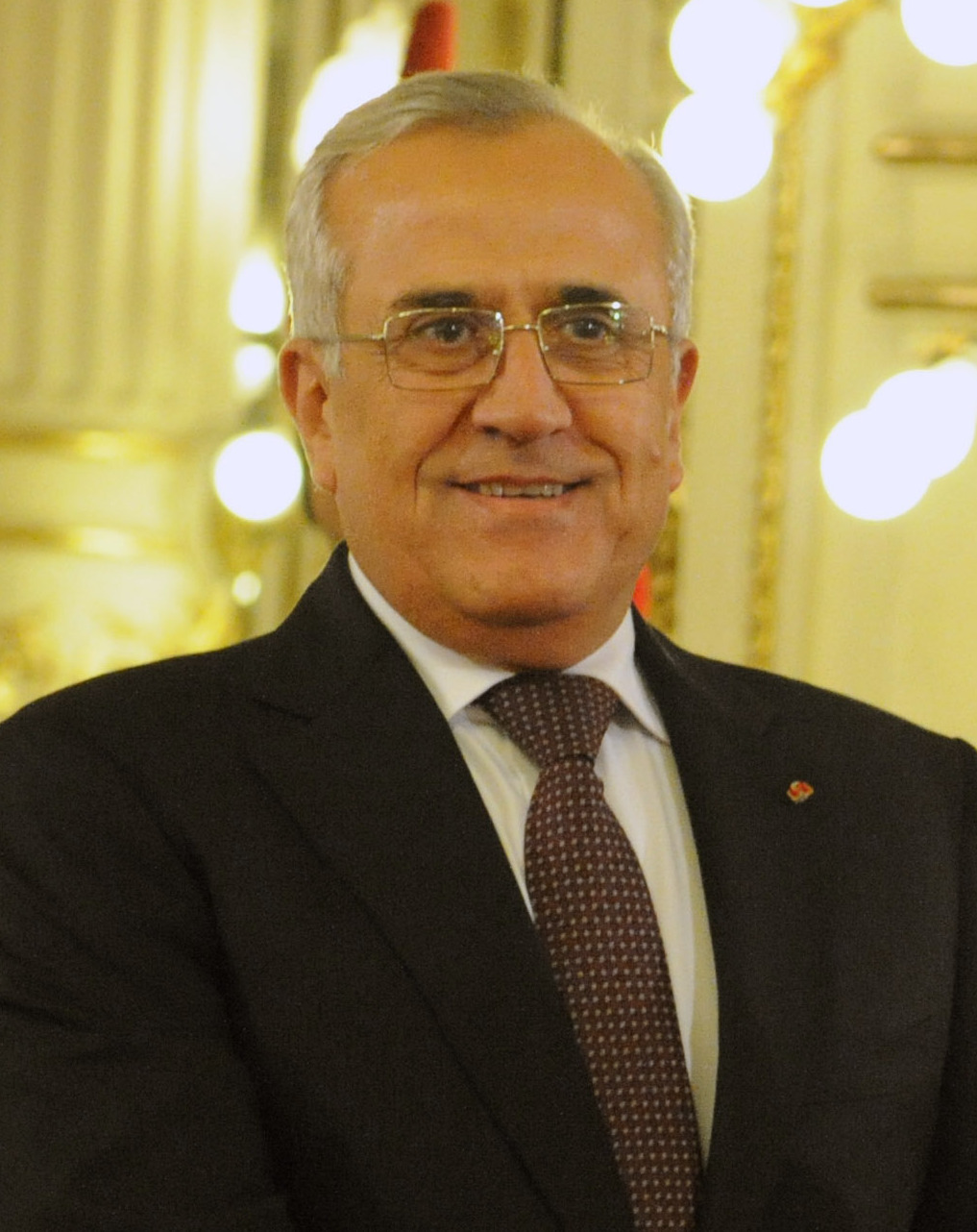
Michel Suleiman
 Lebanon
Also known as: Michel Sleiman
Birthday
November 21, 1948
Birth Sign
Scorpio
Birthplace
Aamchit, Lebanon
Age
77 years old
About
Michel Suleiman is a Lebanese politician and retired military officer who served as the 12th president of Lebanon from 2008 to 2014. Before that, he commanded the Lebanese Armed Forces for a decade. He is widely respected for keeping the army a neutral institution during some of Lebanon's most turbulent years, including the 2006 war with Israel and the internal strife of 2008.
His presidency focused on national unity and steering Lebanon through the fallout of the Syrian civil war. After leaving office, he has remained an active voice in public discourse, advocating for Lebanese neutrality and the strength of the army as a guarantor of stability. As of 2026, he continues to comment on national affairs through his official website and social media.
Early Life & Background
Suleiman was born on November 21, 1948, in the coastal town of Aamchit, in the Keserwan District of Mount Lebanon. He grew up in a Maronite Catholic family, a background that later mattered in Lebanon's confessional political system, where the presidency is reserved for a Maronite.
He enrolled at the Lebanese Military Academy and received his officer training there. His education also included military programs in France and the United States, part of his development as a rising army officer. Over the following decades, he climbed the ranks of the Lebanese Armed Forces, holding various command positions.
A pivotal moment came in December 1998, when he succeeded Émile Lahoud as commander of the army, right after Lahoud was elected president. His profile as a national leader got a major boost in 2007, when the army under his command cleared the Nahr al-Bared refugee camp of al-Qaeda-linked militants. That operation showed both his military skill and his commitment to state sovereignty.
Career Growth
Suleiman's decade as army commander spanned some of Lebanon's hardest years. He managed the country's defense during the 2006 war between Hezbollah and Israel, keeping the army neutral and intact. In May 2008, after a six-month political deadlock, parliament elected him president in a vote brokered by the Doha Agreement. He was sworn in on May 25, 2008, ending the vacuum.
His presidency ran until May 2014, focused on national unity and navigating the spillover of the Syrian civil war. He maintained Lebanon's fragile neutrality, a stance he has continued to advocate since. After his term ended, parliament failed to elect a successor, and the vacancy lasted over two years. Since leaving office, Suleiman has remained an elder statesman, occasionally commenting on Lebanon's challenges. His official website shows continued engagement, with recent statements on the army and sovereignty.
Career Timeline
Public Image & Style
Suleiman's public image is that of a steady, pragmatic, and non-sectarian national figure. He is credited with keeping the Lebanese Armed Forces neutral during intense internal and external conflicts, particularly the 2006 war and the 2008 strife. Media portrayals emphasize his role as a stabilizer and unifier in a deeply divided country. His public statements, especially in retirement, maintain a sober, statesmanlike tone focused on national sovereignty and army strength. He does not have a fandom in the entertainment sense, but he is respected across Lebanon's political spectrum.
Fame & Fandom (iFAMOUS Rankings)
Michel Suleiman remains a figure of significant historical weight rather than contemporary celebrity, operating within the strict confines of statecraft and military command. His public profile is defined by documented political milestones and leadership roles that have secured his place in Lebanese history, though he does not currently hold a placement in the published iFANN Global Top 1,000 rankings or any Top-100 scope list. The iFANN Global Fame Engine has evaluated his digital footprint and public engagement metrics as of August 2026, determining that while his influence is profound in specific geopolitical contexts, it does not translate into the mass-consumption signals required for a global numerical rank. Consequently, no ordinal position can be assigned to him on the world stage. This absence from the charts reflects his career trajectory, which was strictly oriented toward national stability and diplomatic relations rather than entertainment or viral culture. Unlike pop icons who generate measurable spikes in search volume through fan-driven campaigns, Suleiman's visibility is steady and institutional. There is no documented fandom name associated with his legacy, nor are there records of organized fan groups, birthday billboards, or ritualistic tributes typical of celebrity culture. His supporters do not engage in chart pushes or create dedicated subreddits; instead, their engagement manifests through civic discourse and respect for his former office. The lack of a formal fanbase underscores the nature of his service: he was a statesman whose authority derived from duty, not popularity. While he maintains an active voice in public discourse regarding Lebanese neutrality and army strength, these activities are viewed as senior statesmanship rather than the performance of a public figure seeking adoration. His legacy is one of quiet endurance and institutional integrity, standing apart from the frenetic energy of modern fame systems.
Interesting Facts and Legends
Michel Suleiman holds the unique distinction of being the only individual in Lebanese history to serve consecutively as both Commander of the Lebanese Armed Forces and President of the Republic. His election in May 2008 ended a six-month presidential vacuum, yet his departure in 2014 precipitated an even longer period of vacancy lasting over two years. As a Maronite Christian, his tenure fulfilled the confessional requirements of the Lebanese political system. In Western media, his name is frequently spelled "Sleiman," though both variations refer to the same man. Beyond politics, he is known for a keen interest in military history and reading during his leisure time. His career is marked by several pivotal moments that define his historical narrative. He commanded the army during the Nahr al-Bared operation against Al-Qaeda-linked militants, establishing a reputation for decisive leadership before entering the presidency. In June 2013, he made a notable diplomatic intervention by publicly urging Hezbollah to withdraw its forces from Syria, highlighting the tension between national stability and regional involvement. Perhaps most significantly, his term concluded without a successor, creating a power vacuum that underscored deep political fractures. During his presidency, he also issued humanitarian instructions preventing the deportation of Syrian refugees, citing international human rights standards. These events form the core of his verified legacy, rooted in formal political history rather than folklore.
Notable Quotes
“The army is the title of sovereignty and the guarantee of stability.”
“Lebanon's neutrality is essential to its stability and its unique role in the region.”
Family & Personal Life
Suleiman is married to Wafaa Sleiman, who served as Lebanon's First Lady from 2008 to 2014. The couple has three children. Their family life has remained largely private, though Wafaa occasionally appeared at official functions and engaged in charitable activities during his presidency. The family is Maronite Catholic, and they have roots in Aamchit, where Suleiman was born.
Notable Connections
Émile Lahoud, whom Suleiman succeeded as both army commander and president, shaped his early career path. During his presidency, he worked closely with Parliament Speaker Nabih Berri and Prime Minister Fouad Siniora. He also met with international figures such as French Foreign Minister Bernard Kouchner in 2009 and U.S. Senator John Kerry in the same year.
Relationships & Dating History
Public information about Suleiman's romantic history is extremely limited, consistent with his private personal life and the cultural norms of Lebanese public figures. The only documented relationship is his marriage to Wafaa Sleiman. They have three children together, and she served as First Lady during his presidency. No other public relationships, engagements, or rumored pairings have been reported by credible sources. As of 2026, Suleiman is married to Wafaa Sleiman, and there are no reports of separation or divorce.
- MarriedWafaa SleimanCurrentMarried to Wafaa Sleiman, who served as First Lady from 2008 to 2014; they have three children.
Salary, Net Worth In 2026
$5 Million
iFANN Editorial Team estimate
Per iFANN's editorial analysis, Michel Suleiman's net worth is estimated at $5 Million as of 2026. This valuation reflects the accumulation of income from his decades of service as a high-ranking military officer and subsequently as the 12th President of Lebanon, alongside the pension benefits accrued upon leaving office. Since retiring from the presidency, he has participated in occasional speaking engagements and advisory roles, though specific financial details regarding these activities remain undisclosed to the public. Lebanese public officials' finances are rarely reported by celebrity net worth outlets, so this figure is based on typical earnings for high-ranking officials in Lebanon. The estimate accounts for his long tenure in state service and the standard compensation packages associated with such positions in the region.
Awards & Accolades
View 3 records, honours and achievementsKnown For
President of Lebanon
2008-2014 · 12th President
Commander of the Lebanese Armed Forces
1998-2008 · Commander
Keywords
Sources
Quick Facts
- Profession
- politician, military officer
- Born
- November 21, 1948
- Birthplace
- Aamchit, Lebanon
- Gender
- Male
- Spouse
- Wafaa Sleiman
- Birth Sign
- Scorpio
- Children
- 3
Personal Details
- Full Name
- Michel Suleiman
- Spouse
- Wafaa Sleiman
- Children
- 3
- Education
- Lebanese Military Academy
Frequently Asked Questions
How old is Michel Suleiman?
What is Michel Suleiman's net worth in 2026?
Who is Michel Suleiman's wife?
When was Michel Suleiman president of Lebanon?
Why is Michel Suleiman famous?
Social Media
Join the community
fans discussing